



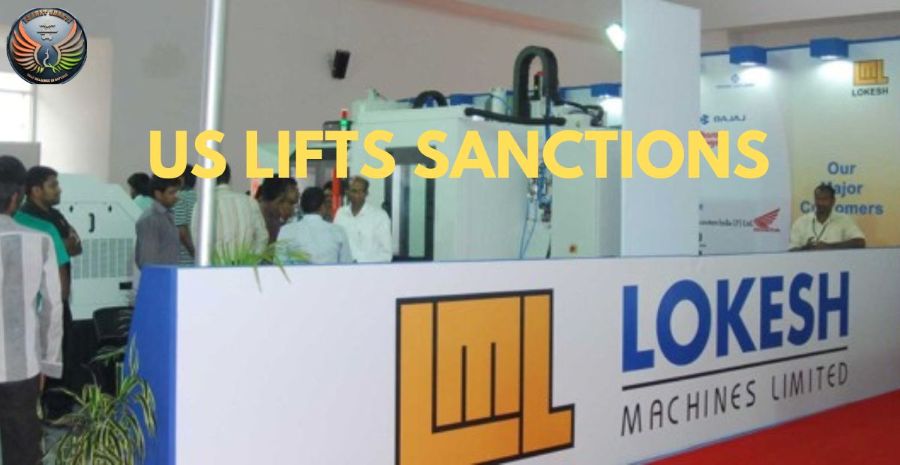
The United States has removed four Indian companies from its sanctions list, ending nearly 20 months of restrictions that had disrupted their access to the global financial system and international business.
The four companies, including Lokesh Machines Limited, RRG Engineering Technologies Private Limited, Galaxy Bearings Ltd and Shaurya Aeronautics Private Limited, were officially removed from the US Treasury Department’s Office of Foreign Assets Control (OFAC) Specially Designated Nationals (SDN) List on June 30, 2026, reversing sanctions imposed under Executive Order 14024 over alleged links to Russia’s military-industrial supply chain.
The delisting marks one of the quickest reversals of such sanctions, a process that industry experts say typically takes five to six years. In this case, it was completed in about 20 months, following a combination of legal representation, compliance efforts and sustained engagement by the Government of India.
Why the companies were sanctioned
The Biden administration designated the four companies in October 2024 for allegedly supplying dual-use technologies or industrial equipment that could support Russia’s defence manufacturing ecosystem.
According to the US allegations at the time:
- Lokesh Machines was accused of exporting machine tools to Russian manufacturers.
- Galaxy Bearings allegedly supplied high-priority bearings and related components.
- Shaurya Aeronautics was accused of exporting radar and navigation-related equipment.
- RRG Engineering Technologies allegedly exported microelectronics to a Russian entity already under sanctions.
However, company executives maintain that no detailed evidence was ever shared with them.
Officials from one of the sanctioned companies, speaking on condition of anonymity, said the companies were “named and shamed” by the US officials under the Biden administration without being informed of any specific violations.
“We were not doing anything illegal. We were following all rules and regulations laid down by the Government of India,” one executive said.
The sanctions effectively cut the companies off from the US financial system.
Assets under US jurisdiction were frozen, access to dollar transactions was blocked and global banks became reluctant to process payments. Since international defence and aerospace trade is heavily dependent on the US dollar and the SWIFT banking network, the restrictions affected exports, imports and business relationships far beyond the United States.
The sanctions also served as a wake-up call for India’s defence manufacturing sector.
Following the October 2024 designations, industry bodies including the Confederation of Indian Industry (CII) and the Federation of Indian Chambers of Commerce and Industry (FICCI) who were themselves unaware of such sanctions, along with US officials, organised multiple awareness seminars in Delhi and Pune to educate Indian companies about US export controls, sanctions compliance and the risks of engaging with countries under American sanctions.
Indian companies dealing in defence and aerospace have increasingly found themselves navigating overlapping regulatory regimes. While Indian law permits certain exports subject to licensing requirements, US sanctions laws impose additional restrictions on transactions involving countries such as Russia, Iran, North Korea, Cuba and Libya, particularly for dual-use technologies and defence-related products.
According to company officials, the sanctions also prompted direct intervention by the Government of India.
Executives from the four defence-linked firms were called to meetings by the Ministry of External Affairs (MEA) and the National Security Council Secretariat (NSCS), during which officials sought a detailed understanding of their businesses, export practices, and whether industry associations had issued any prior warnings.
“The MEA and NSCS wanted to understand our business model and whether any industry body had alerted us about potential compliance issues,” one company official said.
The companies also informed government officials that they had not received any specific advisory from industry bodies before the sanctions were imposed.
Officials familiar with the process said India’s diplomatic engagement became an important part of discussions with the US administration, alongside the direct representation initiated by the companies themselves.
Three of the four sanctioned companies appointed legal counsel in the United States to help them represent before OFAC.
Sources have described the outcome as India’s first successful removal from OFAC’s Russia-related sanctions list following the 2024 designations.
They had expected the change in administration in Washington would ease matters when the Trump administration took over. However, trade tensions and tariff issues dominated discussions, and they had almost given up hope, said a company’s executive.
“Yet we have been removed from the sanctions list in just 20 months. Normally, this process takes five to six years. This happened with the intervention of the Ministry of External Affairs and the National Security Council Secretariat and the positive reconsideration by the US Govt.”
The removal restores the companies’ ability to conduct unrestricted US dollar transactions and reconnects them with international banking channels.
The decision is expected to improve access to global suppliers, technology partnerships and overseas customers, particularly for companies operating in defence manufacturing, aerospace components and precision engineering.
Industry observers believe the move will also restore confidence among foreign banks, investors and institutional customers that had avoided dealing with the sanctioned firms.
As part of the compliance process, company officials said they have provided an undertaking to US authorities that they will not undertake business involving Russia and will comply with applicable US sanctions regulations going forward.
The development is being viewed within India’s defence industry as an important precedent, demonstrating that sanctions designations can be challenged successfully through legal processes, strengthened compliance measures and sustained diplomatic engagement.
Huma Siddiqui