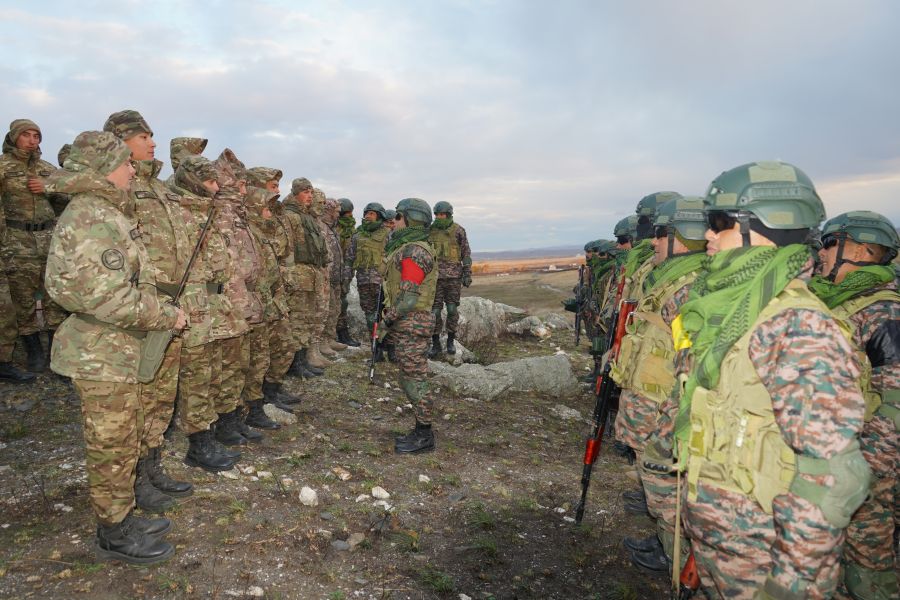



In a major boost to India’s indigenous small arms industry, the Indian Army has placed multiple orders for SSS Defence’s T-12 semi-automatic shotgun. This is the first time the Bengaluru-based company will supply a weapon system to the Army.
Deliveries are scheduled to begin next month, making the T-12 India’s first domestically designed and manufactured counter-drone shotgun to enter Army service at a time when low-cost armed drones are rapidly reshaping modern battlefields.
In an exclusive conversation, SSS Defence CEO Vivek Krishnan said the Army’s requirement is a direct outcome of operational lessons drawn from recent conflicts, particularly the Russia-Ukraine war and India’s own experience during Operation Sindoor.
“The demand for a counter-UAS capable shotgun is a direct result of what militaries have seen in Ukraine. Today, there is no other effective last line of defence for infantry, mechanised forces or special operations teams against small explosive-laden drones,” Krishnan said.
He added that India’s security establishment also recognised the emerging threat after Operation Sindoor, when Pakistan employed large numbers of drones along the western frontier.
“The Indian Army realised there was a need for a dedicated counter-UAS weapon to deal with these threats after Operation Sindoor,” he said.
Unlike conventional shotguns available in India, the T-12 was designed specifically for engaging aerial threats.
Krishnan said SSS Defence began work on the platform more than two years ago after concluding that existing products, both domestic and many international offerings, failed to meet the operational requirement.
“Standard shotguns available in India are simply not designed for this mission. We had to engineer an entirely new system rather than modify an existing weapon,” he explained.
One of the biggest shortcomings, according to the company, was that India largely had pump-action shotguns, which slow down follow-up shots during engagements lasting only a few seconds.
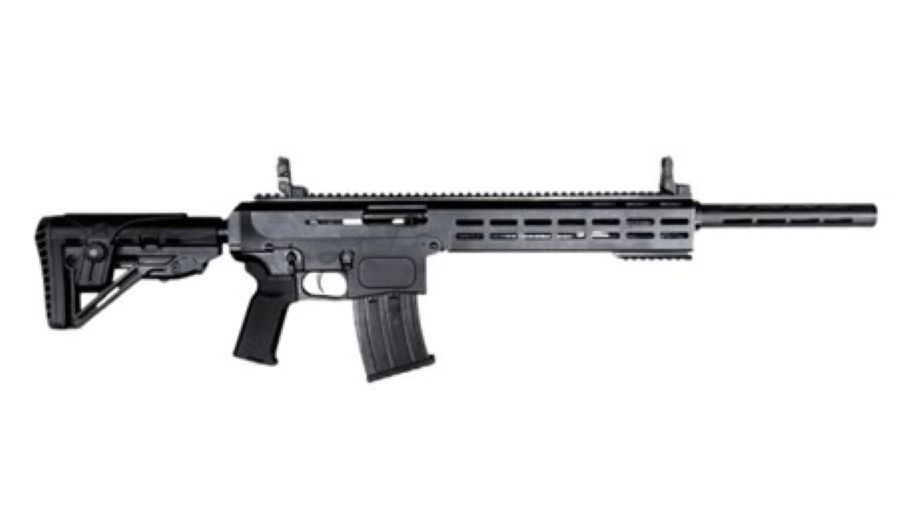
“Reaction time is everything when a drone is approaching. We developed a semi-automatic, magazine-fed platform that allows soldiers to engage multiple targets much faster,” Krishnan said.
The challenge extended beyond the firearm itself.
According to him, existing barrel designs and metallurgy, whether from Indian manufacturers or most foreign suppliers, could not consistently deliver the pellet dispersion required to neutralise drones beyond 25 metres.
To overcome this, SSS Defence developed its own barrel profile and a dedicated counter-UAS choke, enabling the weapon to maintain an effective shot pattern out to operational ranges of nearly 80-100 metres.
The company also redesigned the ammunition instead of relying on standard commercial shotgun cartridges.
Traditional lead-shot ammunition, Krishnan said, was unsuitable for destroying drones because it lacked the energy and pellet distribution needed at longer distances.
“What is required is a very specific cone of dispersion, wide enough to compensate for a moving aerial target but dense enough to retain sufficient energy at the edge of engagement,” he explained.
To achieve that, SSS Defence developed proprietary hardened steel pellets housed in a specially engineered wad that preserves energy while delivering multiple impacts capable of causing structural or electronic damage to drones.
“In essence, we designed an entire ecosystem—the weapon and the ammunition together. That is how leading global OEMs approach specialised weapon systems, but it has rarely been attempted in India,” he said.
Industry sources say the Army’s decision is significant because of it also reflects the growing reliance on “real aatmanirbharat” sources of technology in weapons.
Also, according to sources, several Indian companies have been attempting to introduce similar counter-drone shotguns by importing critical components or technology from Turkish manufacturers. While Turkish manufacturers have scale and are price competitive, their products have faced significant delivery and quality issues in global markets.
Instead, the Army has opted for a fully indigenous solution developed through in-house research and engineering.
The timing is also noteworthy given that during Operation Sindoor, Pakistan employed large numbers of Turkish-origin drones, including Songar and YIHA-series unmanned systems, for surveillance and attack missions along the western border, reinforcing the need for dedicated anti-drone weapons at the infantry level.
Krishnan believes the company’s biggest achievement lies in developing technology that only a handful of manufacturers worldwide currently offer.
“Globally, there are fewer than five companies with a comparable suite of counter-UAS shotgun systems. For the first time, an Indian OEM has produced a mission-specific solution that meets global standards,” he said.
He added that multiple Army formations have already inducted the weapon after exhaustive trials and interest is growing among special forces units as well.
Beyond military use, the shotgun can also serve conventional infantry, law enforcement agencies and specialised security forces.
The T-12 is chambered in 12-gauge, operates through a gas-driven semi-automatic mechanism and uses a five-round detachable magazine. It weighs approximately 3.8 kg and features a Picatinny rail for mounting optics, lasers or other mission-specific accessories. While its conventional effective range is around 50 metres, specialised counter-drone ammunition allows engagement of aerial threats at significantly greater distances.
Krishnan said international interest in the counter-drone shotgun has accelerated following the increasing use of drones in Ukraine and the recent conflicts in West Asia.
“We knew this was a difficult technology to develop, and acceptance in India was never guaranteed. But we also knew there would be strong demand globally. That is exactly what we are seeing today, with enquiries increasing from Europe and Asia,” he said.
The company is now working on the next phase of its counter-drone solution, integrating proprietary early-warning sensors and software capable of detecting incoming drone threats before they reach engagement range, allowing infantry sections additional reaction time.
Huma Siddiqui