


The United States on Friday welcomed the Indian Army’s signing of an agreement to acquire the Javelin anti-tank guided missile system, terming it as another milestone in the growing defence partnership between Washington and New Delhi.
The announcement by the US State Department comes as Prime Minister Narendra Modi is set to travel to Kyrgyzstan for the Shanghai Cooperation Organisation (SCO) summit, where he is expected to meet Russian President Vladimir Putin. Modi will also host the BRICS summit in India next month, with Putin expected to attend.
Today’s announcement adds another layer to India’s balancing act between Washington and Moscow. It also comes as the two countries continue to work through differences over tariffs and a broader trade agreement.
The State Department said the Indian Army has signed a Letter of Offer and Acceptance (LOA) for the purchase of the Javelin system through the US Foreign Military Sales process. Washington said the agreement could lead to further cooperation between the two countries’ defence industries, including co-production.
US Ambassador to India Sergio Gor was quick to underline the significance of the development. In a post on X, he wrote: “BIG news! India plans to buy the battle-tested Javelin antitank system.”
The US special envoy linked the agreement to remarks made by US Secretary of War Pete Hegseth at the Shangri-La Dialogue in May.
“Just as @secwar highlighted at the May 2026 Shangri-La Dialogue, this is a great step forward in the U.S.-India defence relationship and opens the door to co-production possibilities,” Gor said. “The engagement between our two nations is at record high levels.”
The State Department described the agreement in similar terms. It said the deal reflects an “enduring partnership” between the US and Indian armed forces and creates opportunities for future cooperation between their defence industries.
“This agreement reflects a defence partnership that is growing deeper, more capable, and more consequential,” Gor said.
A combat-tested system
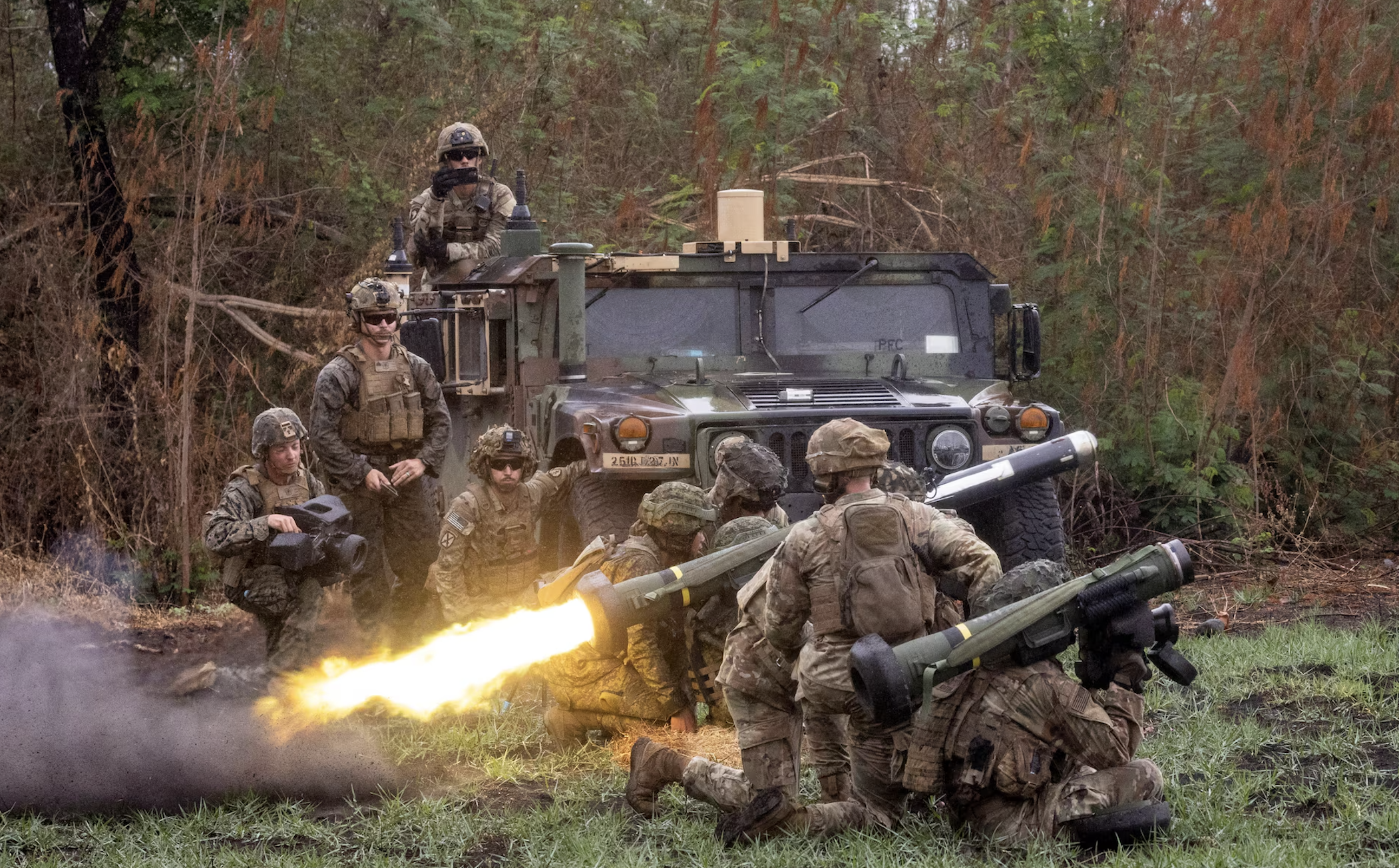
The Javelin is a medium-range, man-portable, fire-and-forget anti-tank guided missile. It is designed to engage armoured vehicles as well as fortified positions. The system is jointly produced by RTX and Lockheed Martin through the Javelin Joint Venture.
It has been in extensive operational use, particularly during the Russia-Ukraine war. The weapon has been widely used by Ukrainian forces against Russian armoured vehicles, making it one of the most recognised modern anti-tank systems.
For India, the acquisition would provide the Army with another modern anti-armour capability. It also reflects New Delhi’s willingness to procure selected foreign systems even as it continues to push for greater domestic defence production.
The latest agreement follows a US approval in November 2025 for a possible $45.7 million Foreign Military Sale to India involving the Javelin system. That package included 100 FGM-148 Javelin missiles and 25 lightweight command launch units, along with training, support equipment and other related items.
The Javelin case formed part of a broader package that also included Excalibur precision-guided artillery projectiles. The combined value of the two proposed sales was around $93 million.
The signing of the LOA is therefore an important step in taking the Javelin purchase forward.
Co-production could be the bigger story
The missile purchase itself, however, may not be the most consequential part of Friday’s announcement.
The reference to co-production points to a much bigger ambition.
India has been pushing foreign defence companies to establish manufacturing capabilities in the country. This is in effort to reduce dependence on imports while developing a stronger domestic defence industrial base.
The Javelin has already been part of those discussions.
Bharat Dynamics Limited signed an agreement with the Javelin Joint Venture in February 2025 to explore opportunities for manufacturing the missile system in India. The initiative opened discussions around possible domestic production to meet future Indian requirements.
Friday’s State Department statement now gives those discussions fresh political momentum.
A co-production agreement, however, is not yet in place. The two sides would still need to settle issues related to technology, production responsibilities, investment and intellectual property.
For India, local manufacturing would fit into its broader Atmanirbhar Bharat strategy. For the US, an Indian production partnership would deepen the integration of American defence companies with one of the world’s largest and fastest-growing defence markets.
India’s need for an anti-tank system
India’s interest in the Javelin also needs to be viewed against its long-running effort to strengthen man-portable anti-tank capabilities.
The Defence Research and Development Organisation has been developing the indigenous Man Portable Anti-Tank Guided Missile, or MPATGM. The programme is intended to give the Indian Army a domestically developed alternative.
The Javelin offers a different proposition. It is already in service with the US and several allied countries and has substantial combat experience.
That makes the acquisition useful as India continues to develop its own systems.
New Delhi is trying to combine immediate operational requirements with long-term indigenisation. The Javelin can address the first requirement while possible production in India could contribute to the second.
India and the US are still negotiating a broader trade agreement. Tariffs and market access remain among the most sensitive issues.
The unresolved trade issues have created friction in a relationship that otherwise has continued to expand across technology, defence, energy and strategic affairs.
The Javelin announcement shows that the disagreements have not derailed defence cooperation.
In fact, Washington is signalling that it wants to take that cooperation further, particularly in defence manufacturing.
The immediate focus will be on completing the Javelin acquisition. The larger question is whether the agreement can lead to an Indian production line. That would represent a significant change in the nature of the relationship. India has traditionally been a major buyer of foreign defence equipment. Washington now wants to position US companies as partners in India’s defence manufacturing ambitions.