






Defence Minister Rajnath Singh on Monday called for a new phase of defence self-reliance, or ‘Aatmanirbharta 2.0’, with a sharper focus on advanced technologies, indigenous research and development (R&D), and resilient supply chains to reduce import dependence and strengthen India’s technological edge.
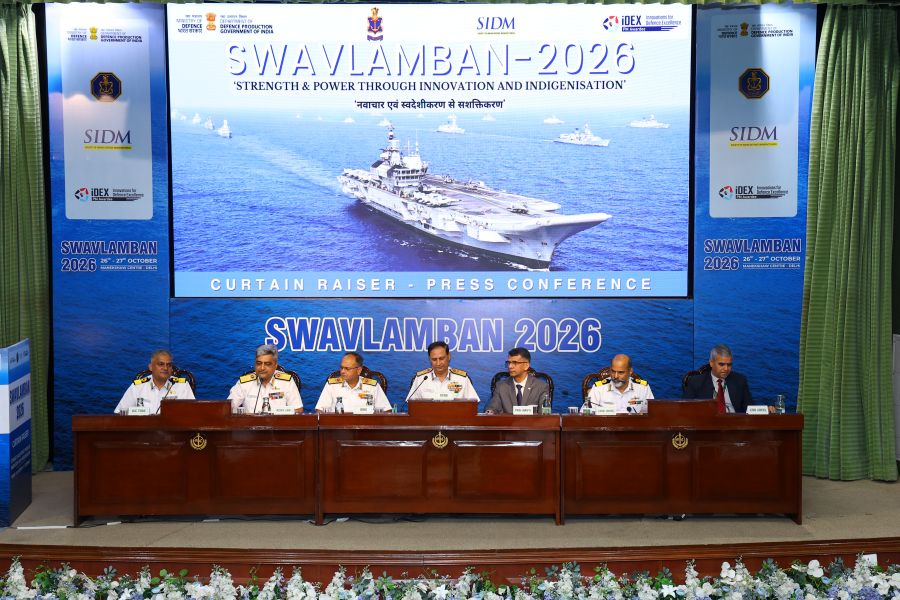
Addressing the fifth edition of SWAVLAMBAN, the Indian Navy’s Naval Innovation and Indigenisation Seminar, in New Delhi, Singh said the progress made over the past decade had laid the foundation for more ambitious technological goals. The next phase, he said, must deliver cost-effective, operationally superior, and globally competitive indigenous systems to pursue the vision of Viksit Bharat@2047.
Singh identified supply-chain security as a strategic imperative linked directly to national security, warning that dependence on imported raw materials, including rare earth elements, and technologies unavailable domestically could leave critical defence capabilities vulnerable to disruption.
He called for a time-bound roadmap for indigenisation, specifying the technologies to be developed, the industries responsible for innovation and the resources required. India must assess its buffer stocks and domestic production capacity in advance, rather than wait for a crisis to expose vulnerabilities, he said.
While some external dependencies would persist until viable alternatives or domestic sources became available, Singh stressed the need to prioritise critical items for indigenous development. He identified sustained investment in R&D as central to overcoming these constraints and expressed confidence in India’s ability to develop cutting-edge technologies.
The Defence Minister also highlighted the role of the Innovations for Defence Excellence (iDEX) initiative in enabling start-ups and micro, small and medium enterprises (MSMEs) to develop technologies previously sourced from abroad. More than 4,000 proposals have been received against 229 challenges issued by the Indian Navy, he said, reflecting growing industry interest in addressing operational requirements.
Naval contracts worth over Rs 1,900 crore awarded through these efforts demonstrate that the innovation ecosystem is delivering tangible results, Singh said. He called for greater attention to the remaining areas of import dependence, particularly Buyer Nominated Equipment, to advance the Navy’s indigenisation drive.
Chief of the Naval Staff Admiral Krishna Swaminathan said the Navy’s iDEX challenges had increased from 20 in 2022 to 229, accounting for about 35% of all challenges issued under the initiative across the defence sector. The Navy has received Acceptance of Necessity (AoN) for 41 cases worth more than Rs 3,500 crore, while 25 contracts valued at over Rs 1,900 crore have been signed, he said.
Swaminathan identified artificial intelligence, autonomous systems, robotics and quantum sensing as key areas of opportunity, stressing that promising innovations must translate into operational capabilities. He outlined five priorities for accelerating capability development: ideation, prototyping, testing, contracting and induction, and life-cycle support.
He called for closer collaboration among the Navy, industry, start-ups and MSMEs to speed up the development and induction of indigenous technologies.
Technology showcase
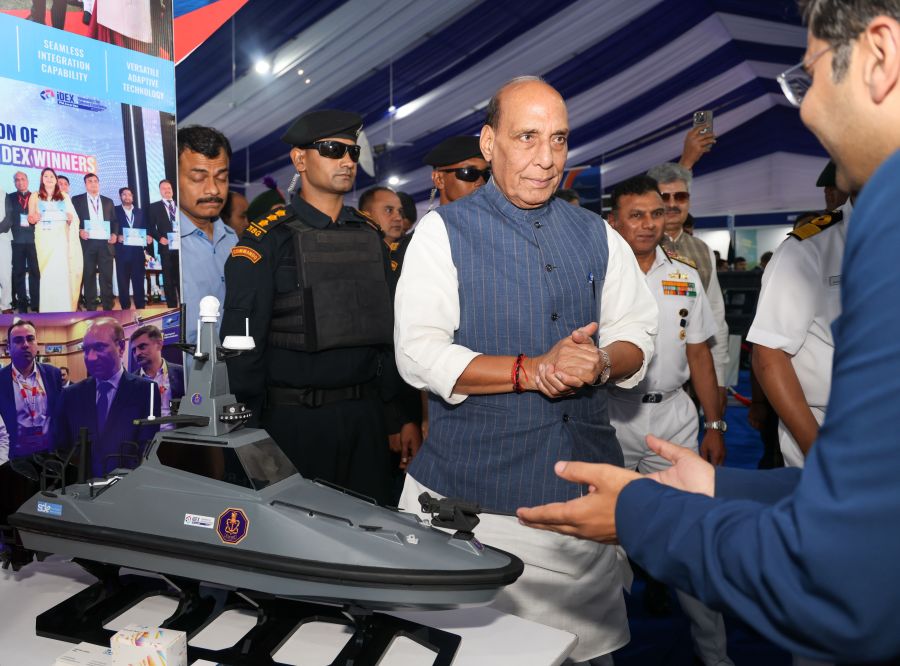
The seminar featured an exhibition with more than 100 stalls showcasing technologies developed by start-ups and MSMEs for naval applications. The displays covered autonomous maritime platforms, AI-enabled warfare, quantum technologies, persistent surveillance, resilient navigation, advanced communications and counter-drone systems.
A dedicated section highlighted products developed by Indian innovators that are progressing towards induction into the Navy, underscoring the effort to move beyond prototypes towards operational deployment.
The emphasis at SWAVLAMBAN 2026 was on converting the gains of the first phase of indigenisation into advanced technological capabilities, while reducing vulnerabilities in critical defence supply chains.
Ravi Shankar
Dr Ravi Shankar has over two decades of experience in communications, print journalism, electronic media, documentary film making and new media.
He makes regular appearances on national television news channels as a commentator and analyst on current and political affairs. Apart from being an acknowledged Journalist, he has been a passionate newsroom manager bringing a wide range of journalistic experience from past associations with India’s leading media conglomerates (Times of India group and India Today group) and had led global news-gathering operations at world’s biggest multimedia news agency- ANI-Reuters. He has covered Parliament extensively over the past several years. Widely traveled, he has covered several summits as part of media delegation accompanying the Indian President, Vice President, Prime Minister, External Affairs Minister and Finance Minister across Asia, Africa and Europe.