






India’s indigenous Air Independent Propulsion (AIP) system for the Indian Navy’s diesel-electric submarines reached a key milestone on Saturday with the inauguration of the Setting to Work Phase-2 (STW-2) activity for its energy module at Larsen & Toubro’s AM Naik Heavy Engineering Complex in Hazira.
Developed by the Defence Research and Development Organisation’s (DRDO) Naval Materials Research Laboratory (NMRL), the AIP system is designed to enhance the underwater endurance of conventional submarines by reducing their dependence on atmospheric oxygen. The technology is expected to extend their submerged endurance, strengthening the Navy’s underwater operational capabilities.
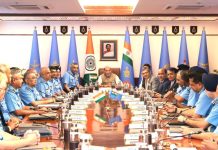
Defence Secretary and DRDO Chairman Rajesh Kumar Singh inaugurated the activity virtually. Vice Admiral B. Sivakumar, Chief of Materials of the Indian Navy, and Dr R. Balamuralikrishnan, Director General (Naval Systems and Materials), DRDO, attended the event at Hazira.
Addressing the occasion, Singh congratulated DRDO scientists and industry partners, describing the progress as the outcome of sustained scientific effort and industrial collaboration. He also acknowledged the Indian Navy’s support in testing and validating the system at successive stages of its development.
Singh stressed the need to advance the programme in line with the Navy’s planned induction timelines, while maintaining stringent safety standards, particularly given the challenges associated with hydrogen and fuel-cell technologies.
The next phase will involve energising the AIP energy module for power generation and subjecting it to rigorous testing in accordance with Indian Navy protocols. Following successful completion of the tests, the module is expected to be handed over to Mazagon Dock Shipbuilders Limited (MDL) for integration with a Kalvari-class submarine in early 2027.
The latest milestone marks progress in India’s efforts to develop critical submarine technologies domestically, bringing together DRDO’s research capabilities, industrial manufacturing expertise and the Navy’s operational requirements. The successful completion of the forthcoming tests will be crucial to moving the indigenous AIP system closer to its planned integration with the fleet.
Team BharatShakti