



Beijing’s protest against India’s standardisation of 28 place names in Ladakh follows its familiar territorial script. But its timing, amid renewed efforts to stabilise bilateral ties, suggests a political message that goes beyond cartography.
The diplomatic thaw between India and China has acquired many visible markers. Prime Minister Narendra Modi and President Xi Jinping have resumed high-level engagement. The Kailash Mansarovar pilgrimage has returned, direct flights have resumed, and border trade is being revived. Bilateral trade exceeds $100 billion annually. After years of confrontation, both governments appear willing to put their relationship on a more stable footing.
Yet one critical element remains conspicuously fragile: trust between the two militaries.
China’s latest objection to India’s decision to standardise the names of 28 geographical features in Ladakh brings that contradiction into sharp focus. Beijing has called the exercise “illegal and void”, reiterated that it does not recognise the Union Territory established in 2019, and asserted that the western sector of the India-China boundary belongs to China. New Delhi has firmly rejected the objections, maintaining that Ladakh is an integral and inalienable part of India.
The dispute is not really about place names. It is about sovereignty, competing territorial claims and Beijing’s unwillingness to accept India’s administrative authority over Ladakh. By challenging the standardisation of geographical names on official Indian maps, China is once again signalling that its claims remain active despite the broader diplomatic engagement.
The timing makes the objection more significant. At a moment when both sides are trying to stabilise relations, Beijing has chosen to reopen a politically sensitive question that should not prevent practical progress on the boundary. Its protest follows an established pattern of rejecting India’s administrative decisions in territories it claims, including parts of the wider Jammu and Kashmir region.
There is no conclusive evidence that the move was designed to send a message to Pakistan. But Beijing’s strategic partnership with Islamabad is an important part of the regional context. China has consistently supported Pakistan’s military modernisation, and its territorial differences with India overlap with a wider strategic contest in which Pakistan remains a significant partner. The latest protest could therefore also serve to reassure Islamabad that rapprochement with New Delhi does not mean Beijing is abandoning its established positions.
The more consequential question, however, is whether China’s diplomatic outreach signals a genuine change in its strategic approach to India.
Normalisation without military trust
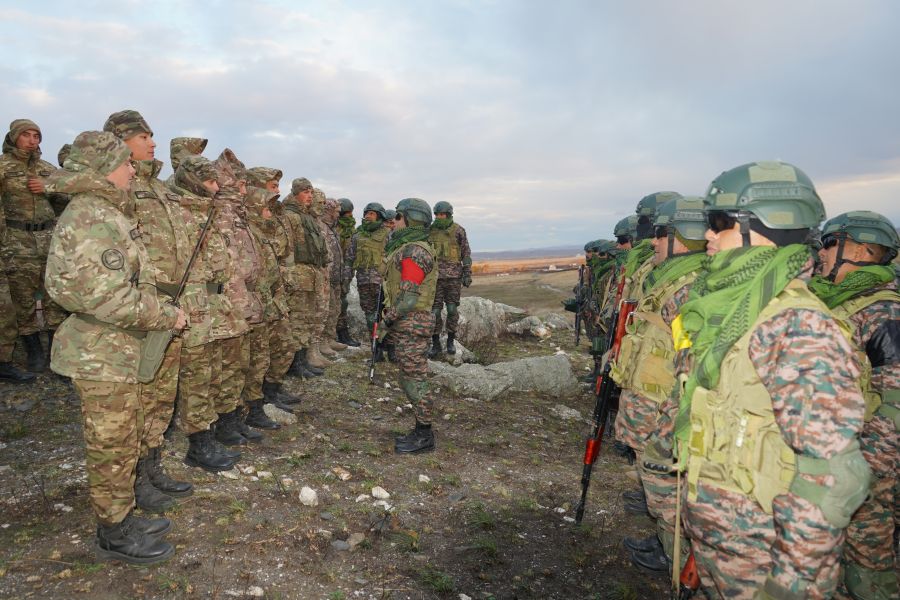
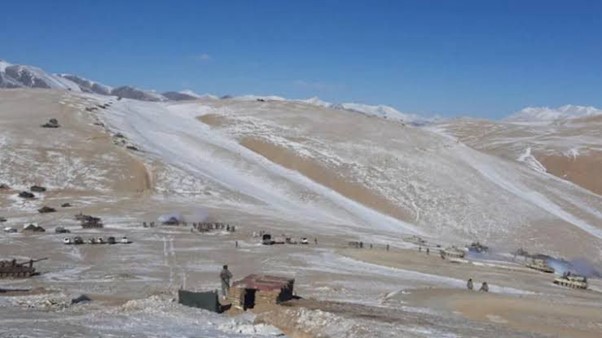
The contrast between political engagement and military mistrust is difficult to ignore. The 2020 confrontation in eastern Ladakh fundamentally altered India’s assessment of China. The military disengagement process and subsequent diplomatic initiatives have helped reduce tensions, but they have not resolved the boundary dispute or removed the risk of fresh confrontation.
In August 2026, National Security Adviser Ajit Doval and Chinese Foreign Minister Wang Yi, who serve as their countries’ special representatives on the boundary question, agreed to establish two additional military hotlines and two new meeting points for senior commanders. They also committed to pursuing early and substantial progress on boundary delimitation and border management. These are useful steps, but their very necessity illustrates the communication deficit that continues to shadow the relationship.
The reported stand-off at Taksing in Arunachal Pradesh offers a further reminder that tensions can resurface even while negotiations continue. Two armies deployed along a disputed Himalayan frontier cannot rely on political assurances alone. They need reliable communication, predictable protocols and the ability to clarify intentions before local incidents escalate.
The central problem is that diplomatic normalisation can be advanced through decisions taken in national capitals; military trust has to be built through repeated, verifiable conduct on the ground. Resumed flights and pilgrimages are welcome developments, but they cannot substitute for transparent border management or a credible settlement process.
India must measure the thaw by results
India was right to reject China’s objection unequivocally. External Affairs Ministry spokesperson Randhir Jaiswal reiterated that no amount of denial by Beijing could change Ladakh’s status as an integral and inalienable part of India. He also explained that the standardisation exercise was conducted in consultation with the Union Territory administration and local stakeholders.
The decision concerns the consistent identification of geographical features on official Indian maps. It does not require Chinese approval. Former External Affairs Minister Shashi Tharoor captured the essential principle when he said that Ladakh was an inseparable part of India and that no other country had the locus standi to challenge that position.
But a firm diplomatic rebuttal is only the immediate response. The larger test is whether China is prepared to translate its stated commitment to stable relations into measurable progress on the boundary, effective military communication and restraint in advancing its claims.
Ravi Shankar

Dr Ravi Shankar has over two decades of experience in communications, print journalism, electronic media, documentary film making and new media.
He makes regular appearances on national television news channels as a commentator and analyst on current and political affairs. Apart from being an acknowledged Journalist, he has been a passionate newsroom manager bringing a wide range of journalistic experience from past associations with India’s leading media conglomerates (Times of India group and India Today group) and had led global news-gathering operations at world’s biggest multimedia news agency- ANI-Reuters. He has covered Parliament extensively over the past several years. Widely traveled, he has covered several summits as part of media delegation accompanying the Indian President, Vice President, Prime Minister, External Affairs Minister and Finance Minister across Asia, Africa and Europe.