



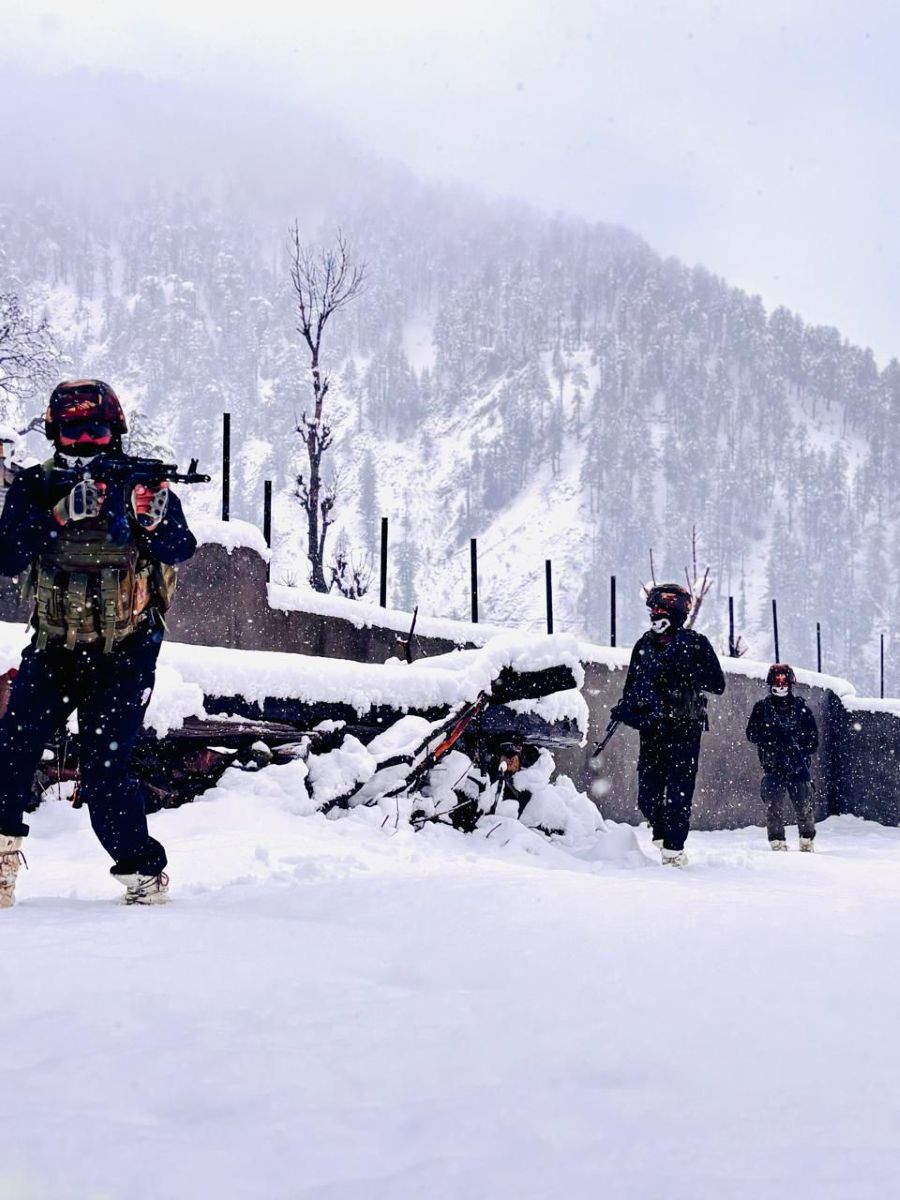
The Indian Army has intensified winter counter-terrorism operations in the Kishtwar and Doda districts of Jammu and Kashmir to track down Pakistani terrorists believed to be hiding in snowbound areas during the ongoing 40-day Chillai Kalan period, Army sources said.
Despite sub-zero temperatures and heavy snowfall, Army units have expanded patrols and set up temporary bases in higher reaches to deny terrorists sanctuary.
Traditionally, the onset of Chillai Kalan, the harshest phase of winter in Kashmir, spans from December 21 to January 31. This period usually sees a temporary lull in terrorist activities as heavy snowfall closes communication routes and isolates mountain regions.
However, this winter has brought a significant change in the operational approach of the Indian Army and other security forces. Rather than scaling back their operations, sources indicate that the Army has adopted a proactive winter posture. They have established temporary bases and surveillance posts deep within snow-covered areas to maintain consistent pressure on potential terrorist hideouts.
Security agencies estimate that 30–35 Pakistani terrorists are currently active in the Jammu region, many of whom are believed to have shifted deeper into uninhabited mountain terrain to avoid detection. Reports also indicate attempts by these groups to coerce villagers for food and shelter, though local support has sharply declined, sources said.
According to Army sources, the ongoing winter operations are being conducted jointly with the Jammu and Kashmir Police, CRPF, Special Operations Group, Forest Guards and Village Defence Guards, ensuring quicker intelligence sharing and coordinated action. Surveillance drones, thermal imaging and ground sensors are also being deployed as force multipliers to detect movement in hostile terrain.
The Army’s focus this winter is to neutralise remaining terrorist pockets while confining infiltrators to inaccessible high-altitude zones, thereby disrupting their logistics and communications. Commanders are also reviewing deployment and patrol grids regularly to keep operations flexible and responsive to changing ground conditions, sources said.
Army sources emphasised that the current approach follows a doctrinal cycle of “surveillance–swift operations–return to surveillance,” aimed at preventing regrouping or fresh infiltration. The extended winter presence, they added, sends a clear signal that harsh weather will not offer safe haven to Pakistan-sponsored terrorists operating in the region.
Team BharatShakti