


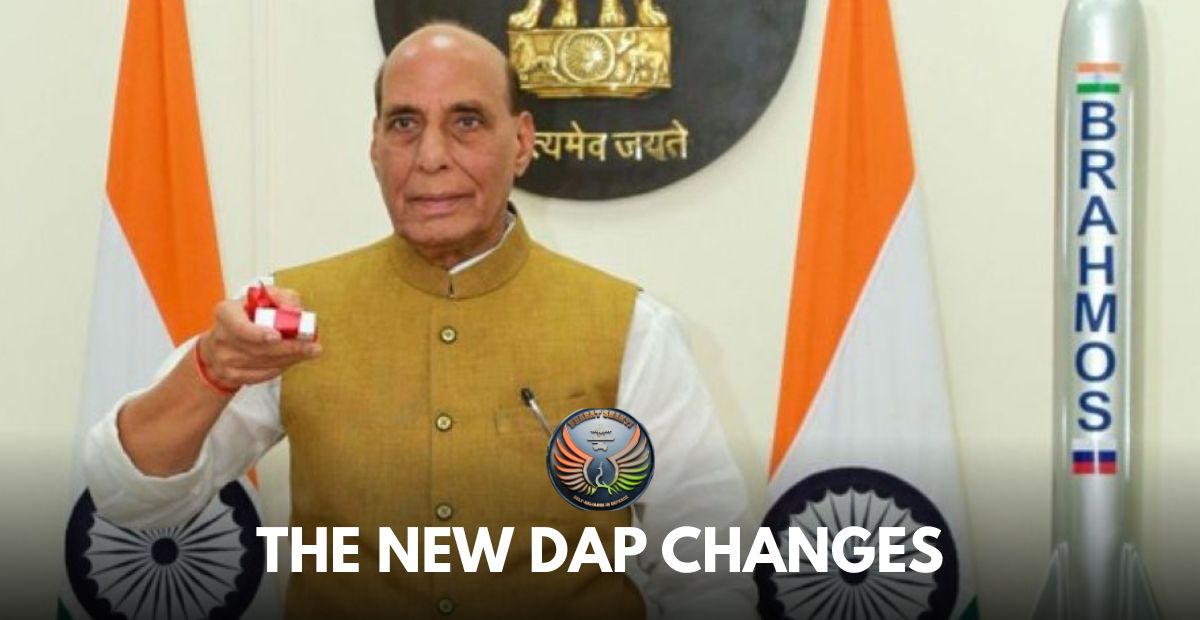
The much-awaited amendments to the Defence Acquisition Procedure (DAP), 2020, are in their final stages of review and are likely to be made public in a draft form soon for different stakeholders to react, comment and suggest changes, according to indications available from sources in the Ministry of Defence (MoD).
In a decision that will please Indian domestic manufacturers, the MoD is unlikely to allow wholly owned Indian subsidiaries of foreign OEMs (Original Equipment Manufacturers) to be treated as Indian companies, at least for the time being.
Last released in 2020, the new version is likely to have only three procurement categories: Buy (Indian-IDDM), Buy and Make (Indian) and Buy Global (Manufacture in India). In the DAP 2020, there are five different categories for procurement.
Another important change is likely to be the decision to amend the no-cost, no-commitment (NCNC) trials procedure. So far, those vendors who cleared the trials and got shortlisted but did not necessarily win the contract had to bear substantial expenditure to participate in the stringent tests. Now, there is a likelihood of the MoD reimbursing the cost of participation in the trials to those who pass the test and get shortlisted before commercial bids are opened, reducing the financial burden on the companies.
One more proposal that might help the industry in the long run is to have variable pricing clauses in long-term contracts. So far, once a contract is signed, companies have had to supply platforms and equipment at a fixed cost throughout the period of supply, irrespective of escalation in the cost of materials or production. There is a suggestion, therefore, to factor in rising inflation with a fixed ceiling in long-term contracts to give space for better financial planning to the companies.
No one is sure whether the upcoming DAP manual will be as thick as the earlier ones, but introducing greater flexibility and ease of doing business is the main principle on which this document will be based, the sources added. There will be more features (squeezing the timelines from AoN to contract signing, simplified testing and trial procedures, stricter adherence to delivery deadlines, and stricter penalties for non-delivery within a contracted deadline, for instance), among other changes, it is learnt.
Provisions of EP (Emergency procurement), adopted post-2020 (the 6th iteration is currently in progress), will likely be a permanent feature in the DAP, under what is called Fast Track Procedure, letting Service HQs buy what is of immediate need within a specified financial limit. Although the Fast Track Procedure is available under the current DAP, it requires the Defence Minister’s nod in each case.
There is also a proposal to provide flexibility in furnishing bank guarantees by Indian companies and to allow Service HQs to buy a limited quantity of certain equipment/platforms from Indian vendors, with the provision that more orders will be placed if the company can demonstrate the ability to carry out spiral development within a specified time. These provisions are likely to be based on an assumption that there will be a mindset change among procurement professionals since the services are now sourcing more and more from domestic companies and therefore need to do initial hand-holding for these companies.
Overall, the defence sector is likely to grow at a much faster pace as India navigates the global churn and faces an uncertain future, located as it is in a highly volatile region. A 20 per cent increase in the capital expenditure (new acquisitions) budget has been demanded by the MoD in the upcoming Union budget, mainly to cater to the increased needs of the Indian Air Force (IAF). If that comes through, Indian defence manufacturers can hope to become an important part of the supply chains of defence majors, who will be mandated to have a larger Indian presence in the coming years.
Nitin A. Gokhale

Author, thought leader and one of South Asia's leading strategic analysts, Nitin A. Gokhale has forty years of rich and varied experience behind him as a conflict reporter, Editor, author and now a media entrepreneur who owns and curates two important digital platforms, BharatShakti.in and StratNewsGlobal.com focusing on national security, strategic affairs and foreign policy matters.
At the beginning of his long and distinguished career, Gokhale has lived and reported from India’s North-east for 23 years, writing and analysing various insurgencies in the region, been on the ground at Kargil in the summer of 1999 during the India-Pakistan war, and also brought live reports from Sri Lanka’s Eelam War IV between 2006-2009.
Author of over a dozen books on wars, insurgencies and conflicts, Gokhale relocated to Delhi in 2006, was Security and Strategic Affairs Editor at NDTV, a leading Indian broadcaster for nine years, before launching in 2015 his own digital properties.
An alumni of the Asia-Pacific Centre for Security Studies in Hawaii, Gokhale now writes, lectures and analyses security and strategic matters in Indo-Pacific and travels regularly to US, Europe, South and South-East Asia to speak at various international seminars and conferences.
Gokhale also teaches at India’s Defence Services Staff College (DSSC), the three war colleges, India's National Defence College, College of Defence Management and the intelligence schools of both the R&AW and Intelligence Bureau.
He tweets at @nitingokhale