


Against the backdrop of rising global tensions, regional wars, and strategic realignments, the 56th edition of the Paris Air Show has become a showcase for two emerging aerospace powerhouses: India and China. Both nations have arrived with assertive military displays, reflecting their growing ambitions and battlefield-tested capabilities. Conspicuously absent, however, is Israel — barred from participating for the second consecutive year, a move that has reignited debate over politics in European defence forums.
A Historic Stage, Now Geopolitically Charged
First held in 1909 and now organised biennially at the iconic Le Bourget Airport since 1949, the Paris Air Show has long served as the global epicentre for aerospace innovation and commerce — a venue where multi-billion-dollar commercial aviation deals are struck, and next-generation defence technologies are unveiled.
But this year’s edition departs from the usual tone of commercial optimism. Instead, it is shaped by harsh geopolitical realities: the Air India Dreamliner crash — India’s deadliest aviation disaster in recent memory — has cast a pall over civil aviation, while fresh missile exchanges between Israel and Iran have renewed anxieties about airspace security and long-range strike capabilities.
India’s Post-Sindoor Assertion: From Buyer to Battlefield Prover
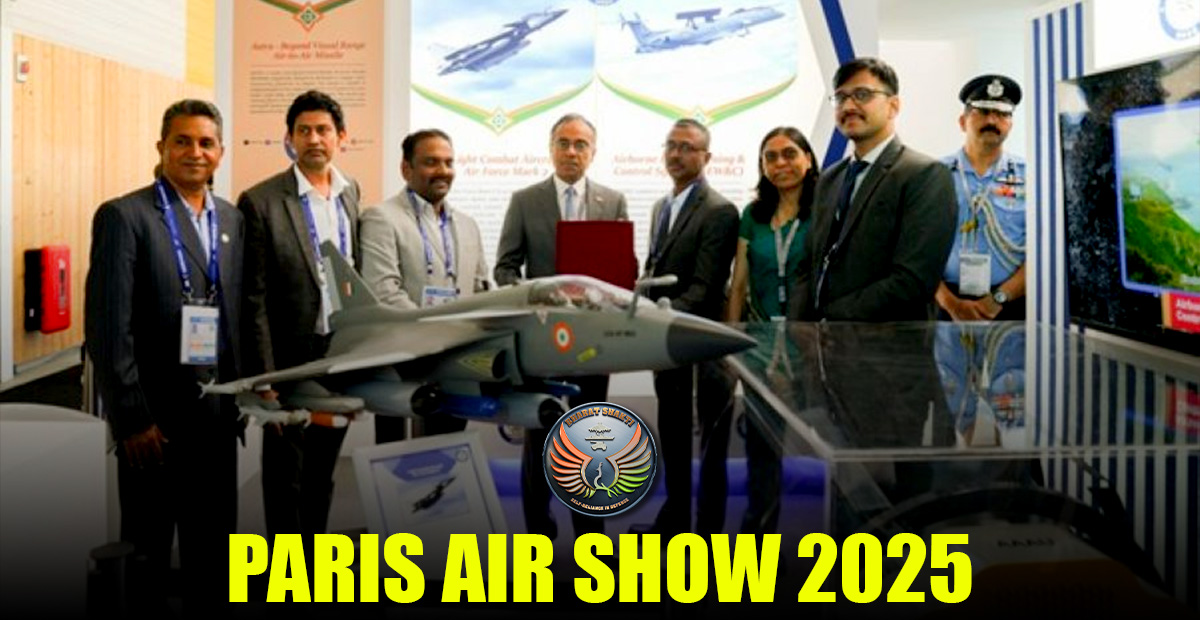
India’s presence at Le Bourget this year is both assertive and symbolic, arriving on the heels of Operation Sindoor — a limited but strategically significant cross-border military operation conducted earlier this year. For the first time, systems directly deployed during the mission are being showcased internationally.
Spearheaded by the Defence Research and Development Organisation (DRDO), India is exhibiting:
- LCA Tejas Mark II: An upgraded multirole fighter with canards, enhanced radar, and extended strike range — positioned for exports and rivalling the Chinese J-10 and Swedish Gripen.
- Astra BVRAAM: India’s first indigenous beyond-visual-range missile, now combat-proven, capable of engaging aerial threats at distances exceeding 100 km.
- Swathi Weapon Locating Radar: Deployed during Sindoor to detect hostile artillery in real-time and facilitate precise counterattacks.
- Helina Missile: A high-altitude, air-launched anti-tank missile that demonstrated strong performance against fortified targets.
- AEW&C “Netra”: India’s indigenous airborne early warning platform, pivotal in securing real-time situational awareness during operations.
India’s showcase highlights its larger strategic objectives: advancing defence exports, deepening aerospace ties with France, and promoting self-reliance under the Aatmanirbhar Bharat initiative.
China’s Strategic Posture: From Participant to Power Player
Facing India across the tarmac is China, whose state-run AVIC (Aviation Industry Corporation of China) is pushing a different but equally ambitious narrative — one of global reach and technical equivalence.
The headline is the international debut of the J-35A, a stealthy, carrier-capable 5th-generation fighter jet seen as a lower-cost alternative to the U.S. F-35. Alongside the J-10CE multirole fighter, AVIC is also promoting the “20 Series” of next-generation aircraft and munitions, including:
- PL-15E: A long-range air-to-air missile with advanced electronic counter-countermeasures.
- PL-10E: A short-range, highly manoeuvrable missile designed for close aerial combat.
China’s offerings signal its growing ambition to challenge U.S. and European dominance in the global arms market, especially in Africa, Southeast Asia, and Latin America.
Israel’s Absence: A Political Statement
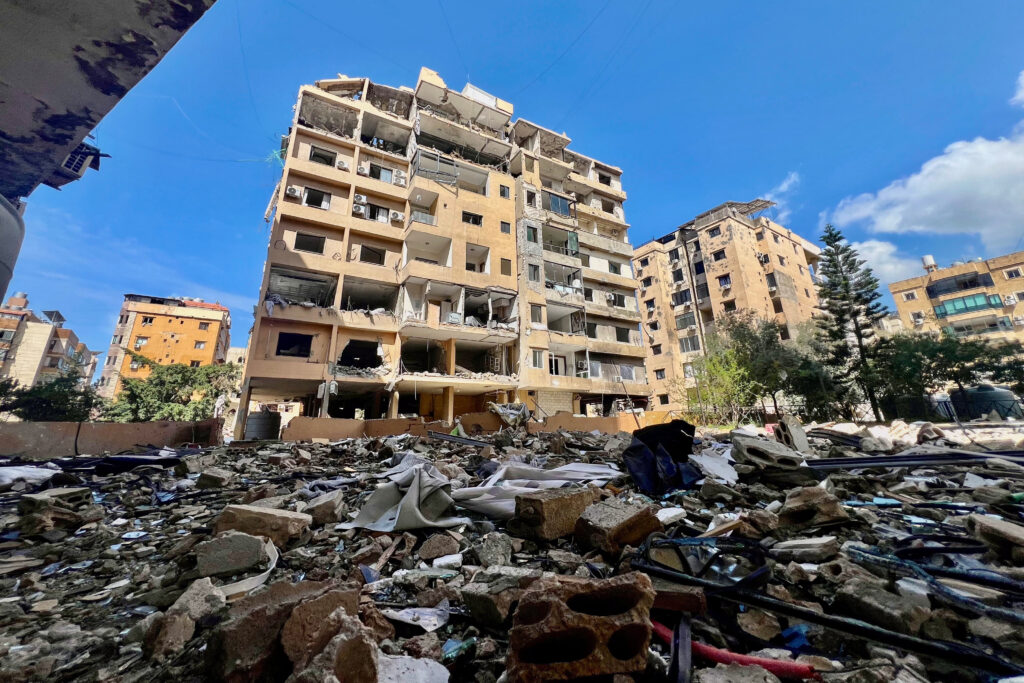
Despite being a regular and well-regarded participant, Israel has again been barred from exhibiting — a pointed decision amid intensifying criticism of its military operations in Gaza and southern Lebanon.
“Excluding Israel from the world’s largest defence expo for two consecutive editions is no coincidence — it’s a geopolitical message,” noted a Paris-based strategic affairs analyst. Israeli defence majors such as Elbit Systems and Rafael had submitted full proposals well in advance, only to be denied entry.
Beyond Deals and Demos: A More Serious Tone
This year’s Paris Air Show unfolds under a cloud of uncertainty. While major civil aviation players like Airbus are finalizing deals — including a rumoured 47-aircraft sale to LOT Polish Airlines — others like Boeing are maintaining a low profile amid fallout from the India crash.
More broadly, defence discussions now dominate the event. In clandestine discussions, governments and corporations are intensely exploring advanced military technologies, including the integration of artificial intelligence within combat systems, the deployment of autonomous drone swarms, and the development of comprehensive air and missile defence solutions. Additionally, they are examining the implications of militarizing space assets, highlighting a critical shift towards cutting-edge innovations in modern warfare.
The emergence of India and China as credible defence exporters is shaking up traditional market dynamics, especially in the Global South, where buyers are increasingly looking eastward for cost-effective and combat-validated systems.
Huma Siddiqui