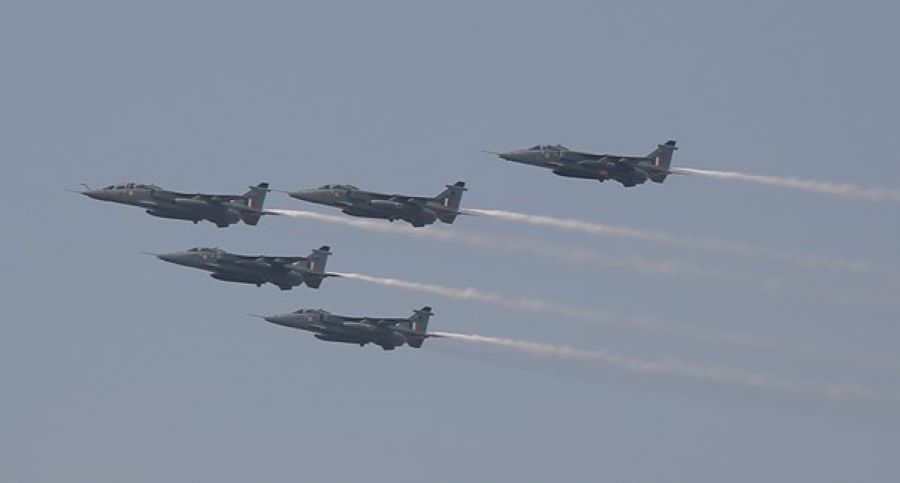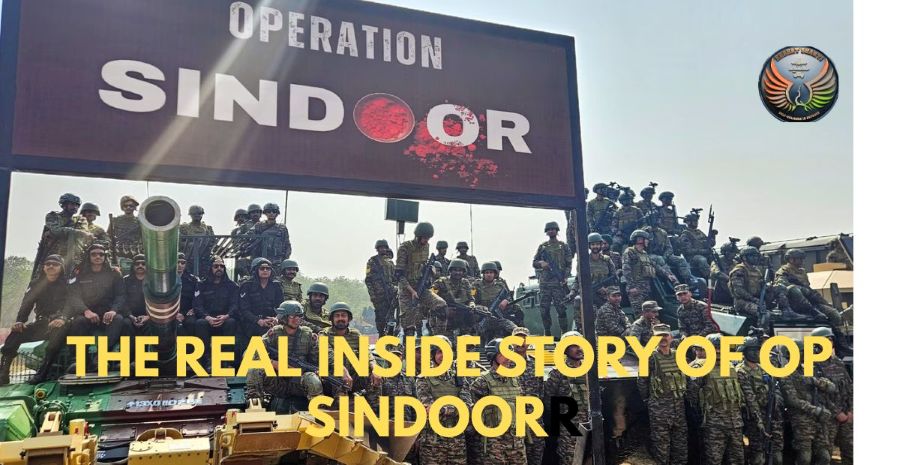
This week is bound to witness a spate of television and YouTube debates, articles and social media posts about Operation Sindoor, the Indian strikes against Pakistan last summer.
India’s action has generated considerable global attention and has altered diplomatic and political equations. Most of the tactical military moves are now well known through numerous articles and books.
What remains less understood, however, is the thinking behind the planning and execution of Operation Sindoor. This article attempts to piece together the behind-the-scenes logic, including the built-in escalation control and dominance India factored in, alongside the inevitable early losses that accompany any pre-emptive strike.
Over the past few months, I have engaged with planners and members of the strategic and military leadership to understand the design and rationale behind Operation Sindoor. What were India’s strategic objectives? Were they achieved? How were targets selected, and were all of them successfully hit?
Based on the details now available, Operation Sindoor was a complex counter-terrorism operation conducted with conventional forces.
First, the political objective: the elimination of nine selected targets—two in Pakistan’s Punjab hinterland and seven close to the Line of Control (LoC) and International Border (IB). Achieving this required the coordinated application of military resources to ensure surprise, striking distant targets by air and proximate ones through ground forces.
The planners were acutely aware of the complexity. Striking terror infrastructure within Pakistan meant anticipating and war-gaming its response—both immediate and delayed.
In conventional wars, especially those involving air power, the initial aim is often to establish air superiority, a time-consuming and attritional process. In the Gulf War, for instance, US forces took over 30 days to dominate the skies. Even then, Iraq managed to generate 30–40 sorties daily.
Similarly, in Operation Midnight Hammer, US B-2 bombers’ strikes on Iran’s nuclear facilities were preceded by over ten days of Israeli operations degrading Iranian air defences, following earlier missions in April and October 2024.
In the India–Pakistan context, the target landscape comprised terror complexes supported by the Pakistani military. Despite this, India maintained its core objective: the elimination of specific terror targets.
Unlike prolonged campaigns such as Desert Storm or conflicts in Afghanistan, Iraq or Vietnam, Operation Sindoor was not intended to stretch over time. Moreover, unlike those wars, India faced a conventionally stronger Pakistani military backing the terrorists.
As military analyst John Spencer observed, “In an era defined by endless cycles of violence without strategic direction, Operation Sindoor stands apart. It offers a model of limited war with clearly defined ends and a state that never relinquished the initiative.”
A key decision by India’s strategic leadership was to avoid prolonged conflict while achieving political objectives. Built-in exit ramps at every stage were designed to prevent mission creep, even if Pakistan chose to escalate.
As events unfolded, Pakistan did not take these exit ramps until its response was effectively silenced on May 10 through a crippling Indian Air Force strike. The IAF neutralised sortie generation capabilities across 11 Pakistani airfields—an unprecedented achievement in such a short span.
Spencer noted again, “India absorbed the blow (possible loss of aircraft), defined its objective and achieved it within a contained timeframe. The use of force was overwhelming yet controlled—precise, decisive, and without hesitation.”
At the planning stage itself, Indian military leadership had accepted the likelihood of early losses. Despite what transpired in the opening hours, decision-makers remained unfazed and proceeded as planned. The primary objective remained clear: impose a cost on the perpetrators of the Pahalgam terror attack through swift, sharp and precise action.
Crucially, the political leadership articulated the aim, strategy and execution framework from the outset.
Prime Minister Narendra Modi’s willingness to take high political risks and his clarity of purpose in crisis situations marked a departure from responses to previous major Pakistani terror attacks this century.
His directive enabled National Security Advisor Ajit Doval, Chief of Defence Staff General Anil Chauhan and the service chiefs—Admiral Dinesh K. Tripathi, General Upendra Dwivedi and Air Chief Marshal A.P. Singh—to devise an operational plan short of full-scale war. The objective: retribution, deterrence and a clear signal of zero tolerance for cross-border terrorism. The hybrid nature of the operation, combining conventional and sub-conventional elements, was a notable innovation.
Planning began immediately after the Pahalgam massacre. Targets were identified, resources allocated, and weapon-target matching completed. The escalation ladder was also carefully mapped.
Level I: Pakistan’s initial counter-strike would be met with a demonstrative Indian response. This phase played out until May 8.
Level II: Drone and loitering munition attacks by Pakistan would trigger calibrated Indian strikes of greater intensity using long-range vectors, including BrahMos missiles and air power. It unfolded on May 9–10.
Level III: Continued escalation would have led to limited ground offensives and naval posturing.
Level IV: Further escalation would have triggered intensified strikes, including naval action against Karachi and other assets.
Pakistan halted at Level II.
Operation Sindoor thus achieved three key objectives: retribution, destruction of nine terror camps—including two deep inside Pakistan—and compelling Pakistan to respond on behalf of terrorist groups, thereby exposing the nexus between its military and these organisations.
As one senior official noted, future retaliatory operations could involve striking fused targets, simplifying planning and execution.
The intensity of IAF strikes on May 9–10 effectively grounded the Pakistani Air Force, leaving its airfields vulnerable. Indian forces then rapidly locked out 11 airfields within minutes.
These strikes forced the Pakistani military to seek external intervention and pursue a ceasefire.
Two broader outcomes merit attention. First, India’s objectives were clear: a counter-terrorist operation using calibrated force. Second, Pakistan’s response effectively defended terrorist entities, reinforcing the perception of institutional linkage.
Recent reports suggest Pakistan is relocating terrorist infrastructure closer to military cantonments and LoC positions. Groups such as Jaish-e-Mohammad and Hizbul Mujahideen are reportedly shifting towards the tribal areas near Afghanistan.
There are also reports of financial support for rebuilding terror hubs such as Muridke. These developments underscore the deep entrenchment of radicalism within Pakistan’s security ecosystem.
As one Jaish-e-Mohammad commander reportedly stated, “after 25 years, we have brought the state, army, air force and navy towards jihadi ideology.”
As Operation Sindoor approaches its first anniversary, its deterrent effect on both Pakistan’s military and terror groups remains evident, despite shifting geopolitical perceptions.
Nitin A. Gokhale

Author, thought leader and one of South Asia's leading strategic analysts, Nitin A. Gokhale has forty years of rich and varied experience behind him as a conflict reporter, Editor, author and now a media entrepreneur who owns and curates two important digital platforms, BharatShakti.in and StratNewsGlobal.com focusing on national security, strategic affairs and foreign policy matters.
At the beginning of his long and distinguished career, Gokhale has lived and reported from India’s North-east for 23 years, writing and analysing various insurgencies in the region, been on the ground at Kargil in the summer of 1999 during the India-Pakistan war, and also brought live reports from Sri Lanka’s Eelam War IV between 2006-2009.
Author of over a dozen books on wars, insurgencies and conflicts, Gokhale relocated to Delhi in 2006, was Security and Strategic Affairs Editor at NDTV, a leading Indian broadcaster for nine years, before launching in 2015 his own digital properties.
An alumni of the Asia-Pacific Centre for Security Studies in Hawaii, Gokhale now writes, lectures and analyses security and strategic matters in Indo-Pacific and travels regularly to US, Europe, South and South-East Asia to speak at various international seminars and conferences.
Gokhale also teaches at India’s Defence Services Staff College (DSSC), the three war colleges, India's National Defence College, College of Defence Management and the intelligence schools of both the R&AW and Intelligence Bureau.
He tweets at @nitingokhale