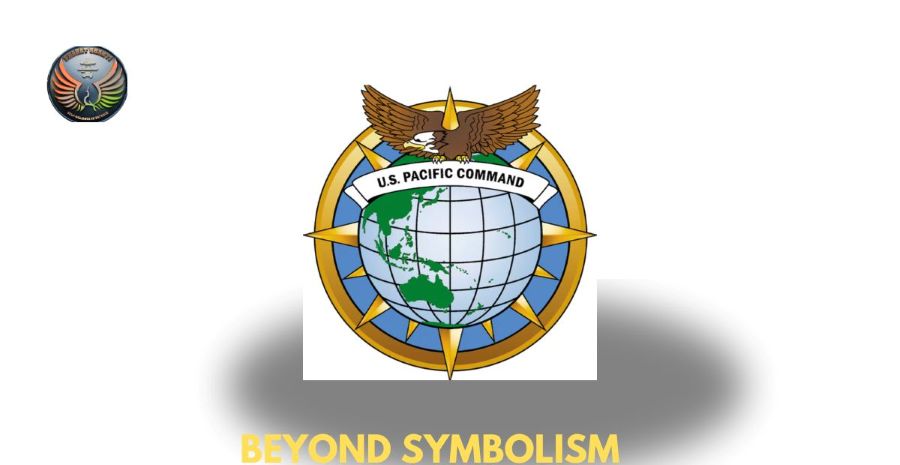
The Pentagon’s decision to restore the name Pacific Command (PACOM), replacing the 2018 Indo-Pacific Command designation, has reopened a debate in India over New Delhi’s future in American strategy toward Asia and the evolving role of the Quad.
The Pacific Command maintained that the change is largely symbolic.
“The command’s fundamental mission and its unwavering commitment to maintaining a free and open theatre alongside regional allies and partners are unchanged,” the Pentagon said, emphasising that the command’s area of responsibility still stretches “to the western border of India”.
However, in strategic circles in India, symbolism is significant, as it often indicates shifting political priorities.
Rear Admiral Monty Khanna (Retd), a member of the National Security Advisory Board (NSAB), believes the move does not alter military geography but may reveal a shift in emphasis.
“The US has not changed the boundaries of the command, only its name,” he said, noting that US Defence Secretary Pete Hegseth has increasingly used the expression “Asia-Pacific” in recent remarks. According to Khanna, the absence of any announced date for a Quad summit this year suggests that the grouping may currently be “on the back burner”.
Khanna argues that Washington’s adoption of the Indo-Pacific construct was partly aimed at drawing India deeper into strategic competition in the western Pacific.
“From the US perspective, it was useful to involve India in the western Pacific theatre,” he said.
For Brigadier Arun Sahgal (Retd) of the Forum for Strategic Initiatives, a Delhi-based military-strategic affairs think tank, the renaming reflects less a downgrading of India and more a recognition of America’s current military limitations.
“Nothing operationally has changed, but the Americans are signalling that their capacity to sustain military commitments beyond the Malacca Strait is constrained,” he said. In his assessment, Washington’s immediate focus has narrowed to managing tensions closer to the South China Sea rather than projecting power across the wider Indo-Pacific space.
Sahgal cautions against assuming that India ever intended the Quad to become a military alliance. New Delhi viewed the grouping largely as a platform for technology cooperation, supply-chain resilience and economic partnerships, while remaining reluctant to play an operational role in contingencies involving Taiwan or the western Pacific.
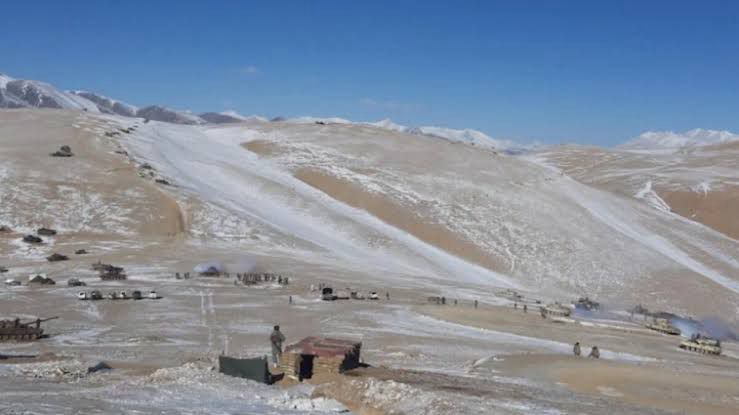
At the same time, he notes that India has benefited from American intelligence support in the past, including tracking Chinese submarine activity in the Indian Ocean Region (IOR) and sharing information during the 2020 eastern Ladakh crisis. Existing arrangements under the US’s CISMOA (Communication Interoperability and Security Memorandum of Agreement) or the SOSA (Security of Supply Arrangement) with India, including secure communications agreements, continue to facilitate interoperability. However, analysts say it remains to be seen whether such cooperation will retain the same priority.
For India, the episode serves as a reminder that crises in the Middle East, Europe and East Asia increasingly stretch US strategic attention. While bilateral defence ties remain robust, Indian analysts say New Delhi cannot assume that Washington will always possess either the political bandwidth or military capacity to support Indian security interests in a future contingency.
The decision to return to PACOM may not necessarily mean abandoning India, but rather recognising the limits of American power. However, as China continues to expand its presence in the Indian Ocean, even symbolic adjustments in Washington’s lexicon will likely be closely monitored in New Delhi.
Ravi Shankar
Dr Ravi Shankar has over two decades of experience in communications, print journalism, electronic media, documentary film making and new media.
He makes regular appearances on national television news channels as a commentator and analyst on current and political affairs. Apart from being an acknowledged Journalist, he has been a passionate newsroom manager bringing a wide range of journalistic experience from past associations with India’s leading media conglomerates (Times of India group and India Today group) and had led global news-gathering operations at world’s biggest multimedia news agency- ANI-Reuters. He has covered Parliament extensively over the past several years. Widely traveled, he has covered several summits as part of media delegation accompanying the Indian President, Vice President, Prime Minister, External Affairs Minister and Finance Minister across Asia, Africa and Europe.