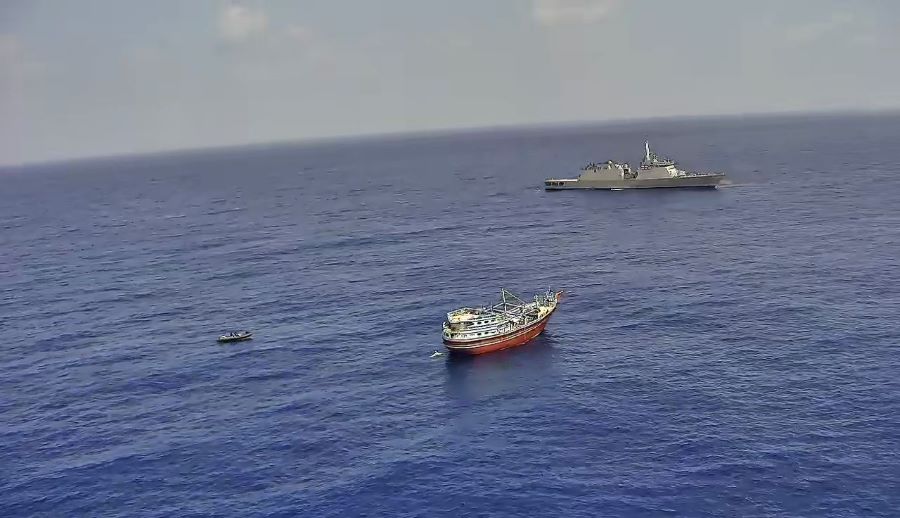



For the first time, the US military has used unmanned surface vessels, better known as sea drones, in combat, striking Iran’s Bandar Abbas Naval Base in the Strait of Hormuz. According to US Central Command (CENTCOM), the drones targeted a submarine and ship maintenance facility, signalling that autonomous maritime systems are no longer experimental platforms but operational weapons.
The strike may appear tactical. Its implications are strategic.
It marks the arrival of a new phase in naval warfare, in which inexpensive autonomous platforms are increasingly taking on missions once reserved for expensive warships and manned forces.
What are sea drones?
Sea drones, or Unmanned Surface Vessels (USVs), are small boats that operate without sailors on board.
They can be remotely controlled or navigate autonomously using onboard sensors and artificial intelligence. Traditionally, they have been employed for surveillance, reconnaissance, intelligence gathering, mine countermeasures, logistics and search-and-rescue missions.
Unlike destroyers or frigates, sea drones are not designed to dominate the seas independently. Instead, they work alongside conventional naval assets, extending surveillance, improving situational awareness and reducing risks to personnel.
Increasingly, however, they are being armed for strike missions.
Why is the US move significant?
The United States has experimented with unmanned vessels for years. It had even deployed one during a rescue mission in the Middle East earlier this year.
But the strike on Iran represents the first time the US has used sea drones as offensive weapons in combat.
Military analysts say the importance lies less in the platform itself and more in what it represents.
It shows that autonomous maritime systems have moved from testing grounds into mainstream military planning. The transition from surveillance to rescue, and now to strike, missions demonstrates the growing confidence of the US military in deploying autonomous systems in real operations.
Lessons from Ukraine
The US is not the pioneer in the combat use of sea drones.
Ukraine has transformed maritime warfare by repeatedly employing explosive-laden sea drones against Russia’s Black Sea Fleet since 2022. These relatively inexpensive platforms have damaged or destroyed several Russian warships and forced Moscow to alter its naval deployments.
Ukraine has even adapted some sea drones into unmanned “motherships” capable of launching aerial drones.
Many defence experts believe Washington has closely studied Ukraine’s experience.
The US combat deployment effectively validates the battlefield success of autonomous naval systems and suggests that conflicts could witness far greater use of such platforms.
Meet the Corsair
The drones used in the attack were Corsair autonomous surface vessels developed by Texas-based defence company Saronic Technologies.
The 7.3-metre vessel can carry payloads of up to 454 kilograms, travel over 1,000 nautical miles and achieve speeds exceeding 35 knots. Its modular design allows commanders to adapt the same platform to different missions rather than developing specialised vessels for every operational requirement.
Perhaps equally significant is production.
Saronic says it can manufacture thousands of Corsair vessels annually, reflecting the Pentagon’s strategy of deploying autonomous systems at scale rather than relying on a handful of sophisticated platforms.
Are sea drones replacing warships?
Not yet.
Sea drones cannot escort commercial shipping, establish sea control, provide humanitarian assistance or project naval power over long distances. Conventional warships remain indispensable for these missions.
But sea drones are changing the economics of naval warfare.
Instead of risking billion-dollar warships and their crews, navies can send expendable autonomous vessels into dangerous waters. They can conduct reconnaissance, deceive enemy sensors, attack lightly defended targets or absorb enemy fire at a fraction of the cost.
They also allow commanders to deploy many more platforms simultaneously, creating a more dispersed and resilient force.
The concept mirrors what drones have already done on land and in the air, expanding combat capability while reducing costs and risks.
What does it mean for India?
The US strike reinforces a lesson already emerging from the Russia-Ukraine conflict – autonomy is becoming central to future warfare.
For India, with its vast coastline and expanding responsibilities in the Indian Ocean Region, unmanned maritime systems could become an important force multiplier.
Sea drones can undertake persistent surveillance, protect offshore infrastructure, monitor chokepoints, support anti-submarine operations, and complement crewed naval assets during high-risk missions.
As regional competition intensifies, particularly with China’s rapid expansion of unmanned naval capabilities, investment in indigenous autonomous maritime systems is likely to become increasingly important.
The bottom line
The significance of the US strike is not that three sea drones attacked an Iranian naval facility.
It is that one of the world’s most powerful militaries has now demonstrated its confidence in autonomous maritime warfare.
Like aerial drones transformed battlefields over the past decade, sea drones are beginning to reshape naval operations. They are unlikely to replace warships, but they will increasingly fight alongside them.
The future fleet is unlikely to consist solely of larger ships.
It will be a network of crewed and uncrewed platforms operating together – making navies more distributed, more survivable and potentially far more lethal.
Team BharatShakti