






The Defence Acquisition Council (DAC), chaired by Defence Minister Rajnath Singh on October 26, cleared capital acquisition proposals worth approximately Rs 2.12 lakh crore for the armed forces, with a significant focus on unmanned warfare, counter-drone capabilities and air defence. The approvals include a Long Range Kamikaze Drone System, a platform-based Counter-Unmanned Aerial System (C-UAS) and Very Short-Range Air Defence Systems (VSHORADS) for the Indian Army.
The proposals reflect the growing priority attached to detecting, tracking and neutralising aerial threats while expanding the armed forces’ ability to conduct persistent surveillance and precision strikes using unmanned platforms. The Council accorded Acceptance of Necessity (AoN), the initial approval for initiating the procurement process, rather than final contracts for the systems.
Kamikaze drones and counter-drone defences
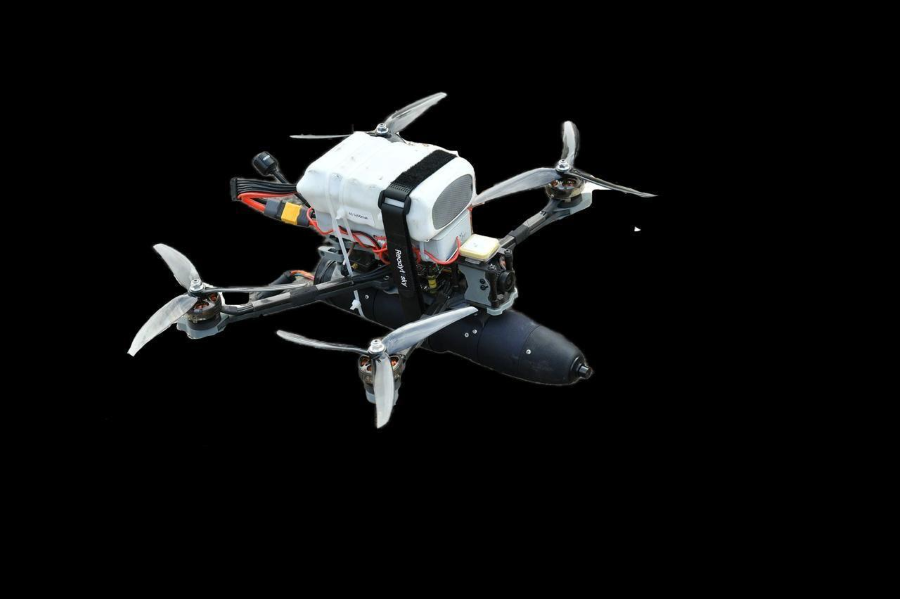
The Army’s proposed acquisition of a Long Range Kamikaze Drone System points to a growing emphasis on one-way attack drones capable of striking designated targets at extended ranges. Such systems can potentially provide a relatively low-cost means of engaging targets, including enemy positions and other high-value assets, subject to their final specifications and operational configuration.
The proposal comes amid the expanding role of loitering munitions in modern conflicts, where unmanned platforms are being employed for target identification, battlefield surveillance and precision attacks. However, the DAC announcement does not disclose the proposed system’s range, payload, endurance, guidance architecture or procurement quantity.
On the defensive side, the proposed Platform-Based C-UAS is intended to improve the survivability of Army tanks against unmanned aerial threats. Integrating counter-drone capabilities with mobile combat platforms is increasingly important as small drones can threaten armoured formations, logistics and other assets operating close to the front line.
The operational challenge is not simply to detect incoming drones but to identify and neutralise them quickly enough to protect troops and equipment. The announcement, however, does not specify whether the proposed system will combine electronic warfare, jamming, kinetic interception or other counter-drone measures.
The Army is also set to pursue an Unmanned Aerial System (UAS) designated as Brick Long Range, Surveillance UAVs and an Integrated Surveillance and Strike System. Together, these acquisitions are intended to strengthen battlefield observation and targeting capabilities. Their precise technical configurations and the division of roles between the systems have not been disclosed.
VSHORADS to counter emerging aerial threats
The Army’s proposed procurement of Very Short-Range Air Defence Systems (VSHORADS) is another key element of the package. The systems are intended to engage new-generation, small-sized aerial threats, adding a close-range defensive layer against hostile aircraft and other qualifying airborne targets.
The requirement assumes added importance as the battlefield threat spectrum expands beyond conventional aircraft and helicopters to include drones and other low-flying platforms. VSHORADS can contribute to the protection of troops and forward positions, although their effectiveness against different classes of drones will depend on the system’s sensors, seeker, engagement envelope and integration with the wider air-defence network.
The Indian Air Force will also pursue helicopters, air-defence systems and weapons under the proposals. The DAC announcement does not identify these systems by name or provide a breakdown of their costs, limiting the extent to which the package’s overall air-defence architecture can be assessed.
A wider modernisation package
Beyond drones and air defence, the Army’s approved proposals include High Mobility Vehicles, a Self-Propelled Tracked Gun System, a Gun Shot Response System and Light Multi-Role Helicopters LMRH. The vehicles are intended to improve mobility and logistical support in difficult terrain, while the tracked artillery system will combine mobility with firepower for mechanised formations. The LMRH will be used by both the Indian Army and the Indian Air Force.
The Gun Shot Response System is expected to provide real-time situational awareness, while the light multi-role helicopters will support reconnaissance, surveillance, combat, search and rescue, and humanitarian assistance and disaster relief operations.
For the Navy, the DAC cleared the Active Offboard Decoy System (AODS), intended to strengthen protection against modern anti-ship missiles, alongside other major naval platforms. The Air Force’s proposals also include a Mobile X-Band Doppler Weather Radar System to provide high-resolution, localised weather surveillance in forward areas, as well as Special Utility Helicopters to meet air-transport requirements.
Domestic industry to account for 82%
Approximately 82% of the total procurement value covered by the AoNs is expected to be sourced from Indian industry, according to the Defence Ministry. The share underlines the government’s continued emphasis on domestic defence manufacturing and the development of indigenous capabilities.
The key test will be how quickly the approvals translate into contracts, deliveries and operational deployment. For unmanned warfare and air defence in particular, the pace of technological change makes timely induction, integration with existing command-and-control networks and the ability to counter evolving threats as important as the initial procurement decision.
The Rs 2.12 lakh crore package therefore represents a broad modernisation push, but its impact will ultimately depend on the specifications selected, the systems’ operational performance and the speed at which they reach frontline formations.
Team BharatShakti