






The interview of the CDS on India Today TV Channel on 2 July was illustrative of the reasons for the lack of progress in the establishment of Integrated Theatre Commands (ITCs). The general impression that had been created, through the media, before the interview, was that the IAF was not in favour of ITCs, and was playing spoilsport as it did not wish to part with its assets and control. However, the clarification offered by the Chief of Air Staff (CAS) in a follow up interview put paid to the misperceptions, if any.The CAS very emphatically stated that
IAF was not against the establishment of theater commands but had misgivings on the methodology. The aim of voicing reservations on the issue was to enable a constructive deliberation to get the process right and ensure synergistic application of combat power in the future. Answering a query, he also clarified that the IAF was certainly not restricted to playing only a supporting role, as was visualised and understood by the land forces.
It would be pertinent to examine why the theaterisation debate has stuttered and failed to secure a consensus among the services. More importantly why jointness has remained elusive. Broadly speaking there are concerns regarding the urgency and methodology that has been adopted towards the restructuring of the military commands. An elaboration would be in order.
As regards the IAF, the implementation of theaterisation was through a decree rather than through consultations and deliberations. The first misstep was the decision to establish an Integrated Air Defence Command (IADC). While in theory it made a great argument to integrate all the AD resources of the three services, the consequences were not thought through and were debilitating for the AF. It split the service down the middle functionally along defensive and offensive lines.
In this regard, the IADC was not recommended by the Kargil Review Committee, Group of Ministers (GoM), Naresh Chandra and Shekatkar Committees. Nor was it mooted by the IAF, being the domain specialist. It was a fanciful idea and ordered through a cavalier approach, the illogical persistence of which displayed poor operational grasp on air matters and arrogance of the newly acquired power. A direct casualty of this unilateral approach was the trust that existed between the services. Unfortunately, no study was undertaken to examine the various joint institutional mechanisms that were available for promoting jointness and why they had failed or were made to fail.
Lamentably, the trust between the services was further eroded, with the CDS opining in the interview that the AF was a supporting arm for the ground forces. Not only does it display an utter lack of knowledge on airpower aspects but slides the service back into the 1940s.
The United States Air Force in the 1940s existed as an auxiliary (supporting) arm of the US Army. During the course of World War II, the overbearing nature of the land forces, borne out of service primacies, and poor comprehension of the capabilities of airpower, resulted in the employment of airpower as per land power tenets (extended artillery and penny packets) and culminated in disastrous consequences; an example being the battle at Kasserine pass in North Africa.
The then Army aviators, who were part of the US Army Air Corps revolted against the land generals leading to the establishment of the US Air Force as an independent service with equal status. Ever since airpower has been employed as per its doctrine and tenets and its contribution as the lead arm of the military the world over needs no elaboration. The equality of the four service arms of the United States Armed Forces, in fact, has been enshrined in the US Constitution.
Needless to say, that the equality of status brings in moderation and balance and negates overzealous attempts towards service-centric approaches to war fighting. It also paves the way for the formulation of unified military strategies. The aspect of equality can be gauged from the fact that between 2008 and 2017, among the Unified Combatant Commands of the US Armed Forces, 32 per cent were headed by USAF.
There were of course times when there was an attempt to slide back into the old scheme of things, e.g., Operation Anaconda in Afghanistan, but were retrieved in time, before they turned into disasters.
Also, to be borne in mind is that by virtue of the core competencies of each service, and the unique capabilities they bring to the fight, each service plays a supported or a supporting role depending on the contingency.
One of the major contentious issues in the restructuring of the military commands is the contemplated categorisation/orientation of the theatre commands. It could be geographic, threat or domain-based. Unfortunately, the orientation has been domain-based leading to doubts regarding the very basic purpose of theaterisation. The domain-based restructuring would invariably lead to service primacies, amassing of unbridled power, autonomies and vaulting ambitions adversely affecting jointness.
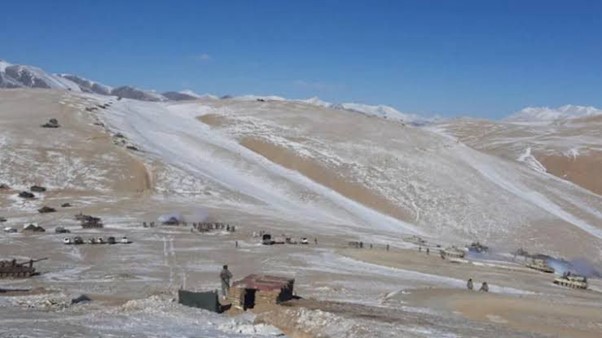
At the very least, what would be expected is an unbiased joint operational audit of the Armed Forces during the recent standoffs such as Depsang, Chumar, Doklam and Ladakh. The lessons that would emerge, besides indicating patterns, would indicate that the operational shortfalls and lapses have very little to do with theaterisation. So, is the absence of theaterisation being used to cover tracks and shortfalls? The AF in the above cases has been largely used in a non-visible role that has been detached and buffered. That partly explains why we have not been able to exercise deterrence and our approach has forced us into a strategy of expectation and hope. The reasons have been that over the years we have developed airpower blindness which will only aggravate the process that has been adopted for theaterisation.
Additionally, what is disconcerting is that the effort of theaterisation has been hasty, piecemeal and ad hoc. It does not inspire confidence. At no stage has a blueprint been offered of the intended transformational changes. Incremental changes in the absence of a vision would indeed be detrimental.
Additionally, little preparatory work has been done in forming a common language among the services for information flow and weapon control. Joint training too has been conspicuous in its absence. These aspects need to be tackled upfront. Needless to say, joint communications and training would be the sin qua non towards any attempts at theaterisation.
Other pressing issues such as the requirement of a national security strategy and a unified military strategy, would actually define military force structures eliminating duplication and waste of resources. So, a lot of work needs to be done before we get into a pell-mell rush in establishing joint/theatre commands.
Air Marshal Suneel Soman (Retd)

Air Marshal SS Soman PVSM AVSM VM retired as Air Officer Commanding in Chief of Western Air Command, IAF in 2015. He was commissioned in the Flying Branch of the Indian Air Force in December 1976 and has more than 3400 hours of flying on fighter aircraft.
Air Marshal Soman has held many appointments which include Commanding Officer of a Fighter Squadron, Chief Flying Instructor at Flying Instructors School (FIS), Chief Operations Officer (COO) at Srinagar during Operation Parakram and Air Officer Commanding at a premier IAF base. He has served as Asst Defence Adviser at the High Commission of India, Dhaka.
He has also served as Director Operations (Air Defence), Dir Operations (Joint Planning), Director (Intelligence), Principal Director Operations (Space) and Principal Director Flight Safety at Air Headquarters. Before his appointment as Air Officer Commanding in Chief Western Air Command, he has served as Air Defence Commander in WAC and as Senior Air Staff Officer in WAC and SWAC.
Whilst in WAC, he was instrumental in revamping the AD organization and communications in the Northern Areas, operationalising the Integrated Air Command and Control System (IACCS) and also helmed WAC during the 2014 Chumar operations.
He is an alumnus of Defence Services Staff College and has graduated from Air War College, USA.
The Air Mshl is a recipient of Param Vishisht Seva Medal, Ati Vishisht Seva Medal and Vayu Sena Medal.