


Pakistan-occupied Kashmir (PoK) is witnessing its worst round of unrest in months, with mass protests spreading across major towns and fresh clashes reported between demonstrators and security forces. While the immediate trigger was the killing of a prominent protest leader, an intelligence dossier suggests that the agitation has evolved into a broader political challenge to Islamabad’s control over the region.
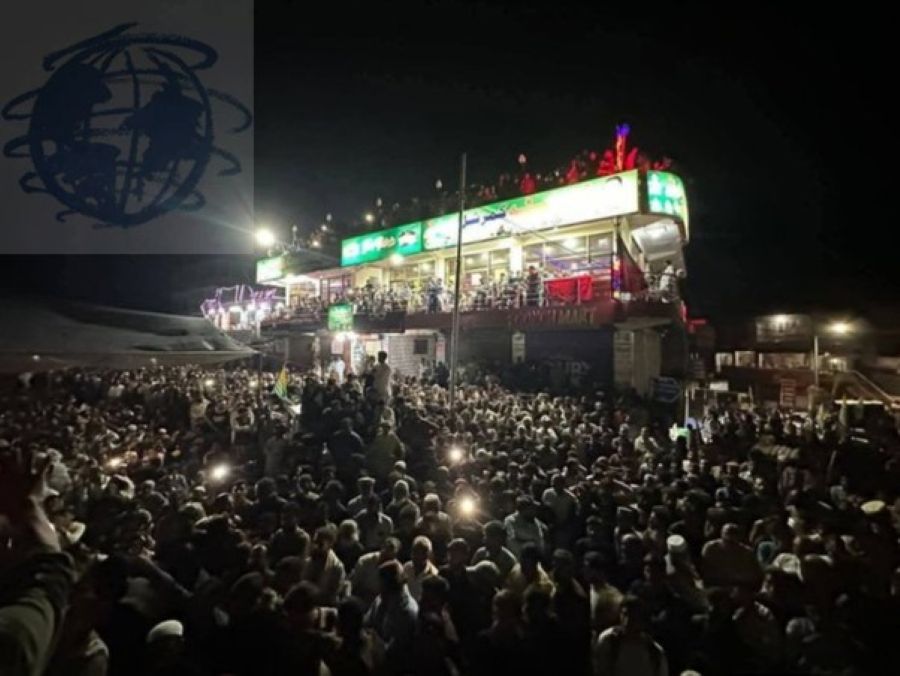
Thousands of people continued demonstrations in Rawalakot, Muzaffarabad, Kotli, Bhimber, Dadyal, Palandri and Sudhnoti, despite a heavy military presence, shutdowns and communications restrictions. Protesters have raised anti-government and anti-military slogans, accusing Pakistan’s establishment of denying the region genuine political representation and exploiting its resources.
According to the dossier, the current wave of violence was set in motion by the June 5 Barmang Bridge shooting and intensified after the alleged targeted killing of Joint Awami Action Committee (JAAC) executive member Shahzaib Habib. The JAAC, which had emerged as the principal platform articulating public grievances, was subsequently banned under anti-terror provisions.
While Pakistani authorities have acknowledged only a limited number of casualties, the intelligence report paints a far grimmer picture. It claims that between June 5 and June 9, at least 19 children and seven pregnant women were among those killed during military action across PoK. Official figures cited in the dossier list 11 male fatalities, but the report alleges widespread use of live ammunition against unarmed civilians and mourners.
Demand Goes Beyond Subsidies
Although soaring prices, electricity shortages and the restoration of wheat subsidies remain key issues, the dossier identifies a far more consequential political demand driving the protests: the abolition of the 12 “refugee seats” in the PoK Legislative Assembly.
The demand strikes at the heart of Pakistan’s political architecture in the region.
The 12 seats are reserved for individuals designated as refugees from Jammu and Kashmir who migrated to Pakistan decades ago but today largely reside outside PoK, including in Islamabad, Rawalpindi and Karachi. Protesters argue that people who neither live in PoK nor experience its realities should not determine the region’s political future.
Activists allege that these seats have long enabled Pakistan’s military establishment and the Inter-Services Intelligence (ISI) to shape electoral outcomes and install governments of their choosing.
Of the 45 seats in the PoK Assembly, these 12 reserved positions can often prove decisive in government formation. Protest leaders contend that the arrangement allows Islamabad to retain effective control over the region while maintaining the appearance of local self-governance.
The dossier further alleges that individuals linked to proscribed militant organisations have occupied some of these seats. One example cited is Abdullah Saeed Shah, also known as Pir Mazhar Saeed Shah, described in the report as a senior functionary of Jaish-e-Mohammed who previously served as PoK’s Information and Broadcasting Minister.
Broken Promises, Renewed Anger
The JAAC had mobilised support around a 38-point Charter of Demands encompassing both economic relief and constitutional reforms. These included restoring affordable wheat subsidies, reducing electricity tariffs, ending privileges enjoyed by political elites, securing royalties from local hydropower projects and ensuring governance free from external interference.
The movement gained momentum after the PoK administration allegedly failed to implement commitments made under the October 2025 Muzaffarabad Agreement. Pakistani negotiators had reportedly accepted 21 of the 38 demands following a previous round of protests in which 31 people were killed.
Eight months later, protesters say those assurances remain unfulfilled.
“The protests reignited after the government failed to fulfil the October 2025 Muzaffarabad Agreement, missing a six-month deadline to address these constitutional and economic demands,” the dossier states.
Funeral Processions Turn into Flashpoints
Following Habib’s death, authorities launched a sweeping crackdown, the report claims. More than 72 civil society leaders and activists were detained, while JAAC’s central office was sealed.
On June 7, mourners gathered for Habib’s funeral prayers allegedly came under attack as security personnel used batons, tear gas and live rounds to disperse crowds.
As the JAAC called upon PoK’s estimated 4.5 million residents to participate in a march on June 9, violence spread rapidly.
In Bhimber, the dossier alleges that security forces opened fire and shelled unarmed civilian convoys moving towards Rawalakot. In Mang, where 27 civilians were reportedly killed, enraged protesters are said to have briefly detained Pakistani military personnel.
The report also contains an explosive allegation involving PoK police sub-inspector Sardar Inayat, claiming the Pakistan Army executed him after refusing orders to fire on protesters.
Region Under Siege
Rawalakot witnessed some of the largest demonstrations, with protesters blocking major roads and confronting police, Rangers and army personnel. Security forces reportedly used pellet guns, tear gas and live ammunition to prevent marchers from advancing. At least seven people were said to have been injured.
Large crowds also gathered in Kotli, Dadyal and Palandri, where demonstrators displayed spent tear-gas shells allegedly fired by security personnel. Markets and businesses remained shut across Muzaffarabad, Rawalakot, Kotli, Bhimber and Dadyal as the strike paralysed normal life.
Clashes were also reported near Neelum Bridge in Muzaffarabad, with videos purportedly showing gunfire circulating widely on social media.
Challenge to Islamabad
What began as a movement against rising prices and electricity tariffs has now assumed a distinctly political character.
The protests increasingly reflect resentment over what many in PoK describe as a democratic deficit: a system in which key decisions are perceived to be dictated from Islamabad and Rawalpindi rather than by elected local representatives.
By questioning the legitimacy of the 12 refugee seats and demanding an end to what they describe as military interference in governance, protesters have moved beyond economic grievances to challenge the very framework through which Pakistan administers the territory.
With security forces deployed in large numbers, communications reportedly restricted and anger deepening across districts, the latest unrest appears less a passing law-and-order problem and more a confrontation over representation, accountability and the future political character of PoK.
The full extent of casualties and the competing claims made by protesters and Pakistani authorities remain independently unverified. However, the scale of the mobilisation and the sharp focus on structural political issues suggest that the current crisis could mark a significant turning point in the region’s increasingly volatile relationship with Islamabad.
Ravi Shankar

Dr Ravi Shankar has over two decades of experience in communications, print journalism, electronic media, documentary film making and new media.
He makes regular appearances on national television news channels as a commentator and analyst on current and political affairs. Apart from being an acknowledged Journalist, he has been a passionate newsroom manager bringing a wide range of journalistic experience from past associations with India’s leading media conglomerates (Times of India group and India Today group) and had led global news-gathering operations at world’s biggest multimedia news agency- ANI-Reuters. He has covered Parliament extensively over the past several years. Widely traveled, he has covered several summits as part of media delegation accompanying the Indian President, Vice President, Prime Minister, External Affairs Minister and Finance Minister across Asia, Africa and Europe.