Amid growing geopolitical uncertainty and disruptions to global supply chains, India’s Defence Secretary Rajesh Kumar Singh has called for the creation of resilient, trusted defence industrial ecosystems. According to him, defence preparedness can no longer depend on concentrated or vulnerable supply chains.
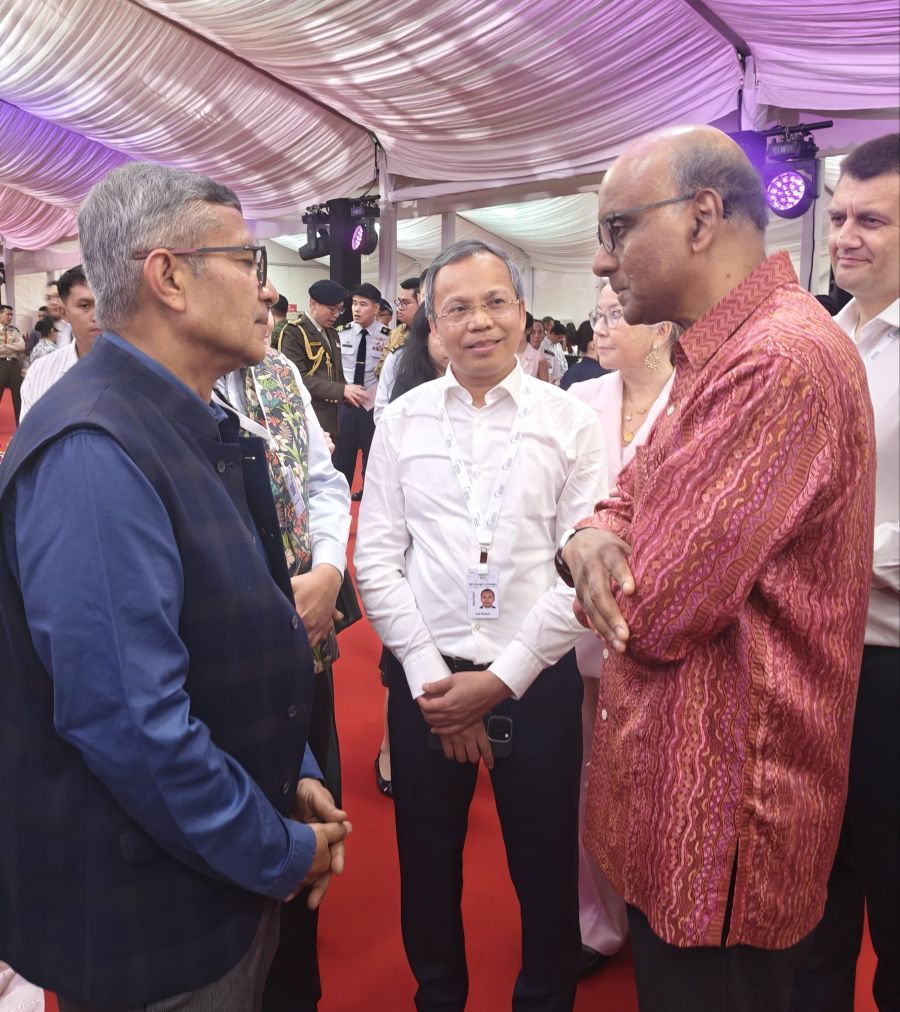
Speaking at the Shangri-La Dialogue in Singapore, Singh said recent conflicts and global crises have highlighted the need for countries to build diversified defence manufacturing networks and stronger industrial partnerships.
“Defence preparedness cannot depend upon fragile or overly concentrated supply chains,” Singh said. “Nations today require resilient, trusted, diversified and economically adaptive defence industrial ecosystems.”
Referring to conflicts in Europe and West Asia, disruptions in maritime trade routes and rapid technological change, Singh said countries must rethink how defence industries are structured and supported.
For India, he argued, resilience goes beyond the traditional notion of self-reliance.
“Resilience is not merely about self-reliance; it is about trusted interdependence,” Singh said. “It is about creating reliable partnerships, diversified manufacturing networks, innovation ecosystems and secure supply chains that contribute to regional and global stability.”
In his address, he said that India’s defence sector has undergone a major transformation over the past decade. According to him, there have been major reforms to boost domestic production and technological capabilities.
The Defence Secretary also shared that there has been expanded private-sector participation, start-ups and small enterprises have been encouraged, indigenous design and manufacturing capabilities have been strengthened, and collaboration with international partners has grown.
He pointed to procurement reforms that prioritise domestic industry participation, with a substantial portion of defence capital expenditure earmarked for indigenous acquisition and production.
“Today, as a result, we are not only modernising our armed forces but also emerging as a dependable manufacturing and maintenance hub,“ Singh said.
India has set a target of achieving defence production worth $30 billion by 2029. Current production stands at approximately $20 billion, with state-owned defence companies accounting for nearly 72 per cent of output. The remainder comes from the private sector, which Singh described as an increasingly important contributor to India’s defence industrial base.
One of the strongest indicators of India’s growing defence-industrial capabilities has been the sharp rise in exports.
Singh said Indian defence exports jumped by 61 per cent over the past year, increasing from $2.7 billion to $4.2 billion. Private industry now contributes nearly 60 per cent of those exports, reflecting the growing role of domestic companies in international markets.
He noted that Indian industry today possesses capabilities across a wide spectrum of military technologies, including missile systems, combat aircraft, armoured platforms and strategic weapons programmes.
At the same time, India continues to invest in addressing capability gaps in critical technologies, particularly propulsion systems for land, air and naval platforms.
He talked about the role of innovation and emerging technology companies in firming up India’s defence ecosystem.
The government is supporting start-ups in developing solutions tailored to the armed forces’ requirements through the Innovation for Defence Excellence (iDEX) programme.
According to Singh, more than 548 iDEX contracts have been signed with over 600 start-ups, helping to accelerate indigenous innovation and prototype development.
India is also encouraging the development of defence manufacturing clusters and industrial corridors across the country. Dedicated defence industrial corridors in Tamil Nadu and Uttar Pradesh are complementing the Aerospace and technology hubs such as Bengaluru and Hyderabad.
Singh noted that major global defence manufacturers are increasingly integrating Indian small and medium enterprises into their supply chains, further strengthening the country’s position within the global defence manufacturing network.
Turning to regional security, Singh emphasised the importance of defence-industrial cooperation in maintaining stability across the Indo-Pacific.
“The region’s prosperity depends on secure sea lanes, stable supply chains and strategic predictability,“ he said.
He reaffirmed India’s support for ASEAN centrality and highlighted the role of regional mechanisms in promoting interoperability, capacity-building and security cooperation.
India’s approach, he said, is aimed at building inclusive partnerships rather than creating competing blocs.
“Our objective is not to create exclusive blocs, but inclusive and reliable partnerships that strengthen connected security and reduce strategic vulnerability,“ Singh said.
In his concluding remarks, he said India remains ready to work with regional partners to strengthen supply chains, deepen defence cooperation and promote innovation-driven security partnerships.
“India is ready to work with partners across the region and beyond to build resilient supply chains, custom defence partnerships, secure maritime commons and innovation-driven cooperation,“ he said.
Nitin A. Gokhale, Singapore

Author, thought leader and one of South Asia's leading strategic analysts, Nitin A. Gokhale has forty years of rich and varied experience behind him as a conflict reporter, Editor, author and now a media entrepreneur who owns and curates two important digital platforms, BharatShakti.in and StratNewsGlobal.com focusing on national security, strategic affairs and foreign policy matters.
At the beginning of his long and distinguished career, Gokhale has lived and reported from India’s North-east for 23 years, writing and analysing various insurgencies in the region, been on the ground at Kargil in the summer of 1999 during the India-Pakistan war, and also brought live reports from Sri Lanka’s Eelam War IV between 2006-2009.
Author of over a dozen books on wars, insurgencies and conflicts, Gokhale relocated to Delhi in 2006, was Security and Strategic Affairs Editor at NDTV, a leading Indian broadcaster for nine years, before launching in 2015 his own digital properties.
An alumni of the Asia-Pacific Centre for Security Studies in Hawaii, Gokhale now writes, lectures and analyses security and strategic matters in Indo-Pacific and travels regularly to US, Europe, South and South-East Asia to speak at various international seminars and conferences.
Gokhale also teaches at India’s Defence Services Staff College (DSSC), the three war colleges, India's National Defence College, College of Defence Management and the intelligence schools of both the R&AW and Intelligence Bureau.
He tweets at @nitingokhale