


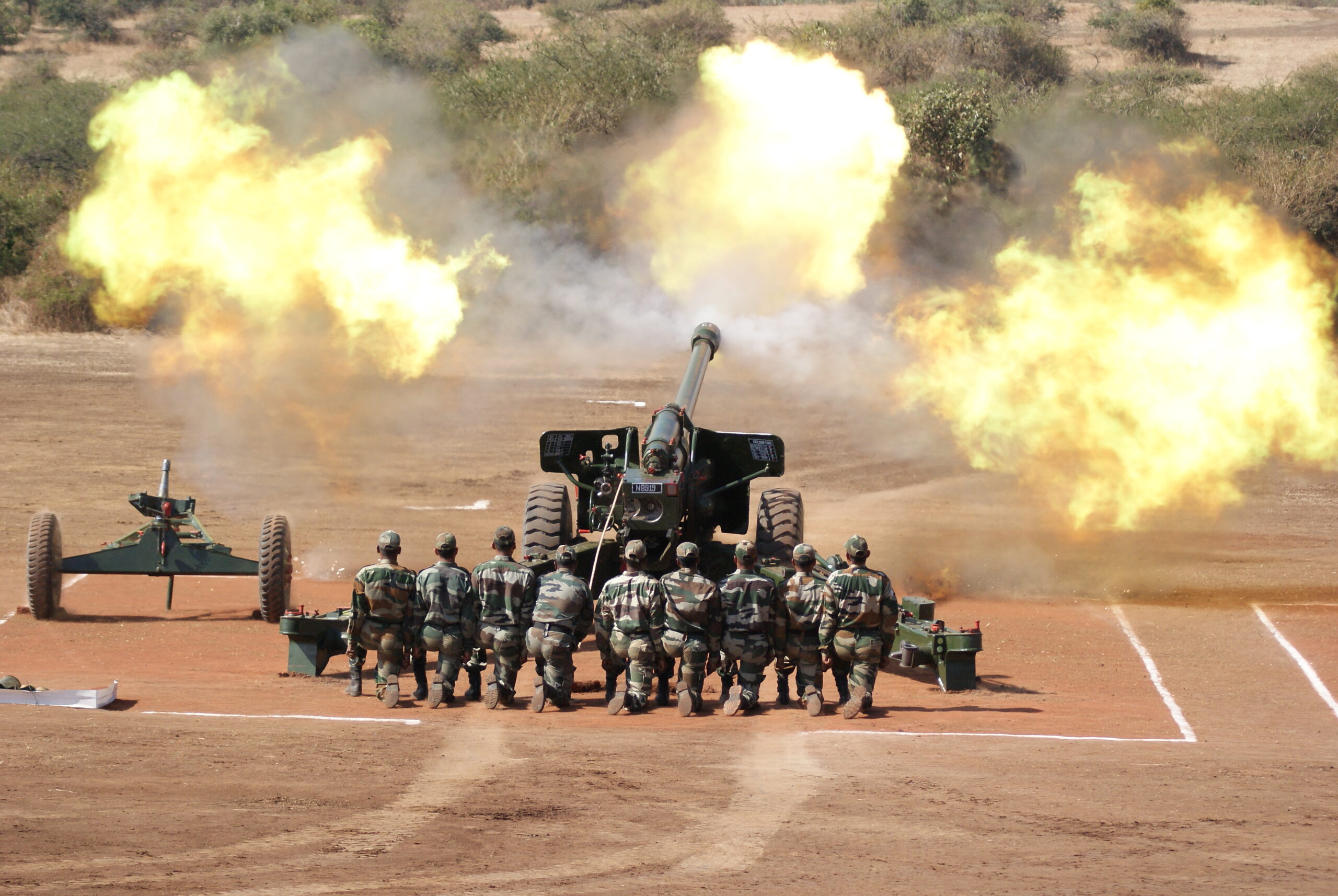
India is reshaping its Army for large-scale conventional warfare against China and Pakistan while remaining reluctant to assume a broader military role in the Asia-Pacific, according to a new assessment released ahead of the annual Shangri-La Dialogue in Singapore.
The London-based International Institute for Strategic Studies, in its latest Asia-Pacific Regional Security Assessment (APRSA) report, said India’s conventional military focus will remain driven by its long-running territorial disputes with its two nuclear-armed neighbours.
“India is preparing its army for large-scale conventional-combat operations, as a result of long-standing territorial disputes with both of its nuclear-armed neighbours,” the 150-page report noted while assessing regional military modernisation trends alongside developments in Indonesia and Japan.
The report said India’s threat perception in the Asia-Pacific remains centred on China and Pakistan, with militarised borders likely to persist for the foreseeable future.
While India’s confrontations with Pakistan have historically carried a higher risk of escalation, the report observed that tensions with China have largely remained “traditional” border disputes.
“As such, India will continue to have militarised borders with China and Pakistan,” it said.
According to the assessment, any future major conventional conflict involving India is likely to remain geographically limited rather than expanding into a broader regional war. The report noted that India’s military responses so far, including surgical strikes and cross-border operations, have remained confined to Pakistan.
The study also underlined that New Delhi is unlikely to play an active military role beyond the Indian Ocean Region and would seek to avoid direct involvement in any future US-China military confrontation over Taiwan.
“Beyond the Indian Ocean Region, India is unlikely to play an active military role in the wider Asia-Pacific,” the report said, adding that New Delhi would likely avoid being drawn into a Taiwan contingency.
The report described India’s security environment with China and Pakistan as a persistent “hybrid” challenge marked by “no war but also no peace”.
According to the assessment, India’s military doctrine continues to evolve as operational lessons from standoffs and conflicts with both neighbours feed into force planning, preparedness and combat doctrine.
“Indian military doctrine continues to evolve, and its potency improves as the lessons learned from operations against Pakistan and China feed back into its ecosystem,” the report said.
The study argued that India’s military thinking has been deeply shaped by its experience of fighting multiple wars since independence, particularly in relation to Pakistan. It also pointed to a growing political willingness in New Delhi to broaden the scope of what it considers an acceptable military response to cross-border terrorism.
The evolution of India’s surgical-strike doctrine following operations in 2016, 2019 and 2025 demonstrates how operational practice is increasingly influencing doctrinal development, the report observed.
It added that the assumptions underpinning military doctrines, including whether they are defensive or offensive, provide important indicators of how future conflicts may be fought and of the political leadership’s confidence in military preparedness.
The annual Shangri-La Dialogue, one of Asia’s premier security forums, will be held in Singapore from May 29 to May 31 and is expected to bring together defence ministers, military chiefs and strategic experts from across the Indo-Pacific.
Nitin A Gokhale, Singapore

Author, thought leader and one of South Asia's leading strategic analysts, Nitin A. Gokhale has forty years of rich and varied experience behind him as a conflict reporter, Editor, author and now a media entrepreneur who owns and curates two important digital platforms, BharatShakti.in and StratNewsGlobal.com focusing on national security, strategic affairs and foreign policy matters.
At the beginning of his long and distinguished career, Gokhale has lived and reported from India’s North-east for 23 years, writing and analysing various insurgencies in the region, been on the ground at Kargil in the summer of 1999 during the India-Pakistan war, and also brought live reports from Sri Lanka’s Eelam War IV between 2006-2009.
Author of over a dozen books on wars, insurgencies and conflicts, Gokhale relocated to Delhi in 2006, was Security and Strategic Affairs Editor at NDTV, a leading Indian broadcaster for nine years, before launching in 2015 his own digital properties.
An alumni of the Asia-Pacific Centre for Security Studies in Hawaii, Gokhale now writes, lectures and analyses security and strategic matters in Indo-Pacific and travels regularly to US, Europe, South and South-East Asia to speak at various international seminars and conferences.
Gokhale also teaches at India’s Defence Services Staff College (DSSC), the three war colleges, India's National Defence College, College of Defence Management and the intelligence schools of both the R&AW and Intelligence Bureau.
He tweets at @nitingokhale