



The Indian Army has initiated the process to procure a specialised target rocket system to strengthen the combat readiness of its air defence units against emerging aerial threats, including drones and cruise missiles.
In a Request for Information (RFI) issued to domestic and foreign defence manufacturers, the Army has sought details of an Intermediate Target System Rocket, a ground-launched aerial target designed to provide live-fire training for troops operating infrared-guided surface-to-air missile systems.
The move is aimed at plugging a long-standing gap in the Army’s air defence training architecture, where opportunities to engage manoeuvrable and representative aerial targets during live exercises remain limited.
According to the RFI, the target rocket should be capable of simulating a range of threats, including manned aircraft, cruise missiles and unmanned aerial vehicles (UAVs), reflecting the changing nature of the battlefield and the increasing use of drones along India’s western and northern borders.
The Army has prescribed stringent operational parameters for the proposed system. The rocket should attain a minimum speed of 180 metres per second, remain airborne for at least 30 seconds, and achieve a slant range exceeding six kilometres. These characteristics are intended to mirror the engagement envelope of fast-moving aerial threats typically intercepted by shoulder-fired and vehicle-mounted infrared missile systems.
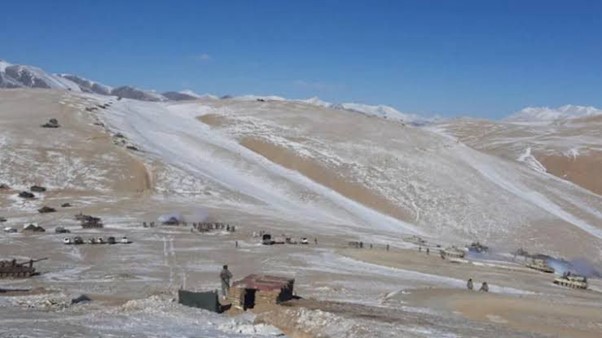
Recognising the unique challenges of high-altitude deployments, the Army has stipulated that the system must be capable of operating at elevations of 4,200 metres and above, enabling its use in forward areas across Ladakh, Sikkim and Arunachal Pradesh.
To ensure realistic training conditions, the target rocket must generate a sufficiently strong infrared signature that can be acquired by missiles currently in service. The launcher must also have traverse capability in both bearing and elevation to facilitate varied engagement scenarios.
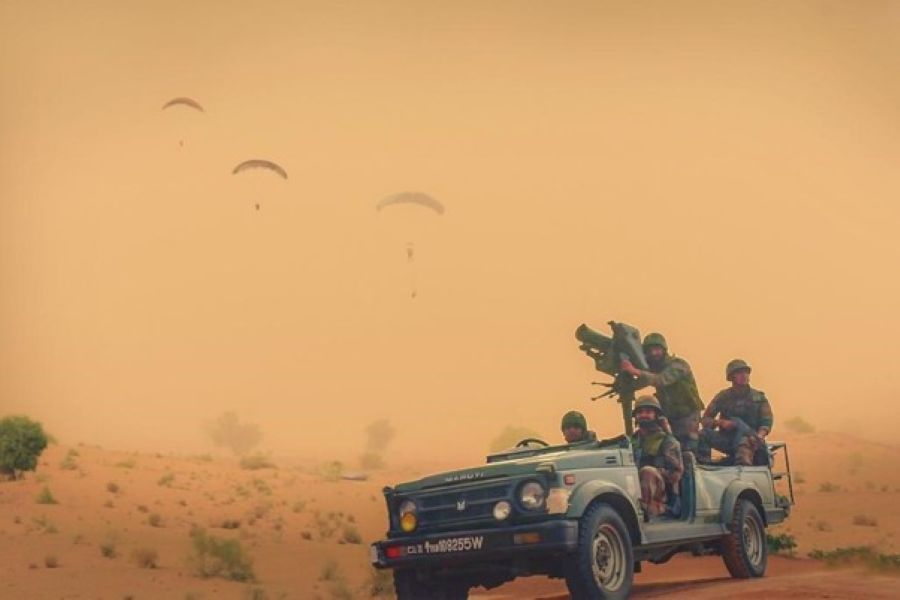
Mobility and rapid deployment have emerged as key requirements. The complete system, including launchers, rockets and associated equipment, should be transportable on standard 2.5-tonne military vehicles or equivalent platforms. The Army has further specified that the launch setup should be completed within 15 minutes.
The equipment must also remain operational under adverse weather conditions, including light rain, fog and cloud cover, and function across a broad range of temperatures and humidity levels.
In line with the government’s push for self-reliance in defence manufacturing, the RFI mandates a minimum 50 per cent indigenous content, opening the door for Indian industry to participate in the programme, either independently or in collaboration with overseas partners.
The requirement comes amid a broader effort to strengthen India’s air defence capabilities following the 2020 Galwan Valley clash and the continuing military standoff with China along the Line of Actual Control. The Army has since accelerated the induction of Very Short Range Air Defence (VSHORAD) systems and man-portable air defence missiles as part of a wider modernisation of its layered air defence network.
While the Indian Air Force employs target drones for pilot and missile crew training, the Army’s ground-based air defence units have lacked a dedicated, cost-effective target system tailored to their operational missile inventory.
Team BharatShakti