



Editor’s Note
In the first article on the subject published on this website on 7 Dec 2016, a historical review of some others’ wars led the author to inferences that it would be extremely unwise for India to be so heavily dependent on ordnance imports in almost every category. Today, the refrain seems to be that India needs to be prepared for a short but intense war, perhaps along two-fronts.
Basing his research on the Comptroller Auditor General’s (CAG) report, an in-depth analysis has been presented in this article that brings into sharp focus the severity of the situation and the necessity of building capacities within the country.
PERILS OF NOT INDIGENISING ORDNANCE AND EXPLORING THE EXPORT OPTION
The CAG has indicted the government in its analysis of the period 2008-13 for severe shortfalls in all categories of ordnance, taking the generally accepted required minimum levels of ordnance for a 20- day intense war or 40-45 days of mixed intensity as the datum. Unconfirmed reports suggest that internally the MOD may be thinking that ordnance sufficient for an intense war of 10 days needs to be maintained.
Intense War: The Indian Experience
The Indian post-Independence fighting experience in every war has actually been of fairly low intensity of combat in terms of expenditure of ordnance; scale of engagements of aircraft, ships, tanks and even infantry that have occurred elsewhere even after WW II. This aspect in no way detracts from the tactical accomplishments or the individual and unit level sagas of bravery in defeat as well as in victory. However, of relevance to this discussion is the core issue of intensity. It is intensity that often determines the rapidity with which one side gains or the other side prevents the gaining of tactical/ operational level objectives. Unanticipated intensity from an enemy can lead to disruption, chaos and loss of combat cohesion. At the same time, an intensive defence mounted in time can thwart his offensive even when in strength or help turn the tide of a relatively weak offensive.
1948: J&K
J&K conflict of 1948 was generally of low- intensity level. Actively engaged troop numbers were small and just when the prospect of more intense commitment of troops, artillery and armour became feasible, India gave in to the seductive appeal of a ceasefire.
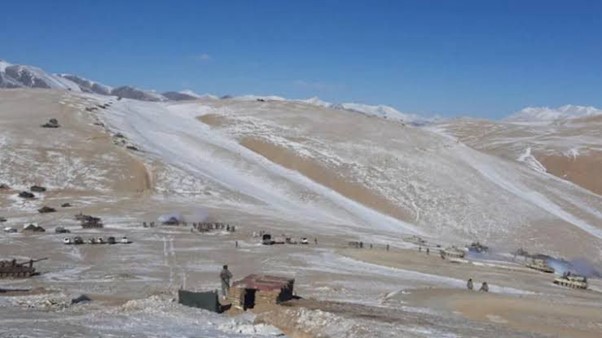
1962: India- China War
When seen dispassionately, the 1962 Indo- China war also was one of medium to low intensity. In terms of rate of ordnance and ammunition expenditure, duration versus casualties on either side, or the absence of airpower, it would be difficult to classify the war as intense. Equally relevant as a parameter, was that even by the time the guns fell silent, no more than 10 percent of the Indian Army had been committed to battle. How could the war be termed intense?
1965: India-Pakistan War
The story was not dissimilar in 1965. Skirmishes and tactical level battles were numerous, but the overall intensity, including of air strikes, was not high when the fact of two nations, with large armed forces engaged along large land frontiers is kept in mind. Pakistan, as the aggressor, embarked on a war of choice ought to have been smarter and should have contrived to be stronger in its offensives at decisive points. India, on the other hand, took the initial blows, recovered, but did not fight back with uniform military-strategic vigour that even within the confused politico- strategic environment was still feasible. The Indian Navy was essentially an observer in the war; the IAF took losses in the East without responding to the PAF.
1971: India- Pakistan War
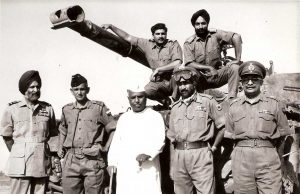
In so many ways the 1971 war culminating in the creation of a new nation, Bangladesh, was brilliantly conceived at the strategic level. In terms of warfare at the operational and tactical levels it was generally waged efficiently. The intensity with which it was waged, however, was still lower than many phases of limited wars that some other nations have had to fight. (Some examples of such wars were mentioned in the previous opinion piece.) The reason for this was the asymmetry of forces that obtained on the East Pakistan front through the months of build-up by India. Opposing Pakistani forces were fewer in numbers; lacking in combat power, especially airpower; involved in cruelly suppressing the liberation struggle and were rapidly decimated.
At the operational level, they were also served poorly in terms of leadership and planning. The numerous battles that quickly led to their resounding defeat were, nonetheless, not very intense in terms of the measures of intensity of warfare. On the Western front, where politically, objectives were circumscribed, there again were numerous battles of limited intensity. In all three arms, the expenditure of ordnance on offensive tasks might have been considerably lower than for the warring sides in the Middle-eastern wars of 1967 and 1973. Were it possible to have raised the intensity of combat along the Eastern fronts, the war could have been even shorter by a few days (perhaps two or three) and that while the number of Pakistani POWs surrendering might have been somewhat lower, their combat casualties could have been higher.
1999: India-Pakistan Conflagration in Kargil Sector
The 1999 Kargil conflict was localised in terms of space. The opposing forces were numerically small, although well-entrenched but overall lacking in combat power. Neither did they seem well-supported by Pakistan leadership in operational and tactical terms. Yet, as many accounts written thereafter suggest, taking back the peaks took much more troops, enormous amounts of artillery ammunition and air-delivered ordnance than had been estimated. In the several weeks of combat that ensued, the overall intensity was still low as would be for a spatially limited conflict. Nonetheless, Kargil swallowed a fair bit of ordnance and took many gallant soldiers to ultimately take it back in blood. If the Kargil conflict were to have escalated along a wider front, or into another Indo- Pakistan war, it seemed that India might have been quite short of the ordnance required to punish Pakistan adequately.
China & “Intense” Wars
For India, the past, therefore, is not a good measure of the combat intensity that we might face in times to come. Nonetheless, we should take into account that China has quite a bit of historical experience of periods of very intensive warfare. Examples are many battles of the civil war wherein the nationalists and the communists fought each other as well as the Japanese. Again, there was the Korean War in which intense battles were fought. Going back a little further, the year- long Sino-Japanese war of 1894-95 had very large scale clashes over large tracts with large formations and intense battles as well as considerable fighting at sea and around ports. More importantly, the Sino-Vietnam war that actually lasted from 1979 to almost 1990 saw very heavy expenditure of ordnance especially from the Chinese side. In India this war is seen from the overly simplistic view that Vietnam won it very rapidly and notched up yet another defeated great power in their list of praiseworthy attainments.
The real lessons are in the details of the many periods of intense fighting; the high casualties; importance of artillery wherein shells were consumed in their millions; the dependence of the Vietnamese for ordnance supplies from the USSR and the rapidity with which the China of Deng Xiao Ping began indigenisation of all ordnance. The Vietnamese fully appreciate that victory, but are aware it was a close call.
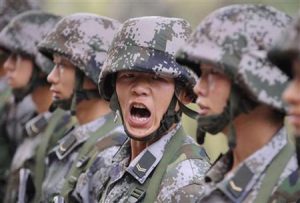
Among other things like national pride, a desire for self-sufficiency, dreams of being a world power, it would be perhaps correct to infer that it is also China’s experience with intense combat that has driven the desire for self- sufficiency, addressing issues of both quantity as well as quality while keeping that very useful principle of perfect being the enemy of good enough.
Three other important aspects need recognition on our part. First, China’s desire to match and then outpace the US militarily may, someday position them as peer- competitors unlike the current American phraseology for China as a near- peer rival. Second, we could be making a serious error if we do not first, hoist China’s understanding of intense combat in modern and future conditions and then try and become a “peer” military competitor. It would be difficult for the purposes of deterrence or for war fighting–should deterrence fail– to hope for an upper hand otherwise. Last, with lip-service to be set aside, there is no way but to “Indigenise by Indianising” our ordnance requirements.
Pakistan focussed Perspective
In aiming to enhance the quality of deterrence and, concomitantly, overall combat power against China, the problem of Pakistan gets taken care of to some extent. The well-appreciated concern, nonetheless, is due to the very real collusive strategic advantage that China and Pakistan derive from each other. The relatively low intensity of warfare between India- Pakistan that existed in 1965/ 1971 was partly predicated by both sides being heavily dependent on imports of platforms as well as ordnance.
The strategic drivers for enhanced possibilities of collusion between China and Pakistan are increasing. As China gets more financially, territorially and therefore militarily enmeshed in Pakistan, the alliance will deepen. That there would be increased suspicion, unease in specific quarters in Pakistan about some loss of sovereignty as a result of greater Chinese involvement is something that Pakistani regimes may need to contend with. They will certainly try and do so. For the purposes of this discussion, Pakistan’s ability to plan in terms of more intense warfare against India would keep improving.
While accurate data would be difficult to get, ordnance manufacturing in Pakistan seems to have been improving at a faster pace than in India. The fact that Pakistan Ordnance Factories (POF) export large amounts of ordnance to a few countries, especially in the Middle East gives the advantage of surge capability for themselves. It also indirectly yields opportunities for live testing of some types ordnance due to the multiple conflicts in West Asia. The world may need to soberly note that if China- Pakistan- North Korea can derive mutual benefits from their nuclear weapon and missile technology cooperation, more conventional ordnance may be par for the course.
Risk Factors in Planning for ‘Short’, Intense Wars
While the Indian conventional war fighting experience has essentially tended towards conflicts of shorter duration and medium to low intensity, mitigation of risks in making assumptions that warfare in future will be short and intense would be necessary. This requires some degree of certainty—always fraught with errors—in political and military strategic estimates. Consider the following:
* If a war of choice, what are the political purposes and objectives vis-a-vis China/ Pakistan?
* What might be the resultant contours of collusion between them?
* If a war of choice for China/ Pakistan, what is the expected intensity with which it would be waged for varying politico- military objectives? What would it take to counter them with similar or perhaps increased counter-intensity?
* Given the above uncertainties, how much faith can be put into an overarching planning factor of say, “x” (10/ 20/25 etc.) days of intense wars?
These questions ought to be then followed by a premise that having fought, and likely won, such a short but intense war, we may exhaust a major portion of our ordnance and some proportion of platforms that deliver such ordnance. What, then, if one of our adversaries uses an opportunity to start another round of conflict from a position of relative strength? This could be a possibility, couldn’t it? Prudence requires that we also recognise that there could be every need to be prepared for the war after the next!
No Choice but Indigenising Further
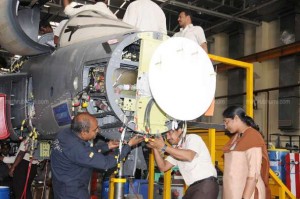
There are good technical, logistical, financial and life-cycle maintenance factors that do push us towards more prudent estimates about how much War Wastage Reserve (WWR) or Minimum Acceptable Risk Levels (MARL) of every type of current and future ordnance should be manufactured and stocked. The prime common advantage linking all these factors occurs via even increased indigenisation. Here is how:
* Smaller quantities of medium-life ordnance, and of more critical but expensive and maintenance/ storage stringent PGMs need to be ordered from a foreign OEM. This helps, among other things, not only saving money but spreading expenditure over more years without jeopardising combat power.
* Greater efforts are possible in R&D spanning forging, casting, explosives and fuses, guidance, homing and propulsion systems via collaboration between the Services, DRDO, PSUs/DPSUs and private companies. One has to carefully examine the significant work done by the cadre of Naval Armament Inspectors (NAI) over the past decades to drive home the point. The Army perhaps never developed an equivalent of the only truly vertically- trained and vertically- tasked cadre of the Indian Navy. If the push towards indigenisation everywhere is to transform into reality, then the many officers and airmen/ sailors within cadres like NAI or in their personal capacities, need to be tapped, encouraged, and supported fully.
* Smaller inventories enable better storage, handling and maintenance. The logistics cost of holding large inventories are always significant but not always necessary.
* Costs for Life Extension (LE) for imported ordnance is fraught with problems encompassing high costs, intrusive inspections and presence, evaporation of expertise and spares within the OEM, etc. All Services surely have their own examples of this.
* Therefore, indigenous development under the IDDM categories for PGM would not only ensure LE at lower cost and trouble, but better address issues of upgrades because the know-how and know-why are obviously resident in the country.
* Regular manufacturing lines can be maintained through orders of smaller batches but with the assurance of surge capacities. Here, an important step is that the capital costs for surge capacities could be fully or partially defrayed by the Government for PSUs and private companies to be able to have these capacities and still be responsible to shareholders and the government.
* Surge capacities would enable export of ordnance, an area in which we have great potential but have remained laggards. There is hardly any country which will buy ordnance from India that our own armed forces do not use or which are not perceived to be essentially IDDM in character.
* Surge capacities would enable readiness for the “War after the next” with the added advantage of incorporating lessons learnt to further enhance the impact ordnance has at the tactical level.
Thus, there are not only tremendous advantages in indigenising every type of ordnance for ourselves, there are great perils in not doing so. We face a formidable, almost wholly indigenised adversary in China with whom some form of military conflict is more a case of “when” and lesser of “if”. Strategists who need to ensure deterrence through thorough preparedness for war cannot find assurance of those that suggest that even talking of the possibility of war with China is to roll towards one. Strength is a finer approach to deterrence than fear or appeasement. Chinese statecraft and the strategies that flow to attain their objectives understand this only too well.
(The concluding article of this series will strive to look at the specific ways in which the current impetus towards indigenisation of ordnance could become quicker realities and get us more bang for our valuable buck.)
Rear Admiral Sudarshan Y Shrikhande, IN (Retd)

RADM Shrikhande is a 1979 graduate of the National Defence Academy. His qualifications include Masters in Weapon and Sonar Engineering from the Soviet Naval War College, (1985-88); M.Sc Indian Staff College (1995), MPhil from the Indian Naval War College and highest distinction from the US Naval War College (2003) and a PHD from Mumbai Univ (June 2025) for his thesis on sea-based nuclear deterrence for nuclear deterrence stability for India.
He has commanded three ships. He has been a defence attaché in Australia and the South Pacific. Ashore, he has held a variety of operational and training assignments. In flag rank, he served as Chief of Naval Intelligence, Chief of Staff, SNC, Joint HQ staff duties, and, in the nuclear forces command, as Flag Officer for Doctrines and Concepts.
In retirement since 2016, he is a visiting professor at several institutions, including NDC and CDM. Staff and War colleges spanning strategy, operational art, RMA, Peloponnesian War, Indo-Pacific geopolitics, leadership and ethics and Atmanirbharta/Self-Reliance in defence production. He has participated in Track 2 discussions with some countries, attended various national/international conferences and workshops, and written for national and international journals. He is a visiting professor at the Naval War College, Goa; Honorary Senior Fellow with ANCORS, Wollongong and a Distinguished Fellow at the Australia-India Institute, University of Melbourne.