


The Indian Air Force is not opposed to theatre commands. But after Operation Sindoor, the question is no longer simply whether India should move to integrated theatre commands. It is also about what structure the country needs, when to create it, and in what sequence.
Air Chief Marshal AP Singh has put that question back on the table, saying the operational experience of Operation Sindoor must factor into the proposed theatreisation plan before a final decision is taken.
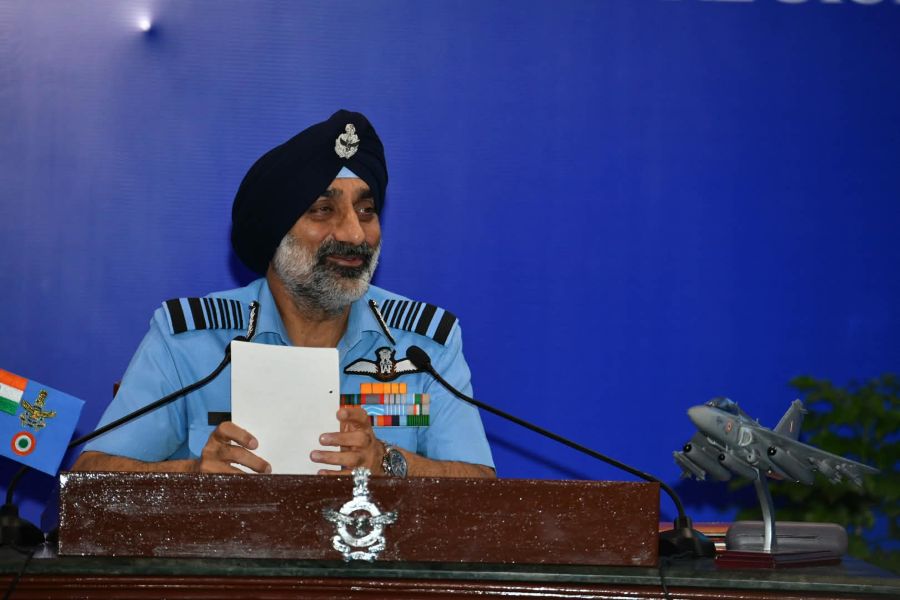
“We have a new situation which we saw after Operation Sindoor,” Air Chief said at his annual press conference ahead of Air Force Day on Saturday in the capital.
“So, my only point is that we should look at all those and then take a decision.”
He made it clear that the IAF was not resisting the reform.
“I have made it clear that the Indian Air Force is not against theatre commands. We have been working towards it, and we have been a part of discussions throughout,” he said.
But the Air Chief suggested that the experience of the 2025 operation had changed the context in which the proposed command structure was being examined.
“Maybe a slightly better option on what kind of organisation we need to make, in what sequence it should be made,” he said, adding that the issue of whether theatre commands should be created in one go or introduced incrementally also needed consideration.
The comments are significant because the proposed structure had already moved considerably beyond the conceptual stage.
Theatre Command Model in Final Stages
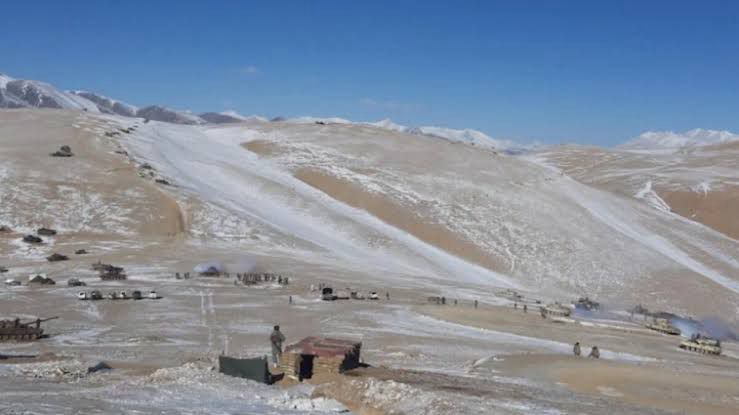
The proposal worked out under former Chief of Defence Staff Gen Anil Chauhan envisages three broad integrated commands – a Western Theatre Command focused on Pakistan, a Northern Theatre Command focused on China and a Maritime Theatre Command covering the maritime domain.
Under the structure reported earlier this year, the Western Theatre was expected to be headed by an IAF officer, the Northern Theatre by an Army officer and the Maritime Theatre by a Navy officer. The plan envisaged integrating the fighting elements of all three services within each theatre rather than retaining separate service-specific operational commands.
Gen Chauhan, before demitting office in May, had submitted the collective proposal of the three services to the government. BharatShakti reported in April that the armed forces had reached consensus on the plan and that the proposal was being moved to the Defence Minister and subsequently to the Cabinet Committee on Security.
Also Read: Theatre Commands Plan Nears Final Shape, Draft to Reach Govt in a Week: CDS
That makes the Air Chief’s latest intervention particularly important. It comes after months of work to settle the structure and after a major military operation that, in his assessment, has provided new operational lessons.
The question now is whether those lessons require adjustments to the architecture before the government gives the final go-ahead.
BharatShakti Tracking the Fault Lines
The latest remarks also reopen a debate that BharatShakti has been tracking for more than a year.
In August 2025, BharatShakti’s two-part examination of theatreisation – Theatre Commands: Back To The Drawing Board? and Theatre Commands: Towards A Unique Indian Model Inspired By Global Best Practices – examined whether India should simply replicate established models or evolve a structure suited to its own strategic circumstances.
Also Read: Theatre Commands: Can a Phased Approach deliver a Design from the Drawing Board?
The second article argued for a phased and bespoke approach rather than treating the creation of multiple geographical theatres as an end in itself.
Also Read: Theatre Commands: Towards A Unique Indian Model Inspired By Global Best Practices
By August this year, the debate had acquired a sharper operational dimension.
In Theatre Commands: Can a Phased Approach Deliver a Design from the Drawing Board?, BharatShakti revisited the question and proposed a possible National Theatre Command as the first step, with the CDS at its apex and the existing higher defence organisation progressively brought into an operational framework.
The argument was that India could first build the joint planning and command mechanisms required for integrated operations and then, after gaining experience, move towards geographical or functional theatre commands. The article suggested allowing three to five years for such a structure to settle before moving to the next stage.
That proposition now acquires added relevance in the light of the Air Chief’s call to examine not only the final organisation but also the sequence in which it should be implemented.
The Force-Availability Question
Another BharatShakti article published in August raised an even more fundamental issue.
Air Marshal R Nambiar (Retd), in The Mirage of Multi-Theatre Ambitions: Reality Must Precede Grand Designs, questioned whether India could afford to create multiple geographical theatres when the country does not yet possess sufficient combat assets to adequately equip even one integrated theatre.
Also Read: The Mirage of Multi-Theatre Ambitions: Reality Must Precede Grand Designs
His argument was that scarce air-power assets cannot simply be divided into geographical silos without considering the demands of a simultaneous or multi-front conflict. The article also questioned whether additional headquarters and command structures, by themselves, would add fighting capability if the underlying inventory of aircraft and other combat platforms remained inadequate.
That argument intersects directly with the Air Chief’s other comments at Saturday’s press conference.
Singh said the IAF currently needs 36-40 new aircraft every year simply to arrest the decline in its fighter strength. He also said the force needs to look at the changing nature of warfare and the lessons emerging from recent conflicts.
In other words, the theaterisation debate cannot be separated from the question of force availability.
A theatre commander may have operational control over aircraft, ships, air defence systems and land forces assigned to his command. But the effectiveness of that command will ultimately depend on the availability, quality and deployability of those assets and on the ability to move them rapidly between theatres when circumstances demand.
Operation Sindoor Changes the Context
Operation Sindoor provides the immediate backdrop to this reassessment.
The operation involved the use of air power, precision weapons, intelligence, surveillance and reconnaissance, air defence and other capabilities across domains. The Air Chief has now said that the experience gained from the operation should inform the final theatreisation architecture.
This does not necessarily mean abandoning the three-theatre concept.
Rather, it raises a more fundamental question: should the command structure be designed first and operational lessons fitted into it later, or should the lessons of recent operations shape the structure before it is formally created?
That distinction could prove important.
The original rationale for theatre commands was to create greater jointness, eliminate duplication and enable the three services to fight as an integrated force. The challenge is to ensure that organisational integration does not become an end in itself.
BharatShakti‘s earlier reporting has also highlighted that theaterisation was being pursued alongside a much broader transformation of the armed forces involving joint logistics, intelligence, communications, training, human resources, maintenance and operational planning. Gen Chauhan had described these building blocks as essential to the eventual creation of theatre commands.
Not Theaterisation versus No Theaterisation
The Air Chief’s latest position therefore should not be read as a rejection of theaterisation.
His formulation is more nuanced: the reform is necessary, but its final design and sequencing need to reflect operational experience.
That distinction matters because the debate has often been reduced to two opposing camps – those in favour of theatre commands and those against them.
The reality is more complex.
There is broad acceptance within the military establishment of the need for greater jointness and integration. The continuing debate is over the command architecture that will deliver it, the allocation of scarce combat assets, the powers of theatre commanders, the role of the Service Chiefs and CDS, and the sequence in which the reforms should be implemented.
BharatShakti‘s coverage over the past year has reflected precisely this evolution – from questioning the original architecture, to examining international models, to exploring a phased approach, and finally to highlighting the resource constraints that could determine whether the proposed structure works in practice.
The Air Chief’s intervention after Operation Sindoor has now added an important operational dimension to that debate.
The immediate question before the government, therefore, may not simply be whether to establish three theatre commands. It may be whether the proposed architecture has adequately absorbed the lessons of India’s latest combat experience and whether the country’s force structure, particularly its limited inventory of high-value air assets, is ready to support it.
For a reform of this magnitude, getting the sequence right could be as important as getting the structure right, however, the debate will go on till the time it takes final shape.
Ravi Shankar

Dr Ravi Shankar has over two decades of experience in communications, print journalism, electronic media, documentary film making and new media.
He makes regular appearances on national television news channels as a commentator and analyst on current and political affairs. Apart from being an acknowledged Journalist, he has been a passionate newsroom manager bringing a wide range of journalistic experience from past associations with India’s leading media conglomerates (Times of India group and India Today group) and had led global news-gathering operations at world’s biggest multimedia news agency- ANI-Reuters. He has covered Parliament extensively over the past several years. Widely traveled, he has covered several summits as part of media delegation accompanying the Indian President, Vice President, Prime Minister, External Affairs Minister and Finance Minister across Asia, Africa and Europe.