



The Indian Army on Tuesday rolled out its long-awaited Integrated Battle Group (IBG) concept, marking the beginning of one of its most significant organisational reforms in recent times. Conceived as agile, brigade-sized and self-sufficient combat formations, the IBGs are intended to enable faster mobilisation and more integrated operations along India’s sensitive frontiers.
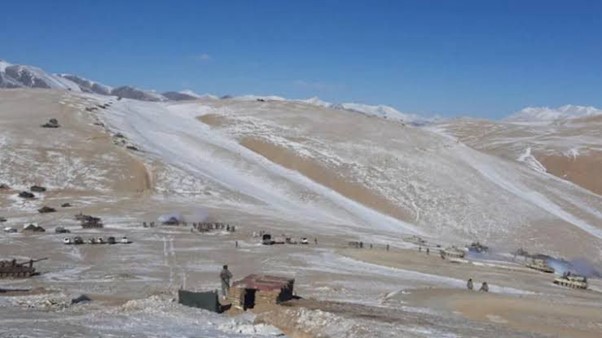
The rollout follows the Ministry of Defence’s approval last year for raising IBGs for the mountainous sectors along the Line of Actual Control in Arunachal Pradesh and Sikkim. Acting on the approval, the Army undertook a major restructuring exercise, culminating on July 1 with six Major Generals taking command of five newly raised IBGs and a dedicated Fire Support Group (FSG) under the 17 Mountain Strike Corps (Brahmastra Corps) deployed along the northern border with China.
The formations have been raised under the Army’s ongoing transformation programme to create leaner, mission-ready forces capable of responding to emerging threats at short notice.
“Every IBG will be self-contained, mixing elements of every arm and service according to the terrain and operational requirements,” noted General Upendra Dwivedi during media interaction last year, who demitted the COAS office on June 30. In the event of hostilities, the IBGs will be able to launch swift strikes against the enemy.
IBGs were at the forefront of the changes in the Northern Theatre Command and are understood to have applied lessons learned from the unprecedented military exercise ‘Himvijay’ held in October 2019.
IBGs are larger brigade formations that integrate infantry, artillery, tanks, air defense, attack helicopters, and logistics units.
As reported earlier, two Integrated Battle Groups (IBGs) were initially planned. One IBG was expected to be under the command of the 9 Corps, which operates along the western border with Pakistan, while the other would be under the 17 Strike Corps, which operates along the northern border with China, which has been operationalised.
Army sources said the current exercise is a pilot project, with the 17 Mountain Strike Corps serving as the test bed for the new organisational model. The performance of the five IBGs and the Fire Support Group will be evaluated under operational conditions before a decision is taken on extending the concept to other Corps across the Army.
Each IBG will consist of approximately 5,000 personnel, making it larger than a brigade (3,000 to 3,500 troops) but smaller than a division (10,000 to 12,000 troops), headed by a brigadier and commanded by a Major-General officer.
As part of the restructuring, the Army has also introduced the appointment of a Chief Operations Officer (COO), a Brigadier-level officer who will oversee operational planning, intelligence, logistics and battlefield coordination within each IBG. The new appointment is intended to streamline operational decision-making and allow the General Officer Commanding to concentrate on higher-level operational and strategic direction during both peacetime and conflict.
Alongside the five IBGs, the Army has also raised a Fire Support Group under the command of a Major General. The formation brings together long-range artillery, rocket systems, precision-strike capabilities, and surveillance assets, providing concentrated firepower to support combat operations rather than relying on dispersed artillery resources.
Unlike a conventional division, which assembles infantry, armour, artillery and supporting arms from different formations during mobilisation, each IBG integrates infantry, mechanised forces, armour, artillery, engineers, air defence, signals and logistics under a single commander. The objective is to reduce mobilisation time and improve battlefield coordination by fielding a combat-ready formation from the outset.
Officials said the restructuring also shortens the chain of command by delegating greater operational authority to field formations, enabling quicker decision-making and faster employment of combat power during rapidly evolving situations.
The IBG initiative forms part of the Army’s wider modernisation drive, which gathered pace after the 2020 military standoff with China in eastern Ladakh. Since then, the Army has accelerated efforts to build more agile formations, integrate drones and loitering munitions into combat operations, strengthen network-centric warfare capabilities, deepen jointness with the other services and decentralise operational command.
The latest restructuring is expected to shape the future organisation of the Indian Army as it adapts to the demands of high-tempo, technology-driven warfare.
Ravi Shankar

Dr Ravi Shankar has over two decades of experience in communications, print journalism, electronic media, documentary film making and new media.
He makes regular appearances on national television news channels as a commentator and analyst on current and political affairs. Apart from being an acknowledged Journalist, he has been a passionate newsroom manager bringing a wide range of journalistic experience from past associations with India’s leading media conglomerates (Times of India group and India Today group) and had led global news-gathering operations at world’s biggest multimedia news agency- ANI-Reuters. He has covered Parliament extensively over the past several years. Widely traveled, he has covered several summits as part of media delegation accompanying the Indian President, Vice President, Prime Minister, External Affairs Minister and Finance Minister across Asia, Africa and Europe.