


Recent developments in the Red Sea region have brought into sharper focus the Horn of Africa as a geopolitical hotspot. The sinking of the Indian flagged MSV Faize Noore Oliya on August 3, 2026, following an attack near Hodeidah (Yemen), brought home the vulnerability of commercial shipping in the approaches to the Strait of Bab el Mandeb, a maritime choke point with attributes similar to Hormuz.
The “Mecca Pact” concluded between Saudi Arabia, Turkey, and Pakistan, though not specifically associated with the Horn of Africa, has implications for India’s interests in the region. Turkey and Saudi Arabia are key geopolitical actors in the region, which has been a playground of rival powers for decades.
The rapidly changing geopolitical environment makes it imperative for India to pay greater attention to Somaliland, which sits astride the critical waterways in the Gulf of Aden and offers a relatively stable and commercially ambitious polity that can be engaged with. Somaliland is a part of Somalia but functions almost like an independent country.
The social media account of the “Republic of Somaliland” on the ‘X’ platform recently exhorted India in an amusing yet salutary message: “Your move India… recognise the Republic of Somaliland and …strengthen your position in the Red Sea and Bab el-Mandeb Strait.“
The uncharacteristically informal suggestion may sound radical, but it is not new in its spirit. Historically, Indian merchants, sailors and religious travellers were familiar with the ports of the Somali coast long before the modern state system emerged.
The monsoon connected the ports on the western coast of India with Aden, the Gulf and the Horn, enabling exchanges of textiles, food grains, livestock, hides and, more importantly, ideas and cultural exchanges between communities.
Under British rule, the connection acquired an administrative and commercial character. Indian traders, clerks and the Indian rupee featured prominently in the economy of British Somaliland, particularly in Berbera. This legacy gives India a social and commercial background that continues to reside indelibly in the region’s historical memory.
Somalia as it exists today was under different colonial administrations (Italian and British), with the British predominant in British Somaliland, which later became its protectorate.
After Somalia’s independence in 1960, India maintained cordial relations with Mogadishu, opened a resident mission and extended development and educational cooperation. Cold War alignments in the Horn were volatile, yet New Delhi retained a stable relationship with Somalia. The port of Berbera, then within Somalia, acquired exceptional strategic value when the Soviet Union obtained access to its facilities in the 1970s. American intelligence assessments perceived Soviet access to the port, and assets such as a missile support facility and an airfield, as vital possessions that could sustain Soviet naval and air operations in the Indian Ocean. The Soviet position ended after the 1977 Ogaden War, but the episode demonstrated the enduring importance of Berbera’s military geography.
The collapse of Siad Barre’s government in 1991 and the civil war that followed produced a disruptive, unstable environment that made Somalia a failed state. The Indian embassy in Mogadishu closed (and has since not reopened), while Somalia endured political chaos, armed factionalism and Islamist violence. United Nations peace operations, African-led political processes, European Union support and the gradual reconstruction of federal institutions have helped create pockets of order and relative stability, but they have not removed the broader security challenge stemming from factional rivalries. Piracy flourished in the resulting vacuum, connected to ransom networks, illicit finance, arms movements and wider trafficking with international connections. The phenomenon was in effect a transnational criminal business enabled by insecurity on land and exploited at sea.
India responded to the challenge of piracy in the maritime domain with sustained operational commitment, supported by an international mandate. Since October 2008, the Indian Navy has maintained anti-piracy deployments in the Gulf of Aden, escorting merchant shipping through the Internationally Recommended Transit Corridor and coordinating with other navies. The mission has protected not only Indian flag vessels but ships and crews of several nationalities. Recent rescues east of Somalia, including daring missions to liberate crews held by Somali pirates in 2024 (M.V. Ruen case), show that piracy remains capable of revival when regional conflict and weak coastal governance create fertile grounds.
It is well known that the erstwhile Somalia now exists as three separate autonomous provinces, only notionally part of a federated structure. The Federal Republic of Somalia is, however, internationally recognised and includes federal member states, among them Puntland.
Somaliland, which originally declared its independence from Somalia in 1991, operates with its own government, security institutions, currency and electoral politics, but Mogadishu and most other African states have long disputed its status.
India does not recognise Somaliland or Puntland as nations and officially supports Somalia’s sovereignty. Israel’s recognition of Somaliland in December 2025 created a new diplomatic fact, whereas Taiwan maintains representative relations and close cooperation without formal recognition. Recent developments have made it imperative for New Delhi to review its approach to Hargeisa. It is no longer easy for India to ignore Somaliland’s effective autonomy even as it cannot discount the fact that it officially maintains relations with Mogadishu, which the African Union and other African partners recognise.
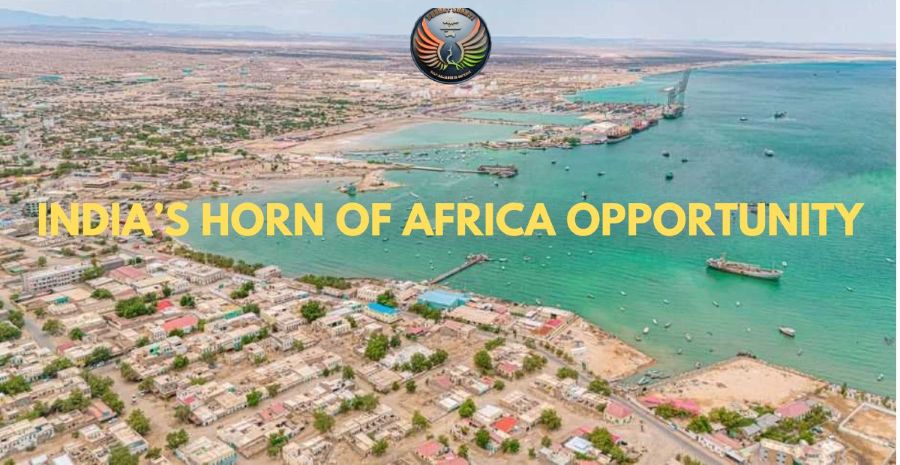
Given the Cold War history, the geostrategic location of Berbera would naturally be central to India’s strategic considerations. A trading presence at Berbera can widen India’s commercial engagement and strategic room for manoeuvre in an increasingly contested western Indian Ocean. India’s closer regional partner, the UAE, through its global investment giant DP World, has committed up to US$442 million to a three-phase port modernisation programme and has developed the Berbera Economic Zone.
The port is intended to serve not only Somaliland but Ethiopia’s large landlocked market through the Berbera corridor. The European Commission’s Joint Research Centre has placed the Dar es Salaam, Nairobi, Addis Ababa, Berbera and Djibouti corridor among eleven African transport corridors selected for comparative Global Gateway assessment. Ethiopia’s January 2024 memorandum with Somaliland on sea access and possible naval facilities highlighted the mutually felt demand for alternative outlets and also the political sensitivity of the issue.
The commercial logic for India’s engagement is bigger than Berbera. The UAE is a significant actor in the Horn of Africa, and its P&O Ports subsidiary obtained a thirty-year concession in 2017 to develop and manage Bosaso in Puntland, initially associated with US$336 million of investment. Bosaso’s modernisation and Berbera’s expansion make clear that the UAE is reshaping the Gulf of Aden littoral through ports, logistics and economic zones.
India may have a particularly useful opening because of its growing strategic partnership with the UAE, its extensive commercial links with Ethiopia and its interest in developing reliable supply chains. New Delhi can seek complementarity with the UAE in offering port services, digital logistics, pharmaceuticals, food processing, training and maritime safety.
The existing strategic environment in the Horn of Africa region poses a challenge for India. Turkey’s close partnership with the Federal Government of Somalia, including the TURKSOM military training mission, has given Ankara a dominant security role in Mogadishu.
Pakistan is now leveraging Turkey’s presence. Pakistan and Somalia separately signed a defence cooperation memorandum in Islamabad on August 4, 2026, covering counterterrorism, training, military expertise, and capability development.
Press reports of a possible fighter aircraft sale remain unconfirmed but indicate the high possibility of a deepening defence relationship. Somalia also welcomed the Mecca Joint Defence Agreement announced by Türkiye, Saudi Arabia and Pakistan in August 2026. Its public operational content remains limited, so it would be premature to describe it as a military bloc in the Horn. Yet it signals greater political convergence among states whose security activities can affect the Red Sea and Gulf of Aden.
For India, it calls for a closer assessment of how training missions, port access, defence exports, intelligence links and commercial infrastructure might combine to influence maritime access in the region. The 2026 West Asian war has already narrowed India’s choices in West Asia and North Africa (WANA) through access uncertainty and elevated transportation risk.
Bab el Mandeb cannot be treated as a distant geography by New Delhi, as it is a gateway to over 30% of India’s crude oil imports, 50% of exports, and 30% of non-crude cargo imports. It connects the Indian Ocean with the Red Sea and the Suez route, and disruptions impose higher costs through longer voyages, steep insurance premia and pressure upon energy and trade flows.
India also cannot ignore the competitive dimension created by China’s military base and port in Djibouti and its wider infrastructure presence in the region. Berbera can offer an additional node from which India can service trade with Ethiopia and the wider East African market. A diversified network of commercial partners and ports is strategically preferable to India.
Despite the strong commercial and strategic logic, political recognition of Somaliland would be a high-risk choice for New Delhi. It might strengthen India’s access to a relatively stable partner, but could also negatively impact its ties with Somalia and invite criticism that India applies territorial integrity selectively. The more prudent course could be based on calibrated engagement without prejudging the final status.
India could take the Federal Government of Somalia into confidence and make it clear that a commercial relationship with Somaliland does not dilute its support for Somalia’s sovereignty and territorial integrity. This could offer a prudent pathway to protect India’s interests while avoiding a binary choice between disengagement and recognition.
A preliminary step could be the creation of a semi-formal Indian trade and commercial liaison office in Berbera, staffed initially under the authority of India’s mission accredited to Somalia. A business delegation could also be considered to assess port services, warehousing, cold chain facilities, health care, education, digital payments and other business opportunities for Indian firms. Similar commercial engagement could keep Mogadishu in the picture. This approach would engage cross sections of Somali society while keeping India’s official position clear.
Somaliland’s domestic political and territorial disputes, including in its eastern regions, remain relevant to risk assessment. India could commission a rigorous commercial and legal study before encouraging major investment. Such due diligence can help to distinguish a sustainable Indian presence from a symbolic foray.
Over time, India can build durable equities in Somaliland. A Berbera-focused trade mission, exploration of joint opportunities with UAE investors, stakeholders in Ethiopia and other African countries, and regular dialogue with Mogadishu as well as Hargeisa would give New Delhi better knowledge and influence at this critical maritime geography in the region.
It would also help create people-to-people links consistent with the older Indian Ocean relationship across the Arabian Sea. Greater political attention, commercial presence and pragmatic maritime cooperation can secure Indian interests in the near term, preserve options for the future and contribute to diversified connectivity in the Horn of Africa.
Team Bharatshakti