Editor’s Note
As India looks beyond traditional defence partners, Italy is emerging as an increasingly important player in Delhi’s maritime and industrial strategy. From torpedoes and helicopters to naval exercises and information-sharing networks, the relationship is expanding well beyond diplomacy into operational cooperation. This piece examines how converging strategic interests in the Indo-Pacific and Mediterranean are reshaping India-Italy naval ties.
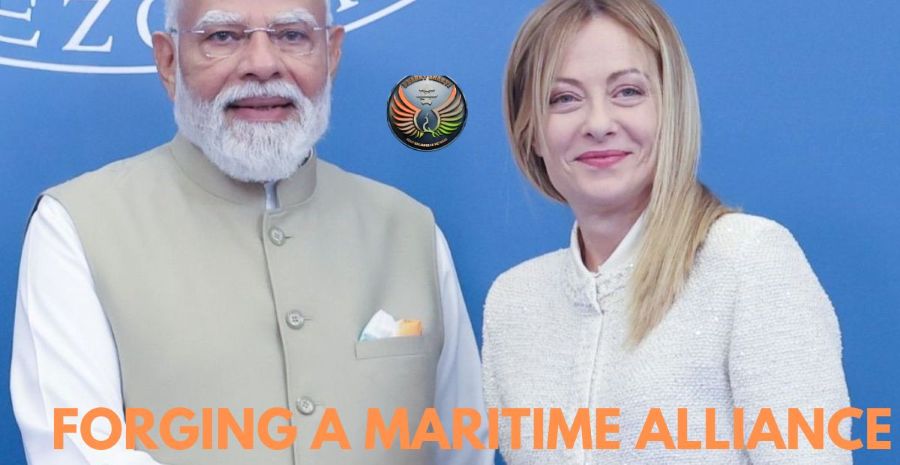
In November 2024, the Indian and Italian prime ministers announced a Joint Strategic Action Plan. It called for defence coproduction and for enhancing cooperation in counterterrorism, cybersecurity, and maritime security. Italy integrates its defence industry into its foreign policy, enhancing its geopolitical profile in regions where it previously had little influence. At a time when the Indian defence sector has been alarmed by the possibility of supply shortages from Russia, due to the ongoing war in Ukraine, Delhi’s efforts to diversify defence procurements and Rome’s incentives to expand trade ties with Asia are converging in a promising partnership.
In December 2025, India concluded a 200 million euro contract for the purchase of 48 Black Shark Advanced (BSA) heavyweight torpedoes from the Italian firm WASS Submarine Systems. The firm is a subsidiary of the Fincantieri Group, Europe’s biggest shipbuilder. A similar deal had been stalled since 2016, leaving the Indian Navy’s six Scorpene-class submarines ineffective in an interdiction role against hostile vessels in the event of war. The original contract was for 98 torpedoes, and while the new contract is for half this number, the smaller deal still constitutes a significant enhancement of India’s undersea war-fighting capability. The global market for undersea capabilities is expected to almost double in value from 22 billion euros to 43 billion in just four years, by 2030. Fincantieri expects to double its revenue from this production sector by 2027, accounting for 8 per cent of the group’s total earnings, up from 4 per cent in 2024.
In 2021, India lifted a ban on the Italian defence company Leonardo, which had been blacklisted in 2014 over a corruption scandal involving the purchase of helicopters. Five years later, in 2026, Leonardo and Adani Defence and Aerospace reached an agreement to establish an integrated helicopter manufacturing infrastructure in India. The Indian government had already exempted component parts needed for the manufacture of certain types of aircraft from customs duty. The deal will allow India to gain manufacturing, maintenance and training capabilities for Leonardo’s AW169M and AW109 TrekkerM helicopter series. At a time when India’s requirements for helicopters are expected to increase to over a thousand airframes in the next decade, the Adani-Leonardo deal comes at the right time. The AW169M will be a strong contender for the Indian Navy’s Utility Helicopter due to its maritime readiness.
India had previously been warming to Italian hardware when, in 2019, it purchased .338 Lapua Magnum Scorpio TGT sniper rifles for troops stationed along the Line of Control. Italian trainers provided familiarisation with the weapon, and a deal for India-based manufacture for five million rounds of ammunition for the weapon was also concluded. These experiences likely opened the door to more interactions, even as the bilateral relationship was upgraded to a Strategic Partnership in 2023.
In November that year, a joint venture was established between India’s Merlinhawk Aerospace and the Italian firm Vega Composites, which together set up a company in Tamil Nadu aimed at producing advanced composite materials for the aerospace, land and maritime sectors. The joint venture would also explore opportunities in hydrogen storage and fuel cell development.
It came on the back of expanding technical cooperation in the non-defence sector, such as in 2020-21, when Fiat Chrysler announced the establishment of a US$ 150 million digital hub in Hyderabad.
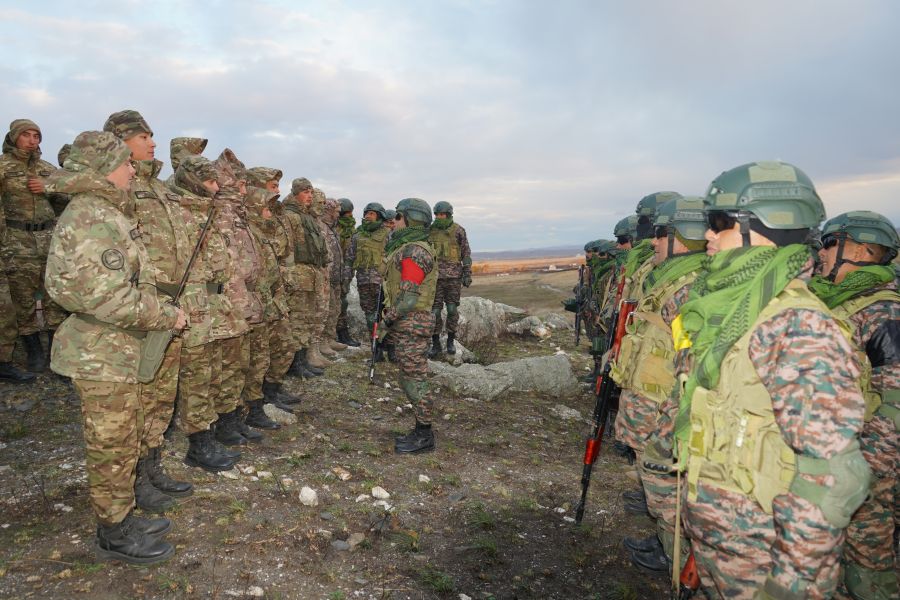
In October 2024, aircraft carriers from the Indian and Italian navies carried out their first-ever joint exercise. The five-day exercise included weapon drills and simulated air combat missions. Tellingly, India’s Russian-manufactured MiG-29K carrier aircraft trained alongside Italy’s American-manufactured F-35 B Lightning II fighters. The Italian crews had previously trained with the US Navy in the Red Sea and, two years earlier, had participated in multinational exercises involving the French, American, and British Royal navies.
In a sign of strengthening maritime ties, the Indian Navy’s recently-commissioned stealth frigate, INS Tamal, made a three-day port call at Naples in August 2025. The ship was on its maiden voyage from Kaliningrad, Russia, where it had been built, to its homeport in India. Prior to calling at Naples, it conducted a passage exercise with the ITS Trieste – Landing Helicopter Dock of the Italian Navy.
Since 2018, India has been a member of the Trans-Regional Maritime Network, a group of 30 countries steered by Italy that aims to track the movement of commercial vessels across the world’s oceans. Both countries are exploring ways to enhance information-sharing in the Indian Ocean Region. Established protocols are that data is transmitted through the maritime traffic monitoring systems of member states. Since India is the resident maritime power in the IOR, it is well-positioned to strengthen Italian maritime domain awareness (MDA) in this part of the globe.
Meanwhile, Italian operational experience in MDA, gained through policing the Mediterranean Sea and pioneering the establishment of information fusion centres between friendly navies, can also enhance Indian capabilities. The Indian Navy’s Information Fusion Centre in Gurugram, for example, has benefited from the model developed by the Italian Navy’s Data Fusion Centre, established in 2006.
Italy has been raising its profile as a maritime security provider since 2008, when it joined the European Union’s Operation Atalanta (counter-piracy mission off the Horn of Africa) and later took leadership roles in Operation Sophia and Irini (interdiction missions against human trafficking off the coast of Libya). The country has taken the initiative in opening a new mandate for EU naval operations in the Red Sea with Operation Aspides (protecting merchant shipping against attacks by Houthi forces based in Yemen).
Since 2020, Italy has been expanding its naval engagements in the Western Indian Ocean. It has been partly due to American expectations that Europe should share the burden of providing security. Italy is seeking like-minded regional partners committed to a rules-based international order. India is a strong candidate, and the signing of a memorandum of understanding in April 2025 between the Italian Federation of Aerospace, Defence, and Security Companies (AIAD) and the Society of Indian Defence Manufacturers (SIDM) was a recognition that the two countries share common objectives in the security sphere.
Prem Mahadevan, a Switzerland-based researcher on European affairs