






The Defence Research and Development Organisation (DRDO) has initiated a search for a compact turbojet engine to power a new generation of indigenous missiles, loitering munitions, and high-speed unmanned platforms, amid growing emphasis on long-range precision-strike capabilities.
In an Expression of Interest (EoI), DRDO has invited domestic and international aerospace firms to supply a flight-proven turbojet engine in the 130–180 kilogram-force (kgf) thrust category for integration into advanced air- and ground-launched systems.
The engine specifications indicate that the requirement is intended for compact, fast-moving platforms where size, weight, and restart capability are critical operational factors.
Under the EoI, the propulsion unit must fit within a highly restricted configuration, not exceeding 275 mm in diameter, 540 mm in length, and weighing less than 25 kg, including accessories. The engine is also required to generate between 130 and 180 kgf thrust at sea level under Indian standard atmospheric conditions, without installation losses.
The operational demands outlined by DRDO are stringent. The engine must withstand axial loads of up to ±10G and lateral loads of ±8G, suggesting its intended use in agile platforms such as cruise missiles, loitering munitions and high-speed aerial targets capable of sharp manoeuvres during flight.
A key requirement is reliable air-start capability above 5,500 metres at speeds between Mach 0.3 and Mach 0.6, a performance parameter generally associated with advanced missile and drone propulsion systems operating in contested environments.
While DRDO’s Research Centre Imarat (RCI) will independently develop the fuel tank, vendors shortlisted under the programme will have to supply the entire propulsion package. It includes the fuel pump, fuel and drainage lines, engine control unit, valves, and a dedicated ground test system.
The EoI does not identify any specific programme, but the technical profile closely matches propulsion requirements for several DRDO systems currently under development or already in service.
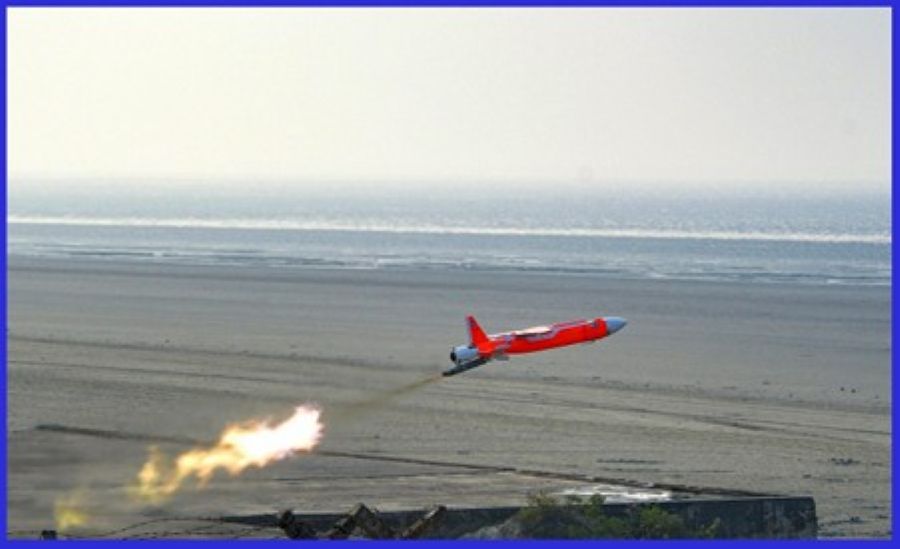
Among them is DRDO’s Abhyas high-speed expendable aerial target, which uses a small turbojet engine in a similar thrust class for weapons evaluation and air defence training missions. A newer engine could potentially improve endurance, manoeuvrability and operational reliability while reducing dependence on imported propulsion systems.
The move also reflects a broader global shift towards relatively low-cost precision strike weapons and autonomous combat systems. Conflicts in Ukraine and West Asia have highlighted the growing battlefield impact of compact jet-powered cruise weapons and long-range loitering munitions capable of penetrating air defences and striking high-value targets with limited logistical overhead.
For India, the requirement signals continuing efforts to strengthen indigenous capabilities in propulsion technologies, an area long seen as one of the more difficult segments of aerospace self-reliance.
Team Bharatshakti