



Editor’s Note
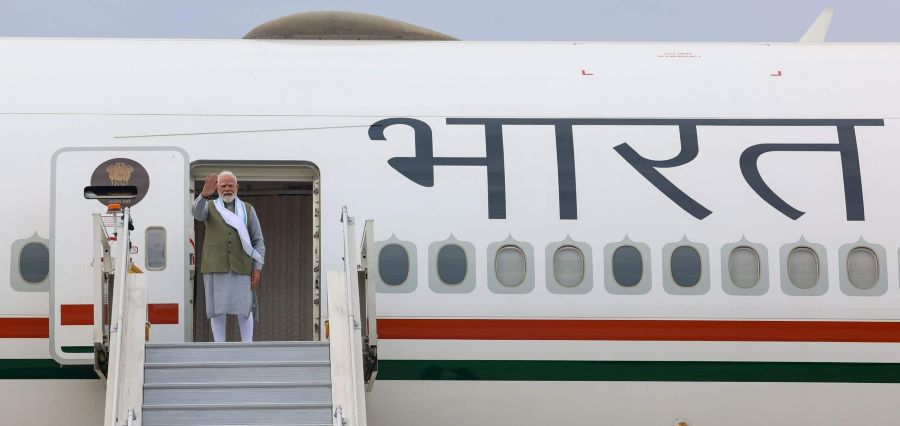
Following his engagements in France, Prime Minister Narendra Modi will undertake a State visit to Slovakia from June 14-16, the first by an Indian Prime Minister since the Slovak Republic became an independent nation in 1993. The visit, though low on public attention, could prove to be a significant milestone in India’s outreach to Central Europe. This article examines why Slovakia matters to India today, as Slovakia has emerged as one of the continent’s fastest-growing defence manufacturing hubs amid Europe’s rearmament drive. The author explores the opportunities it presents for India in defence manufacturing, technology partnerships, offering a timely assessment of an underexplored relationship that could acquire greater strategic relevance in the years ahead.
Slovakia, with a population of 5.4 million, is the world’s largest car producer per capita. Known as the ‘Detroit of Europe’, it hosts five leading car manufacturers and over 350 suppliers of vehicle components. Its low wage level compared to West European countries (roughly 60% of their average wage) and skilled workforce make it a logical site for manufacturing within the European Union. It has now become a fast-growing weapons producer as Europe rearms.
Following the creation of Czechoslovakia at the end of the First World War in 1918, the government wanted to locate factories away from the volatile German border. Thus, despite the region known as Slovakia having a relatively small population, a number of industries were established there. This manufacturing base allowed the Slovak part of former Czechoslovakia to become a major weapons producer for Warsaw Pact countries and their international clients in the developing world.
By the late 1980s, Czechoslovak arms production slowed down due to saturation of developing country markets, technological obsolescence, and diminished risks of US-Soviet conflict. After Czechoslovakia split into Czechia and Slovakia in 1992, both countries focused on integrating into West European consumer goods supply chains. Unlike Czechia, however, Slovakia retained a structural dependence on Russian energy supplies.
When the European Union imposed sanctions on Russian oil and gas after the start of the Russia-Ukraine War in 2022, Slovakia was somewhat conflicted. Its government at the time was sympathetic to Ukraine, sending Slovakia’s fleet of MiG-29 aircraft to the country, together with an S-300 air defence system. However, after a new government was elected at the end of September 2023, policy changed.
The new Prime Minister, Robert Fico, is thought to have remembered what happened during his first term in office in 2009. In January that year, a 13-day gas dispute broke out between Russia and Ukraine. The dispute cost the Slovak economy 100 million euros per day due to the halt of Russian gas supplies, which entered Slovakia via Ukrainian territory. Fico had rushed to meetings in Bratislava and Moscow. The Ukrainians, according to one account, treated him with barely disguised disdain. The Russians were reportedly much more hospitable.
Meanwhile, the Slovak President, who visited Kyiv two days after Fico, also felt slighted by the way Ukrainians treated his efforts to protect Slovakia’s energy security. Some commentators believe that this episode lingered in the institutional memory of the Slovak policy establishment, causing it to view Ukraine with hostility.
Upon being elected to the Prime Ministerial post again in 2023, Fico promised that Slovakia would not send military aid to Ukraine. He left open a loophole for private manufacturers of weapons – they could sell whatever they pleased to Kyiv. That same year, Ukraine’s daily consumption rate of artillery shells was 8000 shells of 155-millimetre caliber. The sole American factory capable of mass-producing 155-mm shells, the Iowa Ammunition Plant, could turn out only 40,000 shells per month, enough for five days’ fighting. European countries thus became crucial to sustaining Ukraine’s war effort, and Slovakia rapidly set up production lines for artillery rounds.
The company producing 155-mm ammunition was ZHS Holding, Slovakia’s largest arms producer. It is jointly owned by the state and a local subsidiary of the giant Czechia-based defence firm Czechoslovak Group (CSG). This latter company is owned by a Prague family known as the Strnads, who are reportedly close to the Smer party, which currently governs Slovakia. CSG also owns a Spanish subsidiary called FMG, which manufactures the gunpowder used in artillery shells. Thus, CSG acts at the hub of an arms production system that extends across Europe, with substantial investments in Slovakia, where it controls four companies.
Within three years of the Russia-Ukraine war beginning, the quantity of arms exported from Slovakia increased ten-fold, and kept rising. By 2026, the military-industrial complex accounted for 3% of Slovak GDP and had increased its artillery shell manufacturing output by 15-fold compared to 2022. Overall exports of arms and ammunition increased 23-fold by 2026. The arms production boom has benefited some factory workers: those involved in weapons manufacture on average earn 26% more than their peers in other production sectors. Besides artillery shells, Slovakia produced Zuzana 2 self-propelled howitzers and communications and electronic warfare systems. Konštrukta Defence, a state-owned company, produces the Zuzana.
One firm specialising in communication systems is Aliter Technologies. In 2025, Aliter acquired a majority stake in Canadian firm 3C Information Solutions Limited, along with its American subsidiary. It indicated plans to go global, according to one of Aliter’s owners. Another Slovak firm, CSM Industry, has partnered with the Finnish defence company Patria to produce armoured personnel carriers for the Slovak military.
In March 2026, Slovakia signed an agreement with Poland on defence industry cooperation. The two countries agreed to jointly offer Saudi Arabia and Vietnam the KTO Rosomak armoured personnel carrier, which is a lighter, licensed variant of a vehicle previously developed by Patria.
The Rosomaks would be equipped with Slovak-produced Turra-30 turrets, which are also intended for Poland’s Borsuk infantry fighting vehicle, which is projected for possible sale to Slovakia. A Slovak firm, Grand Power, will produce 26,000 firearms for the country’s armed forces, replacing Warsaw Pact-era pistols and rifles with newer weapons.
The Slovak Ambassador to India has noted that his country has been selling defence technology to India over the past three decades. He recognised the transformation of India’s defence sector, as demonstrated by India’s defence technology sales to Slovakia. He said that the ‘automotive industry is a strategic component of our cooperation‘.
For Indian private sector defence manufacturers, the growing presence of the Tata conglomerate in the Slovak car-manufacturing industry is an entry point. As American tariffs on EU products (including cars) take effect and Europe continues to rearm, there is likely to be a shift in some Slovak industrial sectors towards arms production. Tata’s investments in Slovakia might potentially open the country to greater business-to-business contacts with India. Small Slovak firms that supply components for car manufacturing are threatened by the transition to electric vehicles, which require fewer components than internal combustion engine vehicles. They are likely to be open to new business opportunities that allow them to diversify.
At the moment, the Slovak arms manufacturing ecosystem is dominated by a few large producers, but there are niche specialisations that make use of information technology skills. These include communications, detection and electronic warfare systems and drone control technologies. Indian firms would need to focus on software-centric defence production sectors to maximise their comparative advantage. Slovakia is a new territory for Indian businesses, but in time, it could become a partner in defence production.
Prem Mahadevan