


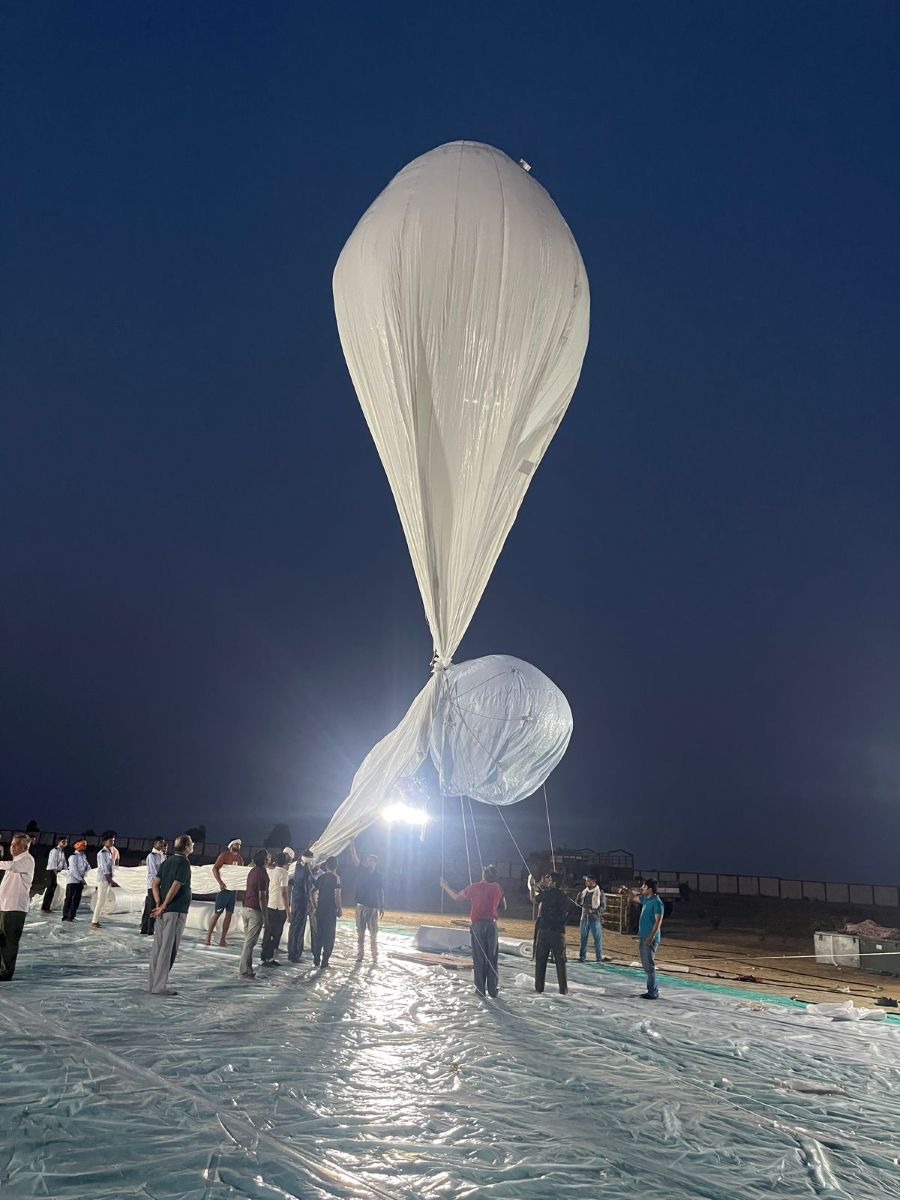
The Defence Research and Development Organisation (DRDO) has successfully flight-tested an indigenously developed High-Altitude Platform (HAPS), taking the system to an altitude of 21 km and holding it at around 20 km for more than 30 minutes.
The flight trial, conducted by DRDO’s Aerial Delivery Research and Development Establishment (ADRDE), Agra, is a significant step in India’s effort to develop long-endurance stratospheric platforms capable of providing persistent aerial surveillance.
The experimental platform was brought down under command after maintaining the required altitude and was successfully recovered. Data collected during the flight is now being analysed to assess the platform’s performance and validate its various subsystems.
During the flight, real-time video and vehicle parameters were transmitted to a Ground Control Station. The platform carried an array of instrumentation and control systems, including an inertial measurement unit, GPS receiver, onboard cameras and an altitude-control mechanism.
Unlike conventional aircraft, HAPS, a stratospheric airship functions as a high-altitude pseudo-satellite are designed to operate in the stratosphere for extended periods. Their ability to remain at very high altitudes for long durations could provide the armed forces with persistent surveillance, communications and intelligence-gathering capabilities, depending on the payload and eventual configuration.
According to the Defence Ministry statement, the trial was conducted with the participation of the Indian Air Force, Centre for Military Airworthiness and Certification (CEMILAC), Directorate General of Civil Aviation (DGCA), Airports Authority of India (AAI) and other civil authorities.
The DRDO describes the platform as a lighter-than-air system being developed as a long-endurance stratospheric aerial surveillance platform. The latest trial is intended to build the flight envelope and validate the technologies required for an operational system.
Defence Minister Rajnath Singh described the successful flight as an important milestone in India’s Aatmanirbhar Bharat effort towards developing a long-endurance stratospheric airship. He congratulated the DRDO, IAF, public sector undertakings and industry involved in the programme.
Team BharatShakti