General Dhiraj Seth on Tuesday assumed charge as the 31st Chief of the Army Staff (COAS), succeeding General Upendra Dwivedi, who retired after more than four decades of distinguished service, taking command of the 1.3 million-strong Indian Army at a time of rapid military modernisation and evolving security challenges along India’s borders.
Before taking over as Army Chief, Gen Seth served as the Vice Chief of the Army Staff. An alumnus of the National Defence Academy, Khadakwasla, he was commissioned into the Armoured Corps in December 1986.
His elevation marks the first time in nearly three decades that an officer from the Armoured Corps has become Army Chief. The last Armoured Corps officer to hold the post was General V.P. Malik’s predecessor, General Shankar Roy Chowdhury, who retired in September 1997.
Gen Seth assumes office as the Army presses ahead with its “Decade of Transformation” agenda, aimed at building a technology-driven, self-reliant and future-ready force amid changing battlefield dynamics and heightened security concerns along both the northern and western fronts.
Widely regarded as one of the Army’s most experienced operational commanders, Gen Seth has the rare distinction of commanding two operational Army Commands on the western front. After being promoted to Army Commander, he headed the Jaipur-based South Western Command before taking over the Pune-based Southern Command, which maintained high operational readiness during Operation Sindoor last year.
During a military career spanning nearly four decades, he has commanded formations at every level, including an Armoured Regiment in the desert sector, an Armoured Brigade in the western theatre, a Counter-Insurgency Force in Jammu and Kashmir, and the elite Sudarshan Chakra Corps, one of the Army’s principal strike formations. He has also served as General Officer Commanding, Delhi Area, overseeing key national and international military engagements and ceremonial responsibilities.
At Army Headquarters, Gen Seth held several key appointments related to strategic planning and capability development, contributing to the Army’s modernisation roadmap, force restructuring and technology induction. He is a graduate of the Higher Command Course, the National Defence College and the prestigious Command and Staff Course in Paris.
Top-level Reshuffle
The change of guard at Army Headquarters has also triggered a series of senior-level appointments.
Lieutenant General Sandeep Jain, currently heading the Southern Command, will assume charge as the Vice Chief of the Army Staff on July 1.
Lieutenant General Rajesh Pushkar, presently commanding the II Strike Corps at Ambala, has been appointed General Officer Commanding-in-Chief, Southern Command, while Lieutenant General Mohit Malhotra, currently Chief of Staff of the Eastern Command in Kolkata, will take over as the new General Officer Commanding-in-Chief of the South Western Command in Jaipur following the retirement of Lt Gen Manjinder Singh. Both officers are from the Armoured Corps.
Dwivedi’s Tenure
General Upendra Dwivedi demitted office on Tuesday after a tenure marked by major operational and organisational developments.
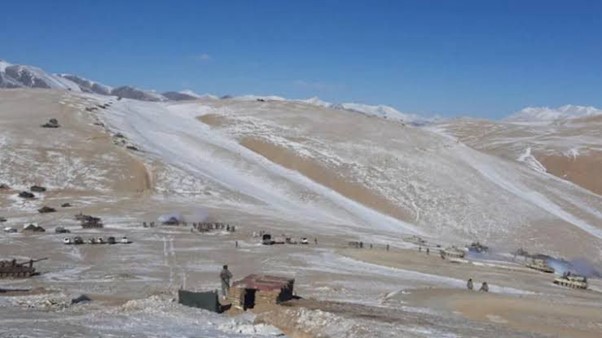
The defining military event during his tenure was Operation Sindoor, under which the Army maintained a high level of preparedness and executed calibrated operations on the western front. Simultaneously, troops continued to maintain a vigilant posture along the Line of Actual Control under Operation Snow Leopard along the Northern Borders.
Gen Dwivedi also oversaw significant reforms under the Army’s ongoing “Decade of Transformation” initiative. His tenure focused on force restructuring, technology absorption, jointness among the services, systems reform and soldier-centric measures.
Several new operational concepts and force structures, including Rudra Brigades, Bhairav Battalions, Ashni Drone Platoons, Shaktibaan Regiments, Divyastra Batteries, Electronic Warfare Brigades, Integrated Battle Groups and raised specialised ‘Baaz’ battalions to operate long-range drones for surveillance and precision strike missions, were advanced during his tenure as part of the Army’s drive to build a more agile, networked and future-ready fighting force.
Ravi Shankar
Dr Ravi Shankar has over two decades of experience in communications, print journalism, electronic media, documentary film making and new media.
He makes regular appearances on national television news channels as a commentator and analyst on current and political affairs. Apart from being an acknowledged Journalist, he has been a passionate newsroom manager bringing a wide range of journalistic experience from past associations with India’s leading media conglomerates (Times of India group and India Today group) and had led global news-gathering operations at world’s biggest multimedia news agency- ANI-Reuters. He has covered Parliament extensively over the past several years. Widely traveled, he has covered several summits as part of media delegation accompanying the Indian President, Vice President, Prime Minister, External Affairs Minister and Finance Minister across Asia, Africa and Europe.