


The recent deadlock between employees of the Ordnance Factory Board (OFB), who struck work to protest the proposed corporatisation of its factories, and the Defence Ministry may have led to the unions calling off a month-long strike but fundamental issues about the functioning of the OFB remain. OFB employees have opposed the Centre’s proposal of converting ordnance factories into public sector entities in order to introduce greater professionalism in their management and increase the export potential of defence equipment. However, OFB employees have opposed the idea for various reasons.
The proposal for corporatisation is not new. The Modi government wanted it done in its first term but it was not until now–till Rajnath Singh took over as Defence Minister–that this process has gathered pace.
Why Restructuring
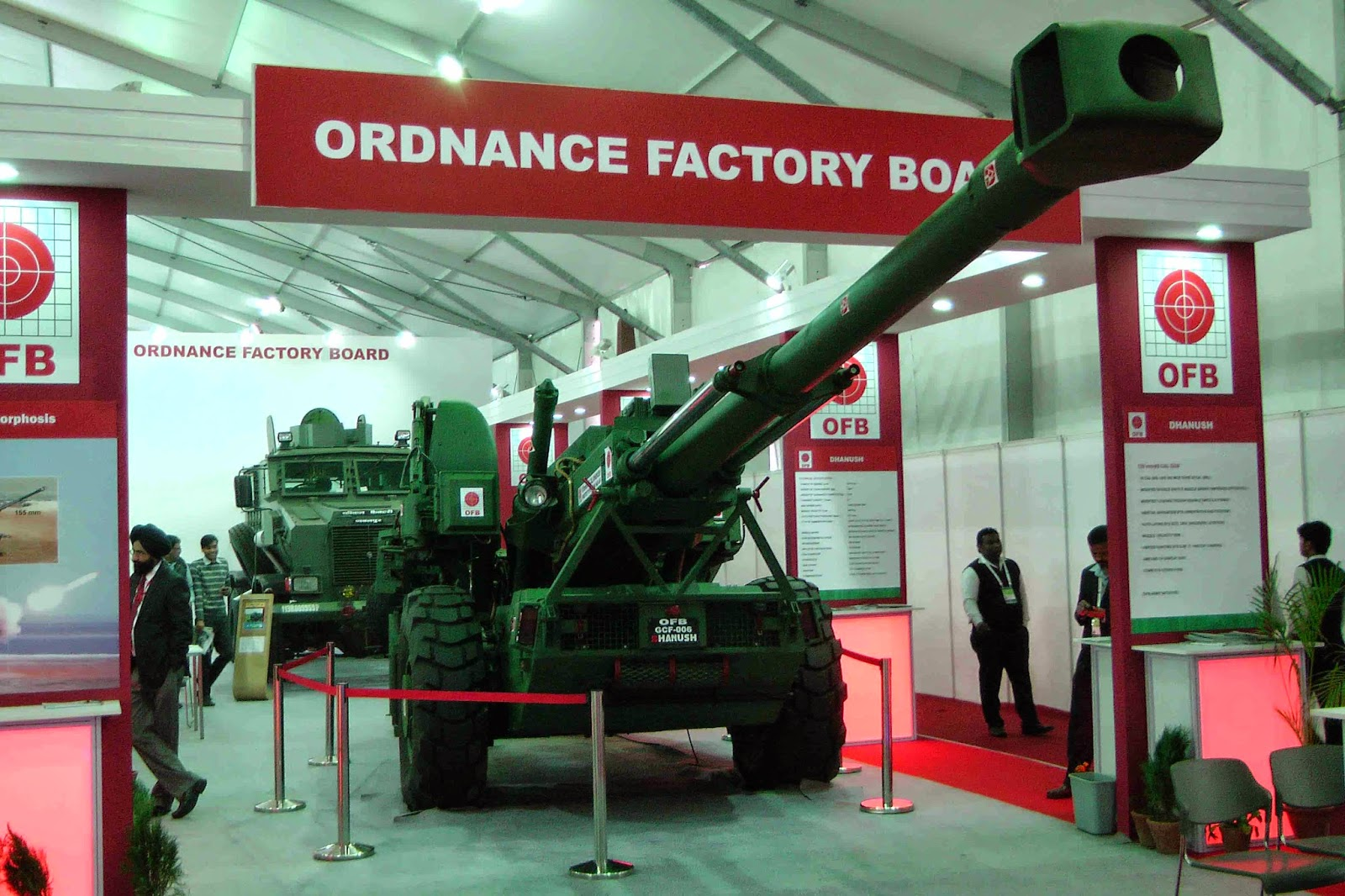
Before getting into the arguments on both sides, it is essential to take a look at the history of OFB and the way it has evolved. The Indian Ordnance Factories organisation – a family of 41 Ordnance Factories under the aegis of its corporate headquarters – Ordnance Factory Board, Kolkata – is a mammoth industrial setup which functions under the Department of Defence Production of the Ministry of Defence. The OFB comprises the world’s largest defence equipment manufacturers, producing from troop uniforms, tents and boots to parachutes, ammunition, tanks, artillery guns and armoured vehicles for the armed forces.
The OFB traces its origins to the Gun and Shell factory set up by the East India Company in Cossipore, near Kolkata, in 1801. Since then it has made steady progress and forms an integrated base for indigenous production of defence hardware and equipment, with the primary objective of self-reliance in equipping the armed forces with state of the art battlefield equipment.
Ordnance Factories were set up as “captive centres” to serve the needs of the Armed forces, but have been facing performance issues for a long time. Concerns have been raised in various quarters over the last few decades, regarding the functioning of OFB which, according to its critics, lacks professional attitude as required from a manufacturing organization like OFB.
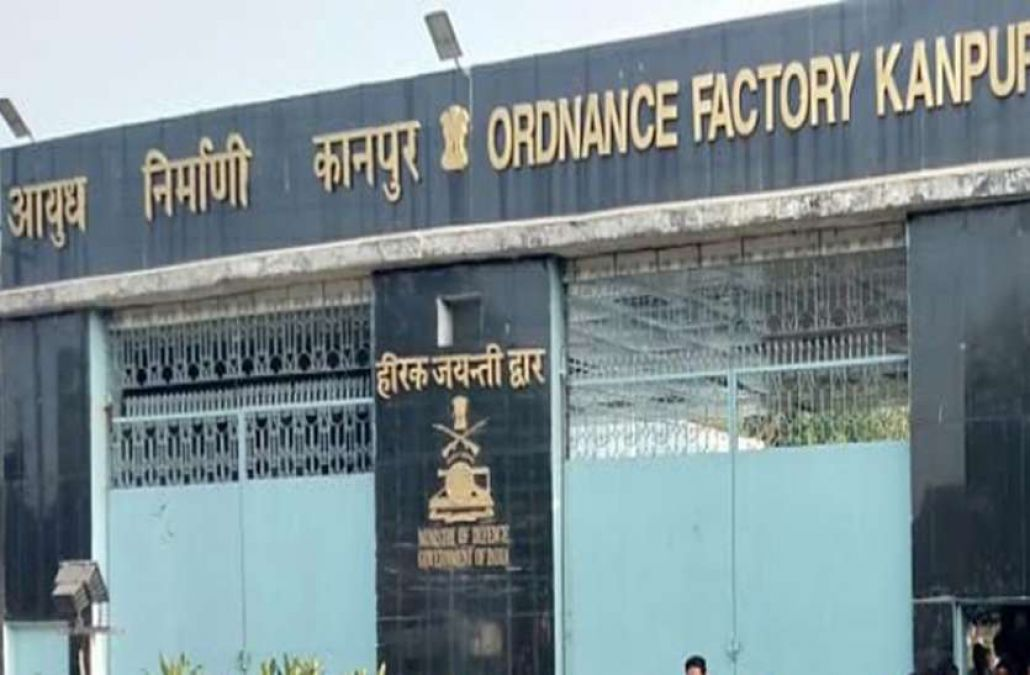
Today, the Board receives annual budgetary support of over Rs 2,000 crore, has over 80,000 employees and holds over 60,000 acres of land. More than 80 per cent of the OFB’s orders come from the army, though the cluster of 41 factories meets barely 50 per cent of the army’s requirements.
Once the so-called ‘force behind armed forces’ has lost its lustre because of the peculiar organisational structure.
The present set-up and methods of OFB are inconsistent with requirements of industry conglomerates that call for agility and flexibility at top managerial levels. Every decision relating to them from the modernisation of plants and machinery to entering into joint ventures with other companies are subject to government rules and regulations, which reduces the leverage and flexibility of a professionally run company.
Being an arm of the government, the OFB and its factories cannot retain profits and hence, do not have the incentive to make any. OFB in its present avatar of a departmental organisation may not be appropriate for carrying out production activities and competing with rivals in the sector who have all the managerial and technical flexibility.
According to the Defence Ministry, there are a few key issues concerning ordnance factories which impinge on performance:
Monopoly Supply: OFB has all along supplied products to Armed forces – the captive customer – on a nomination basis which has its inherent disadvantages. Because of monopoly, there is no incentive for OFB to improve its quality of products and implement a dynamic system of getting customer feedback on both quality and on-time delivery issues.
Quality issues: Poor quality of OFB products have been a consistent cause for concern. It’s an open secret that the armed forces routinely take up issues concerning the poor quality of ammunition manufactured by the ordnance factories, pointing out that it has led to several fatal incidents.
High Cost: The high cost of OFB products due to high overhead charges in OFB including high maintenance charges, high supervisory and indirect labour charges are major concerns. This also results in high overhead charges being loaded onto OFB products, with minimal innovation and technology development taking place.
According to the Additional Controller General of Defence Accounts Report of 2016, the OFB was overcharging the army several hundred crores in cases ranging from battle tanks to clothing to general stores. In the case of the T-90 tanks built under licence from Russia at the Heavy Vehicles Factory Avadi, the OFB was charging the army Rs 21 crore per tank, nearly 50 per cent more than what an import would cost.
Lack of innovation: There is minimal innovation and technology development in OFB.
Low productivity: Generally, there is low productivity of plant and machinery and manpower. Furthermore, working under the umbrella of Government procedures and being the sole service provider for Armed Forces, there is no penalty for delayed delivery to the customers.
How Corporatisation Plan Progressed
Over the past two decades, the subject of restructuring/corporatisation of OFB has been examined by various committees. The T.K.A. Nair Committee (formed in May 2000) suggested corporatisation – the conversion of the Ordnance Factory Board into the Ordnance Factory Corporation Limited. It was further observed that maintaining the status quo of Ordnance Factories as cost centres in a government department would prove expensive, financially and strategically.
With a strong Board consisting of senior officials from the Government, Army, research wings, public sector undertaking and from industry, the Corporation can start its long journey of relying on its strengths, revenues and surpluses, for growth. The proposed structure would also enable appropriate future changes in line with the dynamic fast-changing global environment related to the production of defence goods.
In 2004, the Vijay Kelkar Committee also recommended the same, suggesting that it be accorded the status of a Nav Ratna, along the lines of BSNL. Corporatisation does not necessarily mean privatisation. It was observed that the formation of a corporation alone would ensure that Ordnance Factories get the desired functional autonomy and make them accountable and responsible for their operations and performances.
Later, in April 2015, Vice Admiral Raman Puri Committee observed that it is essential to change the current functioning of OFB as an attached office of the Ministry and a budgeted entity as it is completely incompatible with the modern methods of production and quality control. It recommended corporatising the OFB and splitting it into three or four segments, with each one specialising in a distinct area like weapons, ammunition and combat vehicles.
The first moves to end the OFB monopoly came last year when the government notified 275 non-core items which the armed forces could buy from the open market. In the past, the services had to buy these items exclusively from the OFB.
Modi Govt. Initiative
The first moves to open up the OFB was started in September 2016 when it was assessed that OFB was not meeting the Army’s requirement. This led to the series of policy decisions that gradually come to the present stage; whittling away the OFB monopoly.
The corporatisation of ordnance factories was listed as one of the 167 “transformative ideas” to be implemented in the first 100 days of the Modi government’s second term. These ideas were proposed in early July based on the recommendations of the Sectoral Group of Secretaries in consultation with the relevant Groups of Ministers.
OFB’s top officials were called for a meeting with Defence Minister Rajnath Singh and Ministry officials on July 18, during which a decision to finalise the plan was taken. Officials say a Cabinet note to give effect to corporatisation had been prepared and circulated to stakeholder ministries for consultation.
According to the present dispensation, the vision of the proposal is to make OFB increase its turnover, export growth and self-reliance. Moreover, there is no proposal for privatisation.
In a statement, the Defence Ministry said: “Corporatisation of OFB will bring OFB at par with other defences Public Sector Undertakings (PSUs) of the Ministry of Defence. This is in the interest of OFB as it will provide operational freedom and flexibility to the OFB which it presently lacks. Besides, the interests of the workers will be adequately safeguarded in any decision taken on the subject.”
The proposed transformation of OFB from a Government Department to a public sector corporate entity will have several advantages. These include:
– Improve flexibility and dynamism in decision making as a corporate entity.
– Improvement of the efficiency, move towards optimal costs
– Move away from cost-plus mechanism to competitive pricing so that armed forces could get cheaper products.
– Greater penetration in defence export market.
– Reduce import dependency for arms and ammunition.
– Greater flexibility in technology acquisition through overseas assets.
– Leapfrogging technology and innovation for self-reliance in defence.
– Currently, OFB is a production centre with a dependence on expensive foreign technology. A corporate entity will move from production-based to technology-based organization enhancing self-reliance.
– Corporatised Ordnance factories can form strategic alliances with Indian and overseas companies to develop new products and carve out a niche in the international armament industry.
– Corporatised Ordnance factories may not require finances from the Government to fund modernisation and R&D and can become a financially self-supporting organisation.
– Increased turnover/profitability will lead to enhanced employment and better service conditions.
– Under-utilised capacities in factories will be better utilised.
– Timely supply and quality of supplies by the factories will improve.
– Enhanced combat efficiency of the Armed Forces and ensuring customer satisfaction.
Defence Minister Rajnath Singh, having studied the idea after taking over the MoD in May 2019, is determined to carry the plan through. Despite the employees threatening to go on a month-long strike in protest, Singh is reported to have given in-principle approval to start implementing the plan. Perhaps sensing his thought process, the OFB employees called off the strike and have agreed to discuss the issue.
Employees’ Unease
One of the fears of employees is that corporatisation is a step towards privatisation. They fear job losses. They also argue a corporate entity would not be able to survive the unique market environment of defence products.
“Converting the Ordnance Factories into a corporation is not commercially viable because of fluctuations in orders, long gaps between orders, uneconomical order quantity, and life cycle support required for 30-40 years after the introduction of equipment.
The experience of the past two decades is that corporatisation is a route to privatisation. Therefore, ordnance factories should continue as a departmental organisation,” says a letter sent to Defence Minister Rajnath Singh by the general secretaries of the three main employee federations that are leading the strike, affiliated respectively to the RSS, the CPM’s CITU, and the Congress party’s INTUC.
It remains to be seen if these arguments will cut any ice with the government-which, for the moment, appears determined to move ahead with corporatisation.
Nitin A. Gokhale

Author, thought leader and one of South Asia's leading strategic analysts, Nitin A. Gokhale has forty years of rich and varied experience behind him as a conflict reporter, Editor, author and now a media entrepreneur who owns and curates two important digital platforms, BharatShakti.in and StratNewsGlobal.com focusing on national security, strategic affairs and foreign policy matters.
At the beginning of his long and distinguished career, Gokhale has lived and reported from India’s North-east for 23 years, writing and analysing various insurgencies in the region, been on the ground at Kargil in the summer of 1999 during the India-Pakistan war, and also brought live reports from Sri Lanka’s Eelam War IV between 2006-2009.
Author of over a dozen books on wars, insurgencies and conflicts, Gokhale relocated to Delhi in 2006, was Security and Strategic Affairs Editor at NDTV, a leading Indian broadcaster for nine years, before launching in 2015 his own digital properties.
An alumni of the Asia-Pacific Centre for Security Studies in Hawaii, Gokhale now writes, lectures and analyses security and strategic matters in Indo-Pacific and travels regularly to US, Europe, South and South-East Asia to speak at various international seminars and conferences.
Gokhale also teaches at India’s Defence Services Staff College (DSSC), the three war colleges, India's National Defence College, College of Defence Management and the intelligence schools of both the R&AW and Intelligence Bureau.
He tweets at @nitingokhale