


In a major strategic move aimed at strengthening their footprint in the Indo-Pacific, India and Indonesia on Tuesday unveiled an ambitious defence partnership that combines advanced missile exports with maritime infrastructure, signalling a deeper convergence amid China’s growing military and maritime assertiveness in the region.
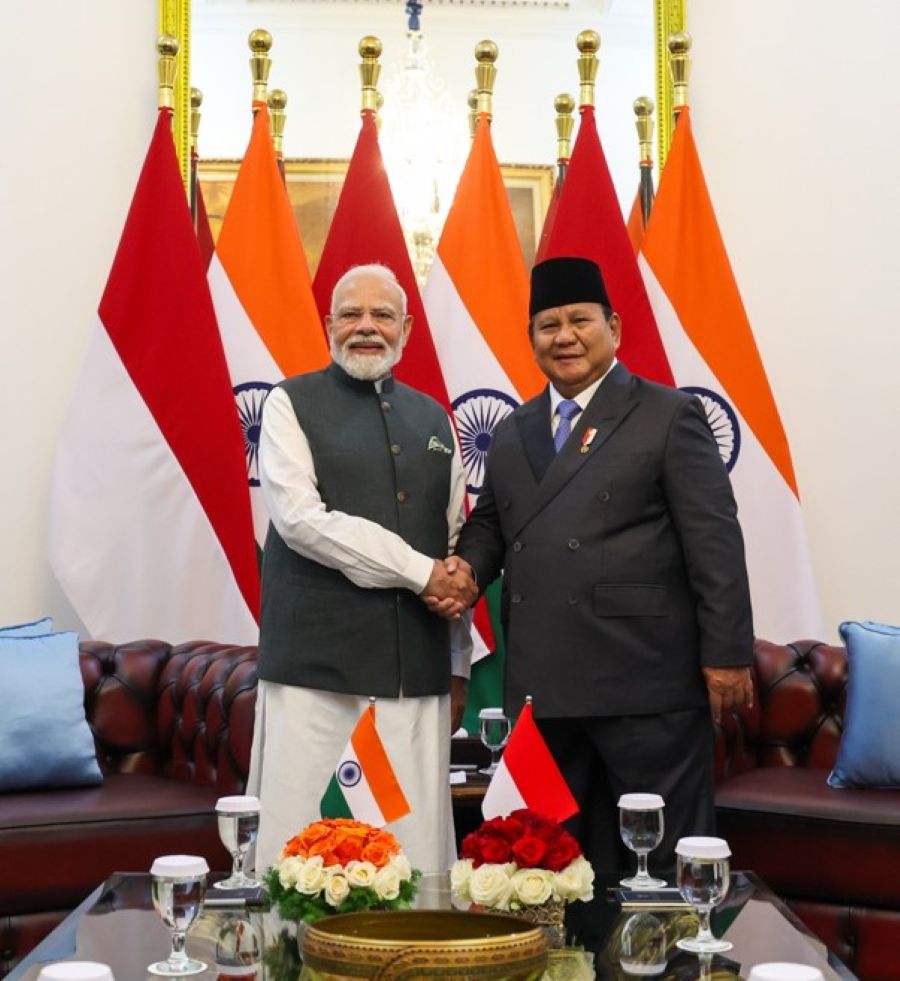
Following talks between Prime Minister Narendra Modi and Indonesian President Prabowo Subianto, the two countries signed agreements covering the procurement of BrahMos supersonic cruise missiles, Astra Mk-1 beyond-visual-range air-to-air missiles and the joint development of the strategically located Sabang Port at the mouth of the Strait of Malacca.
The agreements elevate one of India’s most important strategic relationships in Southeast Asia by simultaneously strengthening Indonesia’s military capabilities and expanding India’s maritime reach across one of the world’s busiest sea lanes.
Indonesia is set to become the third country, after the Philippines and Vietnam, to procure the BrahMos missile system, marking another milestone in India’s defence export ambitions. The proposed package includes missile systems, launch infrastructure, operator training, maintenance support and long-term technical assistance under a phased acquisition model.
The BrahMos, jointly developed by India and Russia, is among the world’s fastest operational supersonic cruise missiles and can be launched from land, sea and air platforms. Interest in the missile has grown internationally after last year’s military conflict with Pakistan during Operation Sindoor.
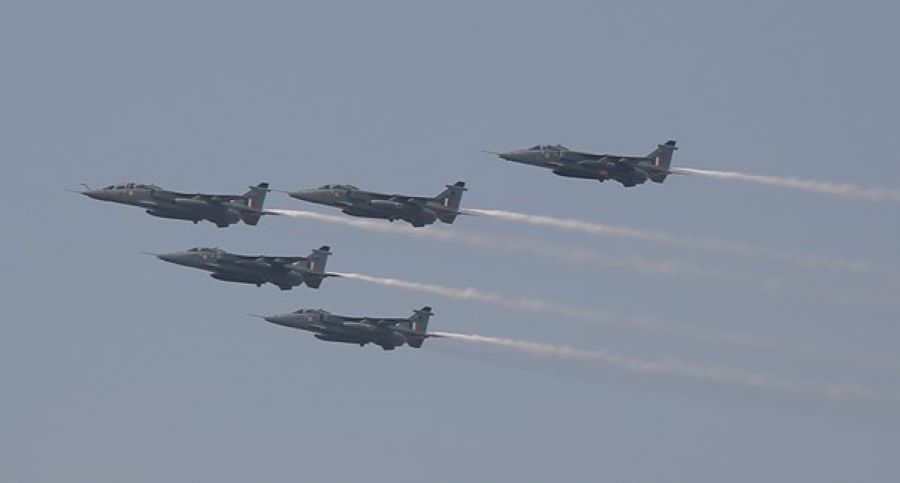
India is also supplying the Astra Mk-1 beyond-visual-range air-to-air missile, which state-run Bharat Dynamics Limited (BDL) will integrate with Indonesia’s Russian-origin Su-30 fighter fleet. The missile, already operational with the Indian Air Force, has an engagement range of about 80-110 km, while India is simultaneously developing the longer-range Astra Mk-2 capable of striking targets up to around 160 km away.
Defence analysts say the combined package reflects New Delhi’s evolving approach of exporting integrated defence capabilities rather than standalone weapon systems.
Captain Sarabjeet Singh Parmar, retired naval officer and analyst said Indonesia occupies a pivotal position in the Indo-Pacific as it sits astride the six major maritime gateways connecting the Indian and Pacific Oceans, including the Malacca, Singapore, Sunda, Makassar, Ombai-Wetar and Lombok Straits.
“The BrahMos sale is a significant step in enhancing Indonesia’s defence capability to meet emerging security challenges. By combining it with the Astra missile package, India is offering a comprehensive defence solution at a time when Jakarta is diversifying its military acquisitions,” he said.
Parmar noted that Indonesia has also recently inducted Turkey’s Khan ballistic missile, making India’s package strategically significant as it offers complementary capabilities while reinforcing long-term defence cooperation.
The most consequential agreement, however, could prove to be the decision to jointly develop Sabang Port, located at the northern tip of Indonesia’s Sumatra island, overlooking the Strait of Malacca and barely 160 km from India’s upcoming Great Nicobar trans-shipment port.
The deep-water port can accommodate all classes of naval vessels, including submarines, and sits close to one of the world’s most critical maritime chokepoints through which a substantial share of global trade and energy shipments passes.
Former Indian Navy spokesperson Captain D K Sharma described the development as a major diplomatic and strategic gain for India.
“The BrahMos partnership strengthens ties with countries facing increasing pressure in the South China Sea. Indonesia is India’s maritime neighbour, and this defence cooperation will significantly enhance long-term security around the Strait of Malacca,” Sharma said.
On Sabang, Sharma said the location could provide India and Indonesia with strategic leverage over one of the world’s busiest shipping corridors.
“Should the need arise, both countries would be positioned on either side of the Strait of Malacca, providing effective strategic oversight of this vital maritime passage,” he observed.
Parmar said the revival of the Sabang project is equally significant because it reinvigorates an initiative first agreed during Modi’s 2018 visit to Indonesia, but which had remained largely dormant due to local sensitivities in Indonesia’s Aceh province.
Its revival, he said, suggests those concerns have now been addressed and could pave the way for improved connectivity between India’s Andaman and Nicobar Islands and Indonesia’s Aceh region under the India-Indonesia Shared Vision on Maritime Cooperation in the Indo-Pacific.
The project also complements India’s Act East Policy, making Sabang a potential eastern maritime gateway after Myanmar’s Sittwe Port, while expanding India’s logistical presence in the eastern Indian Ocean.
Parmar added that Indonesia’s decision to partner with India on Sabang carries broader geopolitical significance.
Indonesia has carefully balanced major powers in the region. The fact that Jakarta has chosen India to develop such a strategically located port underscores the depth of bilateral trust. Although Indonesia is not a claimant in the South China Sea disputes, it has firmly defended its sovereign rights around the Natuna Islands against Chinese incursions,” he said.
India and Indonesia had upgraded their relationship to a New Comprehensive Strategic Partnership during Modi’s 2018 visit, following which a joint task force was created to develop Sabang and improve connectivity between the Andaman and Nicobar Islands and Indonesia’s Aceh province.
Tuesday’s agreements indicate that after several years of slow progress, both countries are now seeking to translate that strategic vision into concrete defence and maritime cooperation, strengthening India’s position in the Indo-Pacific while offering Indonesia greater military capability and strategic options.
Ravi Shankar

Dr Ravi Shankar has over two decades of experience in communications, print journalism, electronic media, documentary film making and new media.
He makes regular appearances on national television news channels as a commentator and analyst on current and political affairs. Apart from being an acknowledged Journalist, he has been a passionate newsroom manager bringing a wide range of journalistic experience from past associations with India’s leading media conglomerates (Times of India group and India Today group) and had led global news-gathering operations at world’s biggest multimedia news agency- ANI-Reuters. He has covered Parliament extensively over the past several years. Widely traveled, he has covered several summits as part of media delegation accompanying the Indian President, Vice President, Prime Minister, External Affairs Minister and Finance Minister across Asia, Africa and Europe.