




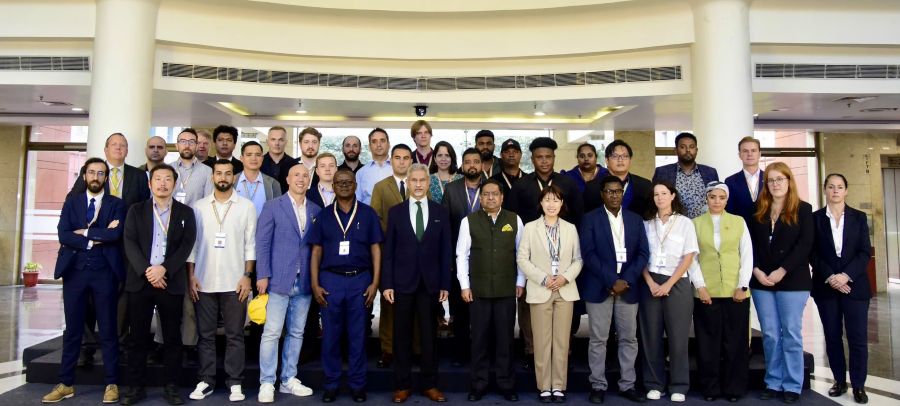
India is stepping up efforts to expand its presence in the global defence market, with the Ministry of External Affairs (MEA), in coordination with the Indian Armed Forces, hosting defence journalists from more than 30 countries and providing them access to some of the country’s major military establishments and defence manufacturing facilities.
The two-week familiarisation programme, which began on November 16, brings together journalists from countries across Latin America, Asia, Africa, Europe, the Middle East, and the Indo-Pacific. This is significant as India looks to position its growing indigenous defence industry as a competitive alternative for countries seeking to diversify their military equipment suppliers.
External Affairs Minister S Jaishankar met the visiting journalists and discussed the changing security environment, emerging technologies and the importance of reliable and diversified partnerships.
“Engaging conversation today with defence journalists from over 30 countries on a familiarisation visit to India. Glad they had an opportunity to witness India’s growing defence capabilities,” Jaishankar said in a post on X.
The delegation includes representatives from Algeria, Armenia, Australia, Croatia, Egypt, Estonia, Ethiopia, Fiji, France, Germany, Guyana, Hungary, Indonesia, Ivory Coast, Japan, Kenya, Latvia, Malaysia, Mauritius, Morocco, Nigeria, Oman, Paraguay, Serbia, Slovakia, South Africa, South Korea, Sri Lanka, the United States, Uruguay and Vietnam.
The programme is the second such initiative organised by the MEA this year, following an earlier engagement in February in which journalists from almost twenty-plus countries had visited military facilities. The effort is to make such outreach more regular, with further visits for specialist foreign defence correspondents.
For India, the exercise goes beyond media familiarisation. It provides an opportunity to introduce international audiences to its defence manufacturing capabilities at a time when the country is seeking to increase exports of missiles, artillery systems, aircraft, helicopters, armoured vehicles, naval platforms and defence electronics.
The itinerary has covered several important components of India’s defence ecosystem.
At Mazagon Dock Shipbuilders Limited in Mumbai, the journalists were introduced to the country’s submarine and warship manufacturing capabilities. The visit is particularly relevant to maritime nations looking to strengthen naval surveillance, coastal security and patrol capabilities.
The delegation subsequently visited the Indian Air Force’s Maintenance Command in Nashik, where it was briefed on aircraft maintenance and servicing infrastructure. At Bharat Forge in Nagpur, the journalists were briefed on artillery programmes and other defence initiatives, including armoured vehicles. The company has already established an international presence, with Armenia among the countries using Indian-made artillery equipment.
At Sulur Air Force Station, the delegation was briefed on the indigenous light combat aircraft ‘Tejas ’. The programme also includes interactions with senior officers from the Army, Navy and Air Force, witnessing demonstrations of military manoeuvres and Special Forces capabilities.
The selection of facilities gives the visitors a broad view of India’s capabilities, spanning military operations, aerospace maintenance, naval construction and private-sector manufacturing.
The composition of the delegation offers an interesting indication of the potential markets for Indian defence products, although participation in the programme should not be interpreted as evidence of specific procurement negotiations.
Southeast Asia: Indonesia and Vietnam are important markets to watch for the BrahMos supersonic cruise missile. Vietnam has entered into a procurement agreement for the system, while Indonesia is expected to seek more BrahMos missiles from India.
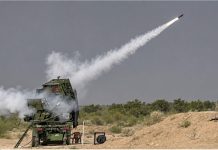
The Akash air-defence system, Astra air-to-air missile, naval patrol vessels and coastal surveillance radars also feature in India’s engagement with regional countries.
Africa: Egypt, Algeria, Morocco, Nigeria and South Africa offer potential opportunities for Indian artillery, air-defence systems, armoured vehicles and naval equipment. The Pinaka multiple rocket launcher, ATAGS 155 mm artillery gun and WhAP 8×8 armoured platform are among the systems that have attracted attention. Morocco’s acquisition of the WhAP provides an important example of India’s expanding armoured vehicle export presence. Dornier-228 aircraft and Dhruv helicopters could also interest countries such as Kenya, Ethiopia and Nigeria.
Indian Ocean and island nations: Mauritius, Sri Lanka and Fiji could be relevant markets for Indian-built offshore patrol vessels, fast interceptor craft, Dornier-228 maritime surveillance aircraft and coastal radar systems. Guyana and other maritime nations are also exploring opportunities in Indian shipbuilding and surveillance technologies.
Europe: Armenia is already an important Indian defence customer, having procured systems including Pinaka, Akash, ATAGS and Swathi weapon-locating radars. Serbia could be a prospective market for artillery, ammunition and radar systems, while countries such as Croatia, Hungary, Slovakia and Latvia could offer selective opportunities in defence electronics, protective equipment, ammunition and specialised components.
Advanced industrial economies: For the United States, France, Germany, Japan, South Korea and Australia, opportunities may lie more in aerospace components, radar electronics, communications equipment, defence subsystems and joint manufacturing than in the direct sale of complete weapons platforms.
India’s expanding export ambitions are backed by a significant increase in defence manufacturing. According to the Ministry of Defence, defence exports reached a record Rs 38,424 crore in FY 2025-26, registering 62.66 per cent growth over the previous financial year.
The export basket has expanded beyond conventional arms and ammunition to include missiles, artillery systems, radars, electronic equipment, naval components, aircraft-related products and specialised defence technologies.
Among India’s prominent export offerings are BrahMos, Akash, Pinaka, ATAGS, WhAP, Dornier-228, Dhruv helicopters and indigenous naval platforms. The growing participation of private manufacturers and smaller companies has also widened the range of products available to international customers.
The government has set an ambitious target of achieving Rs 50,000 crore in defence exports by 2029. Achieving this will require Indian companies to compete on technology, pricing, production capacity, delivery schedules and long-term maintenance support.
The MEA’s engagement with foreign defence journalists reflects a broader shift towards more proactive international communication on India’s military capabilities and defence industry. By providing access to factories, shipyards and military establishments, New Delhi is seeking to give international audiences a closer understanding of what its domestic industry can manufacture and sustain.
Huma Siddiqui