



The 1965 India–Pakistan War did not begin in Kashmir in August or September. Its first major clashes took place months earlier, in the Rann of Kutch, where competing territorial claims brought Indian and Pakistani forces into direct confrontation.
In this episode of Defence Mantra, Nitin A. Gokhale revisits the war through some of the battles and episodes that are often missing from the popular narrative.
The journey begins in Kutch, where Pakistani forces attacked Indian positions in April 1965. The episode explores how the events there influenced Pakistan’s subsequent calculations and the decision to expand the conflict into Jammu and Kashmir.
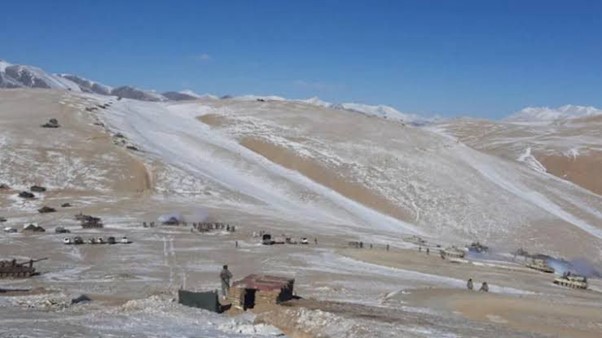
The story then moves north to Kargil, where Pakistani forces occupying strategic heights threatened the Srinagar–Leh road. Indian troops of 121 Independent Brigade Group launched a difficult assault and captured Point 13620. The battlefield success, however, was ultimately reversed at the diplomatic table.
The episode also examines the dramatic battle for Haji Pir Pass. In August 1965, 68 Brigade under Brigadier Zorawar Chand Bakshi launched operations aimed at disrupting the routes being used for infiltration into Kashmir. A bold operation led by Major Ranjit Singh Dyal and troops of 1 PARA resulted in the capture of the strategically important pass.
In Punjab, the Battle of Asal Uttar demonstrated how terrain, preparation and tactical ingenuity could offset Pakistan’s advantage in American-supplied Patton tanks. Flooded fields, anti-tank mines, concealed Indian positions and determined tank-hunters helped turn the battlefield against Pakistan’s armoured thrust.
The episode also looks at the Indian Navy’s largely defensive role, the mobilisation of civilians across the country, and the contribution of farmers, railway workers, truck drivers and civil-defence volunteers.
The final chapter is Tashkent — and the difficult question of what happened to India’s battlefield gains when the war moved to the diplomatic table.