






Editor’s Note
This is the second part of the two-part opinion series, turning from the changing character of warfare to the question of how states should respond to coercion and escalation pressures. The author examines military and non-military instruments of coercion, the manipulation of risk and the changing dynamics of deterrence. The piece then looks at how victory should be defined, the dangers of unintended consequences and what strategic stability could mean for India and the US.
Responding to Coercion, Restoring Deterrence and Defining Strategic Stability
How do you hold a state accountable for something it is allowed to deny? So, instead, we go up an escalation ladder: diplomatic isolation – economic sanctions – technology and other denial regimes – targeted use of force, and so on, and hope that the state will have sufficient incentives to curb the non-state actor or the proxy warrior.
We have made escalation management an inevitability, even a public good, because it appears to limit the death, destruction and uncertainties associated with wars.
This, however, also means that you will start small, and there will be pauses to allow the other side time to back down. But which, in effect, also offer windows of escape – to regroup, to adapt, to mobilise support. And deterrence gets watered down; it becomes a negotiation. All of which make for messy political outcomes and forever wars.
Also Read: Utility of Force in Post Modern Wars Part I
What options do we have for responding to coercion and escalation pressures?
Coercion will stem from both military and non-military instruments. The escalation ladder we spoke about earlier will have numerous non-military means of coercion as its lower rungs, which have become more potent and effective in the globalised and interconnected world we live in.
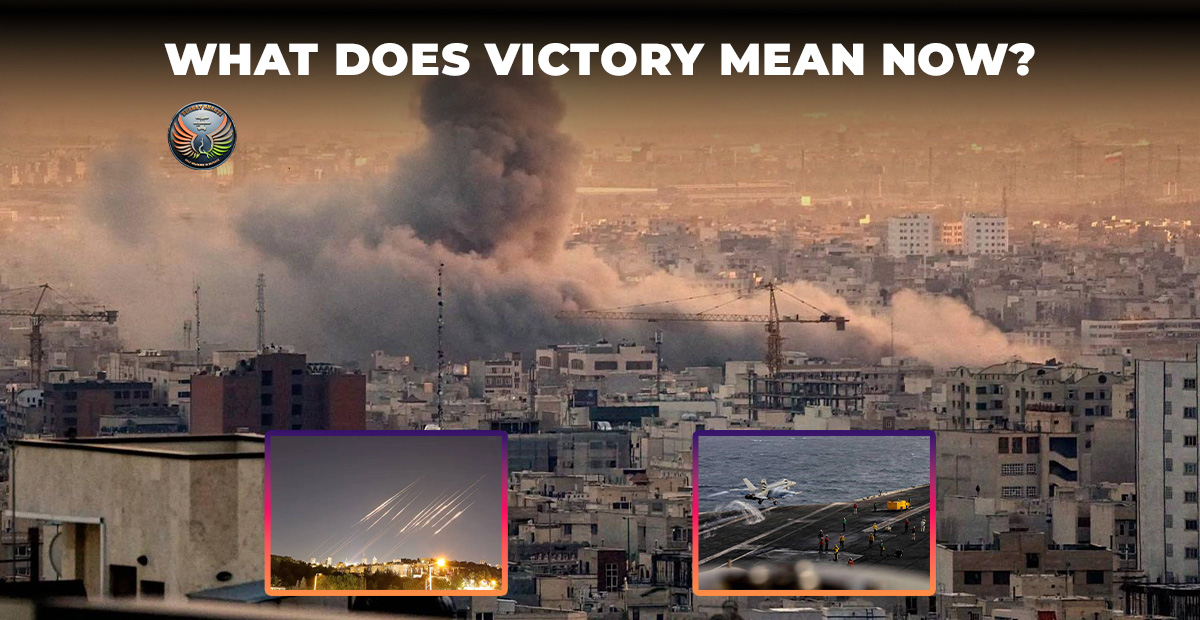
Both the ongoing Russia-Ukraine and the US-Iran wars have seen the employment of economic levers to inflict pain, impact the progress of the war and shape choices being made in world capitals. Supply chains have been affected and weaponised.
All nations have had to take stock of their vulnerabilities to foreign dependence, and autarky is once again being seen as desirable.
Coercion is also exercised through the manipulation of risk, and long-range drones and missiles have sharpened this facet.
Pakistan has for long manipulated risk through its nuclear doctrine and advocacy of Full Spectrum Deterrence (FSD). Iran has made risk to shipping through the Strait of Hormuz the lynchpin of its negotiating position. Ukraine has amplified the assessment of the risks of continued fighting by attacks deep into Russia. Amplified risk compels a reassessment of the cost-benefit analysis and often forces a pause.
The coercion and escalation pressures faced will be different regionally and globally. India has two revisionist powers to contend with, while the US may need to deal with issues of global governance.
So even though the options for these two cases will be different in detail at the macro level, international norms will need to be further strengthened to include revisionism in their ambit; norms must punish risky behaviours; put an end to the idea of deniability; and reinforce the idea of state responsibility with the imposition of clear liability on states for everything that emanates from their soil.
Defining Victory
In these circumstances, for the successful application of military force, we first have to get right our ideas about the metrics used to determine success or failure. What constitutes victory?
If an escalatory process has as its end objectives prizes that were previously obtainable only through total wars, then there is a fatal flaw in the war design, and such an application of force is bound to fail.
Matching ends, ways, and means is something military professionals learn in war colleges, and I think India got it right first at Kargil and, more recently, during Operation Sindoor.
Lastly, Watch Out for Unintended Consequences
Unfortunately, actions, especially military action, have unintended consequences, often with fateful effect.
In the 1965 India-Pakistan war, we converted a clear military victory into a strategic stalemate by positing the war as a lost opportunity to take Lahore and thus deal a decisive blow to Pakistan.
When the Indian Army Chief boasted that he would have beer at the Lahore Gymkhana, he gave a handle to Pakistan to crow that this dream was squashed because Lahore didn’t fall. In reality, Lahore was never the actual military objective, but we had snatched a moral defeat from a military victory. Surely an unintended consequence if ever.
We see this dynamic play out almost daily on US television. Did Russia flounder because they set out to tame Ukraine through a limited ‘special military operation’? This framing was probably for political reasons but may also have had the consequence of under-resourcing the initial moves that offered Ukraine a window of escape.
As the stand-off application of military force takes centre stage, it will become more difficult to adjudicate victory.
Deterrence Dynamics
Deterrence dynamics will need to be relooked at in great detail. What will deter your adversary? We have defeated Pakistan in four wars and during Operation Sindoor, but that hasn’t forced the behaviour change we have wanted. What will restore deterrence?
Iran has been battered – its navy and air force decimated, its leadership decapitated and civilian infrastructure struck. Does this mean that the US has restored/reinforced its deterrence?
The one who will deter more effectively will probably carry the day. Interesting times ahead, with plenty of scope for rethinking conventional force application, for denying adversaries room to manipulate risk whilst increasing the risk to their sense of well-being, and for restoring deterrence effectively.
But to what end? What does strategic stability look like for India and the US?
For India, an enabling environment to sustain a high growth rate for at least the next two decades, without major distractions from wars, proxy wars, supply chain disruptions, and technology denials, and with constructive domestic politics.
For the US, on the other hand, it would be in a different direction. How to preserve its hegemony and pre-eminence in world affairs without having to overstretch through messy entanglements across the world?
Both, to my mind, would require the restoration of deterrence, a reinforcement of rules and norms to that effect, the avoidance of zero-sum games, and a guiding philosophy other than raw power.
Vasudhaiva Kutumbakam (the world is one family) and Sarve Bhavantu Sukinah (may all be happy) are inspirational alternatives that could light the path forward.
Since it appeared relevant, I asked AI some questions about Homer’s epic The Odyssey. What I got in sum was this: the strong have overwhelming force; the weak survive by manipulating risk; order returns only when someone is willing to enforce clear liability and accept the cost of doing so.
Juxtapose this with Thucydides – the strong do what they can, and the weak suffer what they must; and Kautilya, who advocated for the use of every stratagem to survive and expand.
Homer gives the norm we may want; Thucydides gives the trap we are in; and Kautilya gives the instruction manual for living in the trap.
Vice-Admiral RB Pandit (Retd)

Vice Admiral RB Pandit was commissioned into the Indian Navy’s Executive Branch in July 1984. Over four decades, he commanded three ships, a missile squadron, the Western Fleet, and was Commander-in-Chief, Strategic Forces Command.