






Editor’s Note
As 2025 draws to a close, India’s defence acquisition landscape stands at a critical inflection point. The year ahead is not merely about big-ticket procurements such as 4th-gen jets, MTA, jet engines for AMCA and 5th-gen fighters, but about how New Delhi translates its multi-alignment foreign policy into hard military capability without diluting its core principle of strategic autonomy. In his take on the defence acquisition prospects for 2026, BharatShakti’s Editor-in-Chief underlines that India’s choices will be shaped as much by geopolitics as by operational necessity.
In 2026, India’s multi-alignment foreign policy will be applied and tested in the defence sector as well. India’s current and future critical defence acquisitions will be guided by a delicate politico-diplomatic balancing act, executed with a carefully thought-out strategy. Anchored in India’s long-standing policy of maintaining strategic autonomy, defence acquisitions also serve as a leverage in India’s foreign policy toolkit. It would be interesting to observe how India navigates the minefield of balancing larger strategic objectives with the need to acquire defence platforms from different countries.
For years, successive Indian governments procured large defence platforms piecemeal without extracting concurrent benefits in foreign policy terms or for empowering a local defence eco-system. In previous decades, military-industrial conglomerates from around the world often held the upper hand since India neither had the requisite political heft nor mammoth defence budgets to dictate terms. Defence majors also had other markets to turn to, but over the last two decades, India has learnt to diversify its defence imports and to combine large-scale acquisitions with strategic objectives that reinforce and strengthen bilateral relations.
Four major acquisitions from varied defence manufacturing eco-systems are in the pipeline in the coming year. The choice of platforms and the timing of decisions will depend on how geopolitical equations evolve in the coming months. These proposed acquisitions include buying 114 fourth-generation combat jets, 66 Medium Transport Aircraft (MTA), finalising the development of a jet engine for the fifth-generation Advanced Medium Combat Aircraft (AMCA), and deciding to buy an indeterminate number of fifth-generation combat jets, all for the Indian Air Force (IAF).
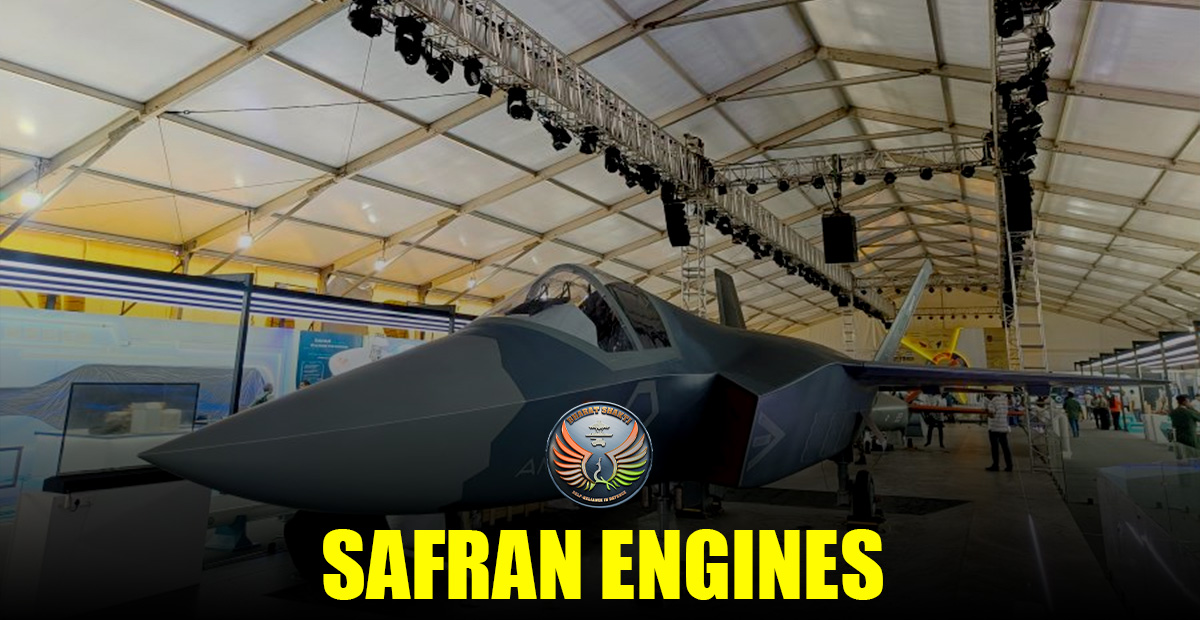
India’s Defence Research and Development Organisation (DRDO) is currently in intense talks with the Safran Group of France to develop a jet engine meant primarily for the second tranche of AMCA. The collaboration will ensure India owns the IP of the developed product. Safran and DRDO will undertake the joint project, with an overall investment of $7 billion or more, to be spent over a 7-8-year period. This completely new engine will also be available for export from India to third countries. The other contenders in this project were engine makers General Electric (US) and Rolls Royce from the UK. After years of negotiations and lobbying by these three rival companies, DRDO and IAF have zeroed in on Safran. But the other two continue to make their sales pitch.
Indirectly tied to this project is India’s quest to acquire 114 combat jets for the IAF to augment its already depleted fleet. Teams from India and France are currently discussing the possibility of India buying additional Rafale jets from Dassault Aviation. The IAF, which bought two squadrons of Rafales in 2016, is happy with its performance and would like to add more of the same aircraft for operational and functional ease. Last year, even the Indian Navy ordered two dozen Rafale Marines for its Aircraft Carrier, INS Vikrant.
The French Company, which has scaled up its operations in India of late by setting up a facility in collaboration with Tata Advanced Systems Ltd to manufacture fuselages for the aircraft, will have to set up either a joint venture or a subsidiary to establish the final assembly line for Rafale jets. Informal talks between Dassault Aviation and MoD officials to determine the extent of indigenisation in the aircraft to be manufactured in India are ongoing, even as inter-ministerial consultations within the government remain a work in progress and a final decision is awaited.
For the acquisition of the MTA, three manufacturers from the US, Europe, and Latin America are in the fray, while the US F-35 and Russia’s Su-57 are the two fifth-generation aircraft seemingly competing for IAF’s attention. The Lockheed Martin-manufactured C-130J medium transport aircraft, already seen as a force multiplier in the IAF, leads the race in the MTA, but Embraer’s C-390 Millennium aircraft is not far behind, according to available indications. Airbus, which has pitched its A-400 M transport aircraft, is the third contender. The C-295 manufactured by Airbus and currently being inducted into the IAF under an earlier programme.
However, in the fifth-generation combat jet space, F-35 may find itself ruled out because of restrictive clauses the US is known to impose on its deployment. That leaves the Su-57 manufactured by Russia as the possible choice. Despite two decades of rising India-US strategic partnership (now going through much turbulence, thanks to the unpredictable man in the White House), India’s armed forces have tread wearily with the Americans because of their record of denying critical defence tech to India. Records show India has shied away from buying American fighter jets since Independence. Moreover, the US has consistently attempted to use India as a frontline state in its policy of containment against China, making Indian policy makers uncomfortable, to say the least, given New Delhi’s own complicated relationship with Beijing.
The announcement of the final shape and size of these mega contracts, however, will depend on external factors such as the signing of the trade deal with the US, how the Russia-Ukraine war ends, and how India positions itself in the current global churn.
The Russians, the French, and the Israelis, on the other hand, have fewer strings attached to their defence partnership with India. The French have outpaced India’s other major defence partners in the past decade for a reason. For instance, a major contract with Dassault Aviation in 2016 to acquire 36 Rafale combat jets for the IAF was worth nearly $8.8 billion. In 2024, the Indian Navy decided to buy 24 Marine Rafale jets at a cost of $7.5 billion. Defence imports from Russia and Israel, two other major defence partners, have also been substantial. India buys a variety of missiles, loitering munitions, and armed Unmanned Aerial Systems (UAVs) from Israel, while Russia supplied one of the most effective air defence systems, the S-400, to India in the previous decade.
Not that the US did not get a large chunk of India’s defence pie. Since 2008, for instance, India, taking advantage of relative stability in its relations with the United States, acquired major aviation assets such as P-8Is and C-17s military aircraft, Apache and Chinook helicopters, all from Boeing, C-130Js and MH60-Rs from Lockheed Martin, to name a few. In 2024, another major deal to acquire 31 MQ-9B Predator drones was signed. Their delivery is yet to begin. One estimate suggests that, together, these platforms and other smaller imports cost India approximately $25 billion. And yet, given the current state of Delhi-DC relations, it is unlikely that India will proactively pursue any major defence deal with American firms. At best, India may go in for more C-130Js in a government-to-government deal, simply because integrating these aircraft into the existing inventory will be smooth. However, there is a school of thought in the IAF that the Embraer aircraft is a close competitor.
With the Indian MoD set to ask for a 20 per cent increase in its capital acquisition budget for the coming fiscal, India’s defence sector is no doubt set to witness fierce competition in the next 12 months.
Nitin A. Gokhale

Author, thought leader and one of South Asia's leading strategic analysts, Nitin A. Gokhale has forty years of rich and varied experience behind him as a conflict reporter, Editor, author and now a media entrepreneur who owns and curates two important digital platforms, BharatShakti.in and StratNewsGlobal.com focusing on national security, strategic affairs and foreign policy matters.
At the beginning of his long and distinguished career, Gokhale has lived and reported from India’s North-east for 23 years, writing and analysing various insurgencies in the region, been on the ground at Kargil in the summer of 1999 during the India-Pakistan war, and also brought live reports from Sri Lanka’s Eelam War IV between 2006-2009.
Author of over a dozen books on wars, insurgencies and conflicts, Gokhale relocated to Delhi in 2006, was Security and Strategic Affairs Editor at NDTV, a leading Indian broadcaster for nine years, before launching in 2015 his own digital properties.
An alumni of the Asia-Pacific Centre for Security Studies in Hawaii, Gokhale now writes, lectures and analyses security and strategic matters in Indo-Pacific and travels regularly to US, Europe, South and South-East Asia to speak at various international seminars and conferences.
Gokhale also teaches at India’s Defence Services Staff College (DSSC), the three war colleges, India's National Defence College, College of Defence Management and the intelligence schools of both the R&AW and Intelligence Bureau.
He tweets at @nitingokhale