



Amid widening strains in the India–US trade ties, the Trump administration has notified Congress of a $686 million sustainment and modernisation package for Pakistan’s F-16 fleet, its largest such proposal this term, even as Prime Minister Narendra Modi and President Donald Trump spoke by phone on Thursday to reaffirm their commitment to advancing bilateral cooperation.
The Defence Security Cooperation Agency (DSCA) submitted the F-16 notification earlier this week, triggering a 30-day congressional review. Of the total value, $649 million covers sustainment and upgrades, including avionics modernisation, cryptographic modules such as the AN/APX-126 Identification, Friend or Foe system, mission-planning software, spares, simulators, training, and contractor support from companies such as Lockheed Martin.
Another $37 million funds defence equipment, including 92 Link-16 tactical data link systems, critical for secure, real-time data exchange with US and NATO aircraft, and six inert Mk-82 500-pound bomb bodies for integration testing.
DSCA said the package is vital to US national security interests, helping Pakistan, designated a Major Non-NATO Ally, maintain interoperability in counterterrorism missions and joint exercises. The upgrades target Pakistan’s Block 52 and Mid-Life Update F-16s, addressing “critical flight safety concerns” and extending service life through 2040. US officials stressed that the sale introduces no new offensive capability and “will not alter the basic military balance in the region,” a standard assurance aimed at India.
The decision adds to a long list of F-16 transactions with Pakistan dating back two decades, including the 2016 sale of eight Block 52A/B jets for $665 million (later amended to $699 million), the 2006 “Peace Drive I” procurement of 18 F-16C/Ds with AIM-120C missiles, and a 2010 sustainment package worth $78.6 million. It follows a $400 million upgrade cleared in February and an AMRAAM missile package approved in October, underscoring continuing strategic engagement despite persistent US concerns over militant safe havens in Pakistan.
Phone call amid diplomatic crosscurrents
Hours after the latest notification, Modi and Trump held a phone call in which both leaders discussed regional and global issues and reaffirmed their intent to strengthen cooperation. The call came shortly after Modi hosted Russian President Vladimir Putin in New Delhi.
Modi described the exchange as “warm and engaging” in a social media post, though Trump did not issue a readout. India’s Ministry of External Affairs said the two leaders reviewed progress in “critical technologies, energy, defence and security, and other priority areas central to implementing the India-US COMPACT (Catalysing Opportunities for Military Partnership, Accelerated Commerce & Technology) for the 21st century.”
The call also followed the release of the US National Security Strategy (NSS) last week, which urged India to assume a larger role in Indo-Pacific security and work closely with allies “to prevent domination by any single competitor nation.” The NSS referenced the Quad grouping of the US, India, Japan, and Australia, though the leaders’ summit planned for autumn 2025 did not materialise. Trump has reportedly declined to visit New Delhi without securing a favourable trade deal.
Growing uncertainties in the partnership
Despite progress in defence cooperation aimed at countering China, Trump has rejected multiple draft trade agreements since February, insisting that India further open its agricultural markets to US exports. Negotiations have now slipped into early 2026, with officials and analysts noting that the fate of the deal and the broader direction of the relationship ultimately depend on the White House.
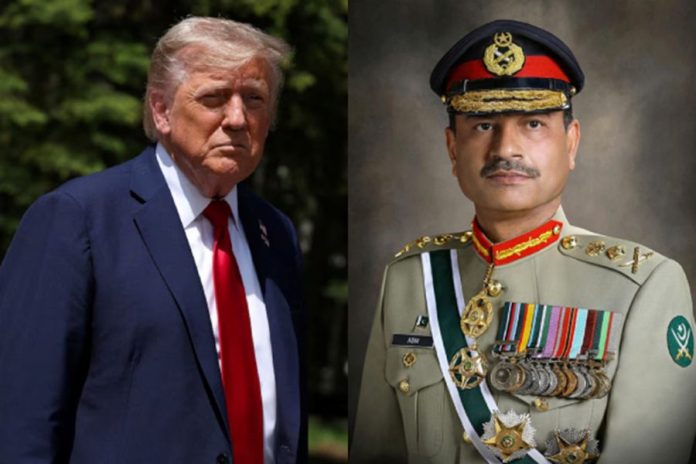
The F-16 approval for Pakistan further complicates the picture, coming as Trump has visibly warmed to Islamabad. The President has met Pakistan Army Chief Gen. Asim Munir twice and Prime Minister Shehbaz Sharif three times this year. Analysts attribute the shift to Islamabad’s stepped-up diplomacy, including hiring former Trump associates as lobbyists and promising cooperation on rare-earth supply chains.
New Delhi has not issued any comment so far on the proposed F-16 sale, though the timing is expected to heighten long-standing Indian concerns over US military assistance to Pakistan.
Ravi Shankar

Dr Ravi Shankar has over two decades of experience in communications, print journalism, electronic media, documentary film making and new media.
He makes regular appearances on national television news channels as a commentator and analyst on current and political affairs. Apart from being an acknowledged Journalist, he has been a passionate newsroom manager bringing a wide range of journalistic experience from past associations with India’s leading media conglomerates (Times of India group and India Today group) and had led global news-gathering operations at world’s biggest multimedia news agency- ANI-Reuters. He has covered Parliament extensively over the past several years. Widely traveled, he has covered several summits as part of media delegation accompanying the Indian President, Vice President, Prime Minister, External Affairs Minister and Finance Minister across Asia, Africa and Europe.