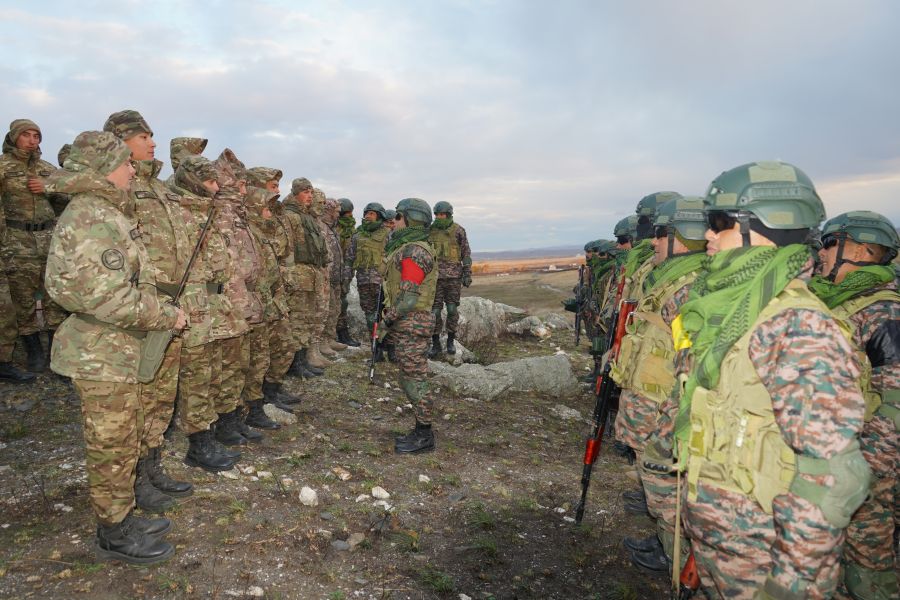




India’s eastern seaboard is witnessing an unusual concentration of global naval activity. In the span of days, the Indian Navy is hosting three major international engagements: Exercise Milan 2026, the International Fleet Review 2026, and the Indian Ocean Naval Symposium (IONS) Ninth Conclave of Navy Chiefs. Together, they send a clear signal: India is preparing to shoulder a larger maritime role, both as a security provider and as a credible force for deterrence across the Indo-Pacific.
From Visakhapatnam, the message was unmistakable: India intends to protect its maritime interests, deepen defence partnerships, and remain a stabilising presence in the wider maritime commons.
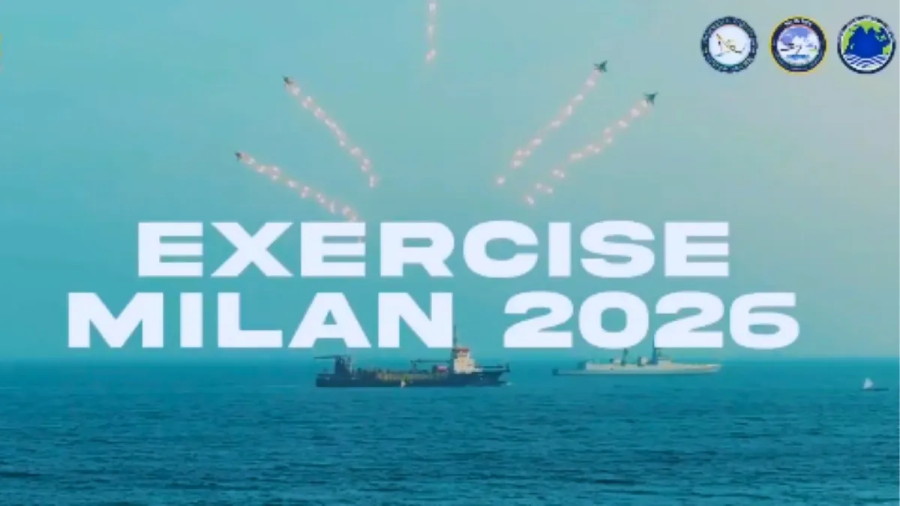
A day after the International Fleet Review, which saw record international participation, MILAN 2026, the largest and most complex edition of the exercise so far, began in the Bay of Bengal on Thursday. The exercise is being hosted at Eastern Naval Command headquarters in Visakhapatnam and has drawn participation from 74 countries.
Inaugurating the exercise, Defence Minister Rajnath Singh called on the international community to work together to deal with increasingly complex challenges at sea, stressing cooperation based on mutual respect and shared responsibility.
He noted that the role of navies in maintaining peace and stability has grown alongside the expansion of global trade and maritime traffic. Competition over key sea lanes, straits and channels, he said, has sharpened in recent years. Interest in underwater resources, including rare-earth minerals, is also adding to tensions in maritime spaces. At the same time, countries must remain vigilant against maritime terrorism and other unlawful activities spreading across regions.
With the harbour phase of the exercise beginning today, the sea phase will take place from February 21 to 25. This stage will see coordinated manoeuvres, live weapon firings and multi-domain drills at sea. More than 22 foreign platforms, including 19 warships and three aircraft, will take part alongside Indian naval assets. Among them is the Boeing P-8 Poseidon, the United States’ long-range maritime patrol and reconnaissance aircraft. In all, over 75 ships, submarines and aircraft are expected to be involved in the exercise.
The Defence Minister underlined that traditional threats at sea now coexist with newer challenges such as piracy, maritime terrorism, illegal fishing, trafficking, cyber vulnerabilities and disruptions to critical supply chains. Climate change, he added, is intensifying natural disasters, making humanitarian assistance and disaster relief missions more frequent and demanding. No single navy, however capable, can deal with these issues alone, he said, highlighting the need for deeper cooperation among maritime forces.
Singh also observed that the global order is going through a period of flux. Platforms such as MILAN, he said, help build trust, improve interoperability and enable coordinated responses to shared challenges. When ships sail together, and sailors train together, he noted, it creates understanding that goes beyond geography and politics.
Calling the participation of 74 nations a sign of confidence in India, he said MILAN 2026 aims to improve operational coordination among partner navies, strengthen professional exchanges and build lasting partnerships. The broader objective, he added, is to support a fair maritime order based on international rules and freedom of navigation in line with international law.
In his opening remarks, Chief of the Naval Staff Admiral Dinesh K Tripathi described MILAN as a “Maritime Mahakumbh”, bringing together naval professionals from across the world with a shared commitment to keeping the seas safe, secure and open. As a maritime nation, India recognises that today’s challenges at sea are interconnected and transnational, and are best addressed through partnership, he said.
During the exercise, participating navies will conduct complex manoeuvres, operational drills, and professional exchanges. These interactions, the Navy Chief noted, will deepen trust, improve coordination at sea and allow navies to learn from each other’s experience.
On the sidelines of MILAN 2026, the Defence Minister also interacted with visiting Navy Chiefs and delegations from nine ASEAN countries who are in India for the IONS Conclave of Chiefs and the International Fleet Review. The discussions highlighted India’s commitment to its Act East policy and the MAHASAGAR vision – Mutual and Holistic Advancement for Security and Growth Across Regions.
Welcoming the strong ASEAN presence, Singh noted that MILAN has expanded significantly since its modest beginning in 1995 with just four foreign navies. The current edition, with 74 participating nations, reflects its growing relevance in the region.
The talks also touched on the upcoming sea phase of the exercise, including anti-submarine warfare, air defence and search-and-rescue operations. Describing ASEAN as central to India’s Indo-Pacific outlook, the Defence Minister said shared security is the foundation of regional prosperity and invited partner nations to benefit from India’s expanding defence technology ecosystem driven by the Atmanirbhar Bharat initiative.
Ravi Shankar, Visakhapatnam
Dr Ravi Shankar has over two decades of experience in communications, print journalism, electronic media, documentary film making and new media.
He makes regular appearances on national television news channels as a commentator and analyst on current and political affairs. Apart from being an acknowledged Journalist, he has been a passionate newsroom manager bringing a wide range of journalistic experience from past associations with India’s leading media conglomerates (Times of India group and India Today group) and had led global news-gathering operations at world’s biggest multimedia news agency- ANI-Reuters. He has covered Parliament extensively over the past several years. Widely traveled, he has covered several summits as part of media delegation accompanying the Indian President, Vice President, Prime Minister, External Affairs Minister and Finance Minister across Asia, Africa and Europe.